
Universal Pipette Tips
Disposable pipette tips designed to fit single and multichannel pipettes from most manufacturers; offer acceptable performance compared to pipette specific tips and can be used with a variety of pipette models.
Single-use universal pipette tips are designed for compatibility with most mechanical and electronic single and multichannel pipettors.
Universal pipette tips are available in a range of types, sizes, colors, styles, and packaging configurations and may be designed for specific purposes or tasks.
- Capacity or volume based on the pipettor size
- Filters to reduce contamination and cross-contamination
- Color
- Sterility or autoclavability
- Tip style: beveled, tapered, wide bore, round, flat, or gel-loading
- Length: short or extended
- Purity: metal-free or DNase-, RNase-, ATP-, Bioburden-, PCR inhibitor-, endotoxin-, or pyrogen-free for genomic and biologic applications
- Surface treatments to reduce retention
- Packaging options to help facilitate re-stocking or eliminate waste

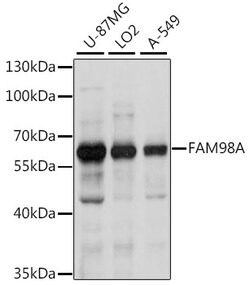
ABclonal Technology FAM98A Rabbit pAb

Enables protein methyltransferase activity. Involved in positive regulation of cell population proliferation, positive regulation of gene expression, and protein methylation. Predicted to be part of tRNA-splicing ligase complex.

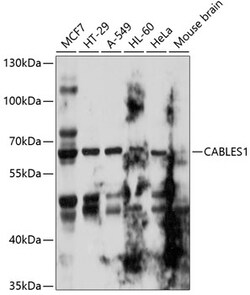
ABclonal Technology CABLES1 Rabbit pAb
This gene encodes a protein involved in regulation of the cell cycle through interactions with several cyclin-dependent kinases. One study (PMID 16177568) reported aberrant splicing of transcripts from this gene which results in removal of the cyclin binding domain only in human cancer cells, and reduction in gene expression was shown in colorectal cancers (PMID 17982127).Multiple transcript variants encoding different isoforms have been found for this gene.
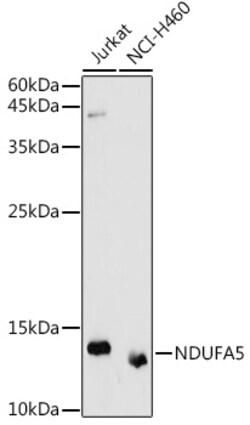
ABclonal Technology NDUFA5 Rabbit pAb
This nuclear gene encodes a conserved protein that comprises the B13 subunit of complex I of the mitochondrial respiratory chain. The encoded protein localizes to the inner mitochondrial membrane, where it is thought to aid in the transfer of electrons from NADH to ubiquinone. Alternative splicing results in multiple transcript variants. There are numerous pseudogenes of this gene on chromosomes 1, 3, 6, 8, 9, 11, 12, and 16.
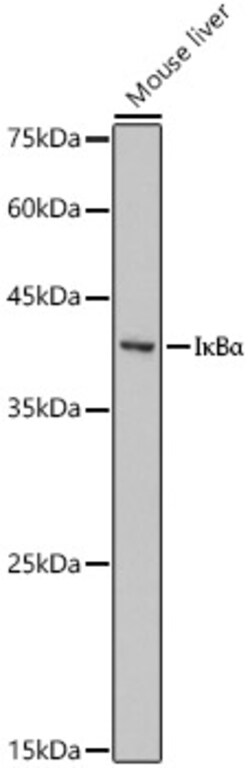
ABclonal Technology IκBα Rabbit pAb
This gene encodes a member of the NF-kappa-B inhibitor family, which contain multiple ankrin repeat domains. The encoded protein interacts with REL dimers to inhibit NF-kappa-B/REL complexes which are involved in inflammatory responses. The encoded protein moves between the cytoplasm and the nucleus via a nuclear localization signal and CRM1-mediated nuclear export. Mutations in this gene have been found in ectodermal dysplasia anhidrotic with T-cell immunodeficiency autosomal dominant disease.
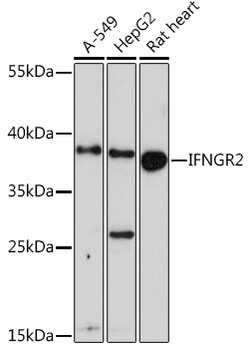
ABclonal Technology IFNGR2 Rabbit pAb
This gene (IFNGR2) encodes the non-ligand-binding beta chain of the gamma interferon receptor. Human interferon-gamma receptor is a heterodimer of IFNGR1 and IFNGR2. Defects in IFNGR2 are a cause of mendelian susceptibility to mycobacterial disease (MSMD), also known as familial disseminated atypical mycobacterial infection. MSMD is a genetically heterogeneous disease with autosomal recessive, autosomal dominant or X-linked inheritance.
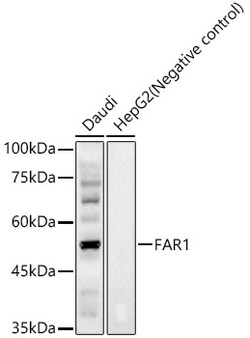
ABclonal Technology FAR1 Rabbit pAb
The protein encoded by this gene is required for the reduction of fatty acids to fatty alcohols, a process that is required for the synthesis of monoesters and ether lipids. NADPH is required as a cofactor in this reaction, and 16-18 carbon saturated and unsaturated fatty acids are the preferred substrate. This is a peroxisomal membrane protein, and studies suggest that the N-terminus contains a large catalytic domain located on the outside of the peroxisome, while the C-terminus is exposed to the matrix of the peroxisome. Studies indicate that the regulation of this protein is dependent on plasmalogen levels. Mutations in this gene have been associated with individuals affected by severe intellectual disability, early-onset epilepsy, microcephaly, congenital cataracts, growth retardation, and spasticity (PMID 25439727). A pseudogene of this gene is located on chromosome 13.
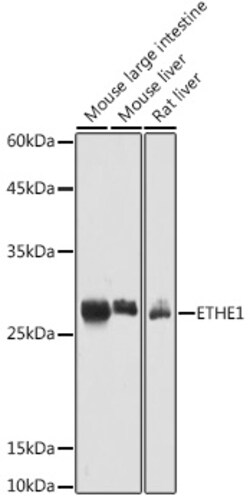
ABclonal Technology ETHE1 Rabbit pAb
This gene encodes a member of the metallo beta-lactamase family of iron-containing proteins involved in the mitochondrial sulfide oxidation pathway. The encoded protein catalyzes the oxidation of a persulfide substrate to sulfite. Certain mutations in this gene cause ethylmalonic encephalopathy, an infantile metabolic disorder affecting the brain, gastrointestinal tract and peripheral vessels. Alternative splicing results in multiple transcript variants encoding different isoforms.
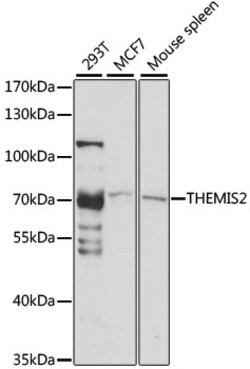
ABclonal Technology THEMIS2 Rabbit pAb
Predicted to be involved in T cell receptor signaling pathway and regulation of B cell activation. Predicted to be active in cytoplasm and nucleus.
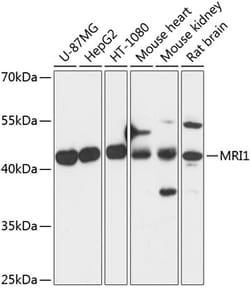
ABclonal Technology MRI1 Rabbit pAb
This enzyme functions in the methionine salvage pathway by catalyzing the interconversion of methylthioribose-1-phosphate and methythioribulose-1-phosphate. Elevated expression of the encoded protein is associated with metastatic melanoma and this protein promotes melanoma cell invasion independent of its enzymatic activity. Mutations in this gene may be associated with vanishing white matter disease (VMWD).
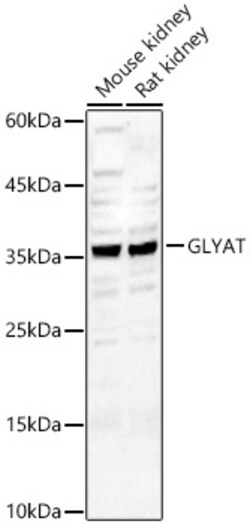
ABclonal Technology GLYAT Rabbit pAb
The glycine-N-acyltransferase protein conjugates glycine with acyl-CoA substrates in the mitochondria. The protein is thought to be important in the detoxification of endogenous and xenobiotic acyl-CoAs. Two transcript variants encoding different isoforms have been found for this gene.
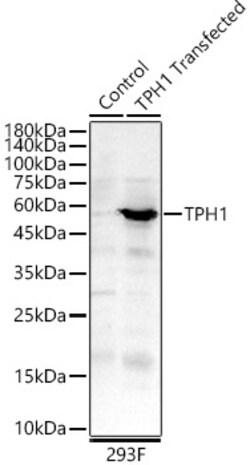
ABclonal Technology TPH1 Rabbit pAb
This gene encodes a member of the aromatic amino acid hydroxylase family. The encoded protein catalyzes the first and rate limiting step in the biosynthesis of serotonin, an important hormone and neurotransmitter. Mutations in this gene have been associated with an elevated risk for a variety of diseases and disorders, including schizophrenia, somatic anxiety, anger-related traits, bipolar disorder, suicidal behavior, addictions, and others.
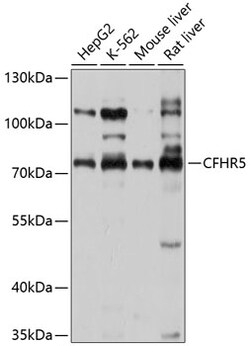
ABclonal Technology CFHR5 Rabbit pAb
This gene is a member of a small complement factor H (CFH) gene cluster on chromosome 1. Each member of this gene family contains multiple short consensus repeats (SCRs) typical of regulators of complement activation. The protein encoded by this gene has nine SCRs with the first two repeats having heparin binding properties, a region within repeats 5-7 having heparin binding and C reactive protein binding properties, and the C-terminal repeats being similar to a complement component 3 b (C3b) binding domain. This protein co-localizes with C3, binds C3b in a dose-dependent manner, and is recruited to tissues damaged by C-reactive protein. Allelic variations in this gene have been associated, but not causally linked, with two different forms of kidney disease membranoproliferative glomerulonephritis type II (MPGNII) and hemolytic uraemic syndrome (HUS).
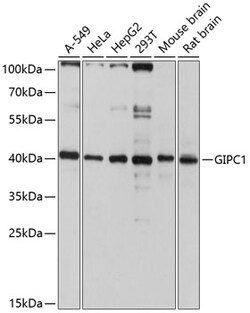
ABclonal Technology GIPC1 Rabbit pAb
GIPC1 is a scaffolding protein that regulates cell surface receptor expression and trafficking (Lee et al., 2008 [PubMed 18775991]).
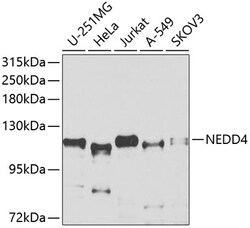
ABclonal Technology NEDD4 Rabbit pAb
This gene is the founding member of the NEDD4 family of HECT ubiquitin ligases that function in the ubiquitin proteasome system of protein degradation. The encoded protein contains an N-terminal calcium and phospholipid binding C2 domain followed by multiple tryptophan-rich WW domains and, a C-terminal HECT ubiquitin ligase catalytic domain. It plays critical role in the regulation of a number of membrane receptors, endocytic machinery components and the tumor suppressor PTEN.
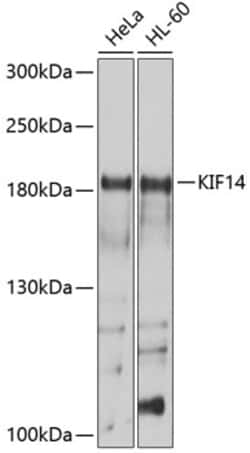
ABclonal Technology KIF14 Rabbit pAb
This gene encodes a member of the kinesin-3 superfamily of microtubule motor proteins. These proteins are involved in numerous processes including vesicle transport, chromosome segregation, mitotic spindle formation, and cytokinesis. In human HeLa-S3 and 293T cells, this protein is localized to the cytoplasm during interphase, to the spindle poles and spindle microtubules during mitosis, and to the midbody during cytokinesis. An internal motor domain displays microtubule-dependent ATPase activity, consistent with its function as a microtubule motor protein. Knockdown of this gene results in failed cytokinesis with endoreplication, which results in multinucleated cells. This gene has been identified as a likely oncogene in breast, lung and ovarian cancers, as well as retinoblastomas and gliomas. Alternative splicing results in multiple transcript variants.