
General Cell Lines and Cell Cultures





Biochain Institute Inc Frozen Tissue Section - Human Adult Normal: Adipose, 5 slides/PK
BioChain's tissue products are based on the sample repository network established following the IRB-approved ethical standard and procedures. BioChain's Frozen Tissue Slides are ideal for rapidly identifying cellular localization of RNA or protein. A single human adult normal tissue with 5-10 um thickness is mounted on a positively charged glass slide. The slides are fixed and dehydrated with acetone for consistent results with in situ hybridization and immunohistochemistry. More organs may be available upon request.


Eurofins Discoverx Ready-to-Assay CCR2B Chemokine Receptor Frozen Cells, 2 Vials of Cells. (HTS007RTA)
The Ready-to-Assay CCR2B Chemokine Receptor Frozen Cells are a simple, thaw-and-assay cell format for use in studying drug candidates (small molecules or biologics) targeting GPCRs. This assay assesses ligand (e.g. eotaxin) based activation of CCR2 GPCR activity via detection of increasing levels of intracellular calcium. The included cell line overexpresses CCR2 alongside endogenous high levels of a promiscuous G-protein, coupling the receptor to the calcium signaling pathway. Upon activation of CCR2, the resulting calcium activity can be fluorescently assayed. Ready-to-assay kits consist of two vials of the stably modified clonal cell line in a convenient thaw-and-use format. For detailed product information, User manual and datasheet, visit www.discoverx.com/products-applications/frozen-cells.


ATCC Shigella flexneri; serotype 2b
Shigella flexneri strain CDC 3591-52 [CIP 104222] was deposited by CDC. This culture is whole-genome sequenced and has applications in enteric disease research, infectious disease research, and media testing.

Biochain Institute Inc Matched Pair - DNA - Human Primary and Metastatic Tumor Tissue: Breast, 2x10 ug/PK
BioChain's human DNA matched pair products include: Primary Pair (PP), Primary and Metastasis Pair (PM). PP consists of DNA prepared from primary tumor and its adjacent normal tissue; PM consists of DNA prepared from primary tumor and corresponding ponding metastatic tumor. Genomic DNA in each pair is prepared from the same donor. This product line is designed foridentifying tumor-specific genes and tumor metastatic genes.
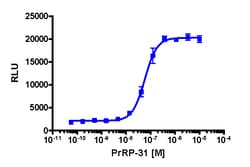
Eurofins Discoverx PathHunter PRLHR Activated GPCR Internalization U2OS Cell Line, 2 vials. (93-0766C3)
The PathHunter PRLHR Activated GPCR internalization cell line is a stable, engineered cell line for use in studying drug candidates (small molecules or biologics) affecting GPCR activation and internalization. This cell line uses EFC technology to measure ligand-induced internalization of PRLHR via detection of localization to the early endosome. The included cell line overexpresses EA-tagged β-Arrestin-2 as well as a ProLink-tagged early endosome protein and untagged PRLHR. Upon ligand-induced receptor activation, β-Arrestin-2 is recruited to the activated GPCR and the resulting PRLHR-arrestin complex is internalized to the early endosome, leading to production of EFC signal. This stable modified cell line is provided as two vials of cryopreserved cells. For detailed product information, User Manual and datasheet, visit www.discoverx.com/gpcr.

Biochain Institute Inc Paraffin Tissue Section - Human Adrenal Tumor: Adenoma, 5 sides/PK
BioChain's tissue products are based on the sample repository network established following the IRB-approved ethical standard and procedures. BioChain's formalin fixed paraffin embedded (FFPE) tissue section line encompasses a large selection of tissue sections which are suitable for immunohistochemistry and in situ hybridization assays. The tissue sections are approximately 5 um thick. Each slide contains tissue from a single human tumor. Documentation of tissues' clinical histories may be available upon request. For those customers who want to perform FFPE DNA and RNA isolation, BioChain can provide tissue section slices in tubes instead of mounting them on glass slides.
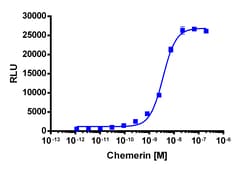
Eurofins Discoverx PathHunter CHO-K1 CMKLR1 β-Arrestin Cell Line, 2 vials. (93-0313C2)
The PathHunter CMKLR1 cell line is a stable, engineered cell line for use in studying drug candidates (small molecules or biologics) targeting GPCRs. This cell line enables assessment of ligand (e.g. chemerin) based activation of CMKLR1 GPCR activity via detection of β-arrestin recruitment. The included cell line overexpresses ProLink-tagged CMKLR1 and EA-tagged β-Arrestin-2. Activation of CMKLR1 stimulates the recruitment of β-Arrestin-2 and produces EFC signal. This stable modified cell line is provided as two vials of cryopreserved cells. For detailed product information, User Manual and datasheet, visit www.discoverx.com/gpcr.

Bioss Folate Receptor alpha Monoclon
Folate Receptor alpha Primary Antibody Unconjugated Host Species Rabbit Target Species Human Mouse Rat Clonality Monoclonal Applications WB RecombinantConcentration 1ug/ul Size 100 ul Storage Buffer 10mM phosphate buffered saline(pH 7 4) with 150mM sodium chloride 0 05% BSA 0 02% sodium azide and 50% glycerol
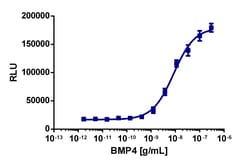
Eurofins Discoverx PathHunter U2OS BMPR1A/ACVR2B Dimerization Cell Line, 2 vials. (93-1038C3)
The PathHunter BMPR1A/ACVR2B Dimerization cell line is a stable, engineered cell line for use in studying drug candidates (small molecules or biologics) targeting receptor-receptor interaction. This cell line enables assessment of ligand (e.g. BMP-4) induced dimerization of BMPR1A/ACVR2B receptors. This product uses EFC technology. The cell line included overexpresses ACVR2B target protein fused to PK alongside BMPR1A target protein fused to EA. Upon ligand-induced dimerization of BMPR1A/ACVR2B, detectable EFC signal is produced. This stable modified cell line is provided as two vials of cryopreserved cells. For detailed product information, User Manual and datasheet, visit www.discoverx.com/kinases.
Eurofins Discoverx Ready-to-Assay SST3 Somatostatin Receptor Frozen Cells, 2 Vials of Cells. (HTS171RTA)
The Ready-to-Assay SST3 Somatostatin Receptor Frozen Cells are a simple, thaw-and-assay cell format for use in studying drug candidates (small molecules or biologics) targeting GPCRs. This assay assesses ligand (e.g. somatostatin) based activation of SSTR3 GPCR activity via detection of increasing levels of intracellular calcium. The included cell line overexpresses SSTR3 alongside endogenous high levels of a promiscuous G-protein, coupling the receptor to the calcium signaling pathway. Upon activation of SSTR3, the resulting calcium activity can be fluorescently assayed. Ready-to-assay kits consist of two vials of the stably modified clonal cell line in a convenient thaw-and-use format. For detailed product information, User manual and datasheet, visit www.discoverx.com/products-applications/frozen-cells.
Eurofins Discoverx ChemiScreen MC3 Melanocortin Receptor Membrane Preparation, 1 vial. (HTS022M)
The ChemiScreen MC3 Melanocortin Receptor Membrane Preparation is derived from proprietary stable recombinant cells to ensure high levels of MC3R surface expression. ChemiScreen membrane preps can be used to screen for ligand binding affinities using a competitive radio-labeled ligand approach. Increased binding affinities will lead to higher radioactive signal. Membrane preps contain 1 mL of 1 mg/mL frozen membranes derived from a stably modified clonal cell line which was chosen for optimal receptor expression. For detailed product information, visit www.discoverx.com/membranepreps.
Eurofins Discoverx ChemiScreen GAL1 Galanin Receptor Stable Cell Line, 2 vials. (HTS094C)
The ChemiScreen GAL1 Galanin Receptor Stable Cell Line is an engineered cell line for use in studying drug candidates (small molecules or biologics) targeting GPCRs. This cell line enables assessment of ligand (e.g. galanin) based activation of GALR1 GPCR activity via detection of increasing levels of intracellular calcium. The included cell line overexpresses GALR1 alongside endogenous high levels of the promiscuous G protein, Gα15, coupling the receptor to the calcium signaling pathway. Upon activation of GALR1, the resulting calcium activity can be fluorescently assayed. This stable modified cell line is provided as two vials of cryopreserved cells. For detailed product information, visit www.discoverx.com/targets/gpcr-target-biology.
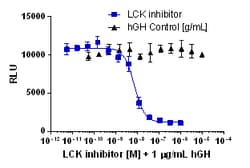
Eurofins Discoverx PathHunter U2OS LCK Activity Assay, 2 vials. (93-1100C3)
The PathHunter U2OS LCK Activity Assay is a stable, engineered cell line for use in studying small molecule drug candidates targeting the LCK kinase domain. The cell line is engineered to express the catalytic domain from LCK fused to the cytokine receptor binding domain (CRBD) of JAK2. The cells co-express an Enzyme Acceptor (EA) tagged SH2 domain and a ProLink (PK) tagged Cytokine receptor. The CRBD is designed to bind the CTK catalytic domain to the GHR-PK. Activation of the GHR-PK induces receptor phosphorylation by the LCK catalytic domain. This leads to SH2-EA recruitment and production of EFC signal. This stable modified cell line is provided as two vials of cryopreserved cells. For detailed product information, User Manual and datasheet, visit www.discoverx.com/kinases.