
General Cell Lines and Cell Cultures

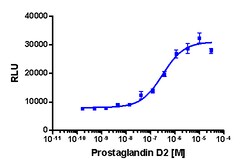
Eurofins Discoverx PathHunter CHO-K1 CRTH2 β-Arrestin Cell Line, 2 vials. (93-0291C2)
The PathHunter CRTH2 cell line is a stable, engineered cell line for use in studying drug candidates (small molecules or biologics) targeting GPCRs. This cell line enables assessment of ligand (e.g. prostaglandin D2) based activation of CRTH2 GPCR activity via detection of β-arrestin recruitment. The included cell line overexpresses ProLink-tagged CRTH2 and EA-tagged β-Arrestin-2. Activation of CRTH2 stimulates the recruitment of β-Arrestin-2 and produces EFC signal. This stable modified cell line is provided as two vials of cryopreserved cells. For detailed product information, User Manual and datasheet, visit www.discoverx.com/gpcr.


Eurofins Discoverx ChemiBrite α2B Adrenergic Receptor Stable Cell Line, 2 vials. (HTS157L)
The ChemiBrite α2B Adrenergic Receptor cell line is a stable, engineered cell line for use in studying drug candidates (small molecules or biologics) targeting GPCRs. This cell line enables assessment of ligand (e.g. epinephrine and norepinephrine) based activation of ADRA2B GPCR activity via detection of increasing levels of intracellular calcium. The included cell line overexpresses ADRA2B alongside exogenous high levels of a promiscuous G-protein, coupling the receptor to the calcium signaling pathway. ChemiBrite cells also express a clytin variant, allowing for luminescent as well as fluorescent signal detection. Upon activation of ADRA2B, the resulting calcium activity can be assayed in either detection mode. This stable modified cell line is provided as two vials of cryopreserved cells. For detailed product information, visit www.discoverx.com/targets/gpcr-target-biology.
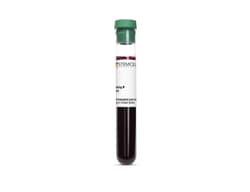
STEMCELL Technologies Solid Tumor Cancer, Hu PB, EDTA, Fresh, Size: 1 Collection
Primary Cells, Fresh

ATCC BT-474; Breast Ductal Carcinoma; Human
BT-474 is a cell line exhibiting epithelial morphology that was isolated from a solid, invasive ductal carcinoma of the breast obtained from a 60-year-old, White, female breast cancer patient. Use these cells in your cancer research.
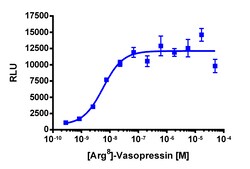
Eurofins Discoverx PathHunter AVPR1B Activated GPCR Internalization U2OS Cell Line, 2 vials. (93-0722C3)
The PathHunter AVPR1B Activated GPCR internalization cell line is a stable, engineered cell line for use in studying drug candidates (small molecules or biologics) affecting GPCR activation and internalization. This cell line uses EFC technology to measure ligand-induced internalization of AVPR1B via detection of localization to the early endosome. The included cell line overexpresses EA-tagged β-Arrestin-2 as well as a ProLink-tagged early endosome protein and untagged AVPR1B. Upon ligand-induced receptor activation, β-Arrestin-2 is recruited to the activated GPCR and the resulting AVPR1B-arrestin complex is internalized to the early endosome, leading to production of EFC signal. This stable modified cell line is provided as two vials of cryopreserved cells. For detailed product information, User Manual and datasheet, visit www.discoverx.com/gpcr.

ATCC NCI-H1436; Lung Carcinoma; Human (Homo sapiens)
NCI-H1436 [H1436] is a cell line that was isolated from the lungs of a 39-year-old, White male with stage E small cell lung cancer. This product can be used for cancer research.
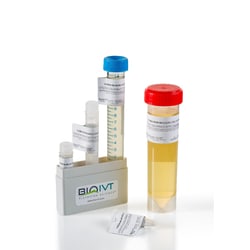
Bio IVT BIOIVT LLC Human Mononuclear Cells, Cryopreserved, Individual Donor, High Viability
Human Mononuclear Cells (PBMC) are provided cryopreserved from individual donors with high viability. This product is intended for in-vitro research and manufacturing purposes only, requiring handling at Bio-Safety Level 2.
- HLA type provided for detailed donor characterization.
- Tested negative for a panel of infectious agents including HIV ½ AB, HCV AB, HBSAG, HIV-1 RNA, HCV RNA, HBV DNA, WNV RNA, ANTI-T. CRUZI, and STS.
- Recommended short-term storage at -70°C or colder for up to 2 weeks.
- Recommended long-term storage in liquid nitrogen vapor phase (-140°C).
- Sample type from individual male donor.
- Donor race is white or Caucasian.
- Concentration per vial is 10M.
- Viable cell count of 20.0 × 10⁶.
- Cell viability is 91.0%.
- Cryopreserved using CRYOSTOR CS10.

Biochain Institute Inc Frozen Tissue Section - Bronchitis: Lung, 5 slides/PK
BioChain's tissue products are based on the sample repository network established following the IRB-approved ethical standard and procedures. BioChain's Frozen Tissue Slides are ideal for rapidly identifying cellular localization of RNA or protein. A single human adult normal tissue with 5-10 um thickness is mounted on a positively charged glass slide. The slides are fixed and dehydrated with acetone for consistent results with in situ hybridization and immunohistochemistry. More organs may be available upon request.


ATCC UMR-106; Osteosarcoma; Rat (Rattus norvegicus)
UMR-106 is an epithelial-like cell that was isolated from the bone of a rat with osteosarcoma. This cell line was deposited by AE Bogden.

Amsbio LLC Human Prostate cancer and normal adjacent tissue FFPE block

Human FFPE tissue blocks are processed from diseased tissues or clinically-unremarkable donor normal human tissue samples. Tissue is prepared by a certified medical pathologist, fixed in 10% neutral formalin for 24 hours and embedded in IHC-grade paraffin. The target FFPE specimen size is 0.5 x 0.5 x 0.5 cm, but it can vary significantly depending on the organ.
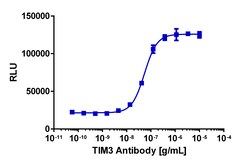
Eurofins Discoverx PathHunter U2OS TIM3/TIM3 Dimerization Cell Line, 2 vials. (93-1082C3)
The PathHunter TIM3/TIM3 Dimerization cell line is a stable, engineered cell line for use in studying drug candidates (small molecules or biologics) targeting receptor-receptor interaction. This cell line enables assessment of ligand induced dimerization of TIM3/TIM3 receptors. This product uses EFC technology. The cell line included overexpresses TIM3 target protein fused to PK alongside TIM3 target protein fused to EA. Upon ligand-induced dimerization of TIM3/TIM3, detectable EFC signal is produced. This stable modified cell line is provided as two vials of cryopreserved cells. For detailed product information, User Manual and datasheet, visit www.discoverx.com/checkpoint.

ATCC Prevotella intermedia; Strain VPI 4197; genomic DNA
Genomic DNA from Prevotella intermedia strain VPI 4197 (ATCC 25611). This whole-genome sequenced product can be used in PCR or other molecular biology applications.

ATCC Staphylococcus aureus; subsp. aureus
Staphylococcus aureus subsp. aureus strain NCTC 8532 [IAM 12544, R. Hugh 2605] is a whole-genome sequenced bacterial type strain. The culture has applications in bioinformatics, enteric disease and infectious disease research, media testing, and quality control.

Biochain Institute Inc Paraffin Tissue Section - Human Testis Tumor: Seminoma, 5 sides/PK
BioChain's tissue products are based on the sample repository network established following the IRB-approved ethical standard and procedures. BioChain's formalin fixed paraffin embedded (FFPE) tissue section line encompasses a large selection of tissue sections which are suitable for immunohistochemistry and in situ hybridization assays. The tissue sections are approximately 5 um thick. Each slide contains tissue from a single human tumor. Documentation of tissues' clinical histories may be available upon request. For those customers who want to perform FFPE DNA and RNA isolation, BioChain can provide tissue section slices in tubes instead of mounting them on glass slides.
Discovery Life Sciences Head Neck Ca Mutation PBMC
PBMCs Peripheral Blood Mononuclear Cells are immune cells isolated from whole blood and viably cryopreserved providing a foundational material for immunology studies cell therapy research and functional immune assays