
Mouse Secondary Antibodies


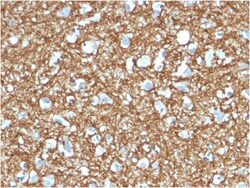
Biotium p14ARF(4C6/4), Biotin conjugate, 0.1mg/mL
The progression of cells through the cell cycle is regulated by a family of proteins designated cyclin-dependent kinases (Cdks). Sequential activation of individual members of this family and their consequent phosphorylation of critical substrates promotes orderly progression through the cell cycle. Multiple proteins are encoded by the tumor suppressor gene CDKN2A (MTS1/ p16INK4a) via translation of alternate reading frames, resulting in the pro- duction of the p19 ARF protein in mice and the p14 ARF protein in humans. p14 ARF induces an increase in MDM2 and p21 levels and leads to cell cycle arrest in both G1 and G2/M. p14 ARF is negatively regulated by p53 and is known to bind directly to MDM2. CDKN2A also encodes the mitotic protein p16, which binds to and inhibits the Cdk4/cyclin D complex. Primary antibodies are available purified, or with a selection of fluorescent CF Dyes and other labels. CF Dyes offer exceptional brightness and photostability. Note: Conjugates of blue

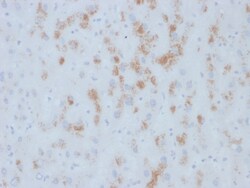
Biotium Cytochrome p450(M12P4H2), CF740 conjugate, 0.1mg/mL
This gene encodes a member of the cytochrome P450 superfamily of enzymes. The cytochrome P450 proteins are monooxygenases, which catalyze many reactions involved in drug metabolism and synthesis of cholesterol, steroids and other lipids. This protein localizes to the endoplasmic reticulum and is induced by ethanol, the diabetic state, and starvation. The enzyme metabolizes both endogenous substrates, such as ethanol, acetone, and acetal, as well as exogenous substrates including benzene, carbon tetrachloride, ethylene glycol, and nitrosamines, which are pre-mutagens found in cigarette smoke. Due to its many substrates, this enzyme may be involved in such varied processes as gluconeogenesis, hepatic cirrhosis, diabetes, and cancer. Primary antibodies are available purified, or with a selection of fluorescent CF Dyes and other labels. CF Dyes offer exceptional brightness and photostability. Note: Conjugates of blue fluorescent dyes like CF405S and CF405M are not recommended for
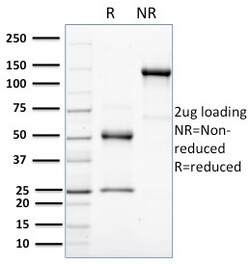
Biotium HER-4 / ERBB4(HFR-1), CF740 conjugate, 0.1mg/mL
The EGF receptor family comprises several related receptor tyrosine kinases that are frequently overexpressed in a variety of carcinomas. Members of this receptor family include EGFR (HER1), Neu (ErbB-2, HER2), ErbB-3 (HER3) and ErbB-4 (HER4), which form either homodimers or heterodimers upon ligand binding. The gene encoding ErbB-4 is expressed as a full-length protein, which produces a short membrane-anchored cytoplasmic domain fragment and a long ectodomain fragment. The short fragment is heavily tyrosine phosphorylated and possesses tyrosine kinase catalytic activity toward an exogenous substrate. Proteolytic cleavage of ErbB-4 is promoted by the binding of heregulin. ErbB-4 is involved in cell proliferation and differentiation and its expression is highest in breast carcinoma cell lines, normal skeletal muscle, heart, pituitary, brain and cerebellum. Its expression in breast cancer, pediatric brain cancer and other types of carcinomas has been reported in studies which sugges
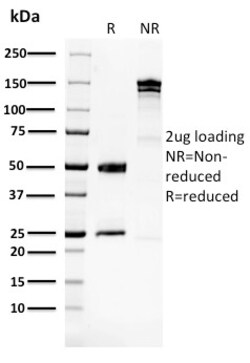
Biotium Glucose 6-Phosphate Isomerase(CPTC-GPI-1), Biotin conjugate, 0.1mg/mL
Besides its role as a glycolytic enzyme, mammalian GPI can function as a tumor-secreted cytokine and an angiogenic factor (AMF) that stimulates endothelial cell motility. GPI is also a neurotrophic factor (Neuroleukin) for spinal and sensory neurons. Defects in GPI are the cause of hemolytic anemia non-spherocytic due to glucose phosphate isomerase deficiency.Primary antibodies are available purified, or with a selection of fluorescent CF Dyes and other labels. CF Dyes offer exceptional brightness and photostability. Note: Conjugates of blue fluorescent dyes like CF405S and CF405M are not recommended for detecting low abundance targets, because blue dyes have lower fluorescence and can give higher non-specific background than other dye colors.
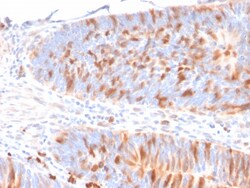
Biotium MBD1 (Methyl-CpG Binding Domain Protein 1)(CPTC-MBD1-1), 0.2mg/mL
DNA methylation is the major modification of eukaryotic genomes and plays an essential role in mammalian development. Human proteins MECP2, MBD1, MBD2, MBD3, and MBD4 comprise a family of nuclear proteins related by the presence in each of a methyl-CpG binding domain (MBD). Each of these proteins, with the exception of MBD3, is capable of binding specifically to methylated DNA. MECP2, MBD1 and MBD2 can also repress transcription from methylated gene promoters. MBD1 has also been predicted to be involved in the development and progression of tumors, and it has been shown that MBD1 is significantly upregulated in pancreatic cancer tissues when compared with surrounding normal tissues. Furthermore, MBD1 may serve as a potential therapeutic target for pancreatic cancer. Primary antibodies are available purified, or with a selection of fluorescent CF Dyes and other labels. CF Dyes offer exceptional brightness and photostability. Note: Conjugates of blue fluorescent dyes like CF405S


Meridian Life Science MAB TO VEROTOXIN II (SLT-2A)
Verotoxin II (Shiga-Like) A Subunit (SLT-2a, STX-2a)

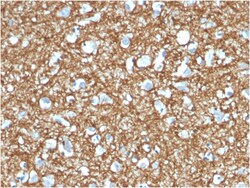
Biotium p14ARF(4C6/4), CF740 conjugate, 0.1mg/mL
The progression of cells through the cell cycle is regulated by a family of proteins designated cyclin-dependent kinases (Cdks). Sequential activation of individual members of this family and their consequent phosphorylation of critical substrates promotes orderly progression through the cell cycle. Multiple proteins are encoded by the tumor suppressor gene CDKN2A (MTS1/ p16INK4a) via translation of alternate reading frames, resulting in the pro- duction of the p19 ARF protein in mice and the p14 ARF protein in humans. p14 ARF induces an increase in MDM2 and p21 levels and leads to cell cycle arrest in both G1 and G2/M. p14 ARF is negatively regulated by p53 and is known to bind directly to MDM2. CDKN2A also encodes the mitotic protein p16, which binds to and inhibits the Cdk4/cyclin D complex. Primary antibodies are available purified, or with a selection of fluorescent CF Dyes and other labels. CF Dyes offer exceptional brightness and photostability. Note: Conjugates of blue
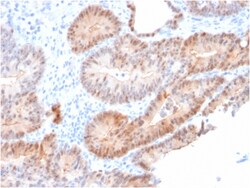
Biotium Aldo-keto Reductase Family 1 Member C2 / DD2(CPTC-AKR1C2-1), 0.2mg/mL
Aldo-keto Reductase Family 1 Member C2 (AKR1C2), also known as Dihydrodiol Dehydrogenase 2 (DDH2), is a member of the aldo/keto reductase superfamily, which consists of more than 40 known enzymes and proteins. These enzymes catalyze the conversion of aldehydes and ketones to their corresponding alcohols by utilizing NADH and/or NADPH as cofactors. The enzymes display overlapping but distinct substrate specificity. This enzyme catalyzes the reaction of progesterone to the inactive form 20-alpha-hydroxy-progesterone. Primary antibodies are available purified, or with a selection of fluorescent CF Dyes and other labels. CF Dyes offer exceptional brightness and photostability. Note: Conjugates of blue fluorescent dyes like CF405S and CF405M are not recommended for detecting low abundance targets, because blue dyes have lower fluorescence and can give higher non-specific background than other dye colors.
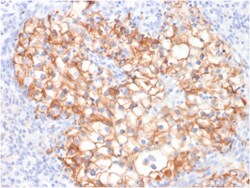
Biotium Ksp-Cadherin / CDH16 (Renal Cell Marker)(CDH16/2125), 0.2mg/mL
This MAb recognizes a protein of 130 kDa, identified as Ksp-cadherin. Cadherins form a superfamily of related glycoproteins that mediate calcium-dependent cell adhesion and transmit signals from the extracellular matrix to the cytoplasm. Cadherins have been implicated in embryogenesis, tissue morphogenesis, tissue structure maintenance, cell polarization, neoplastic invasiveness and metastasis, and membrane transport. It is suggested that Ksp-cadherin is a marker for terminal differentiation of the basolateral membranes of renal tubular epithelial cells. Within the kidney, Ksp-Cadherin is found exclusively in the basolateral membrane of renal tubular epithelial cells and collecting duct cells, and not in glomeruli, renal interstitial cells, or blood vessels. Ksp-Cadherin has been suggested to distinguish Chromophobe Renal-Cell Carcinoma from Oncocytoma. Primary antibodies are available purified, or with a selection of fluorescent CF Dyes and other labels. CF Dyes offer exception
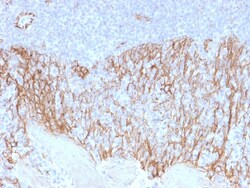
Biotium Catenin, beta (p120)(CTNNB1/2099), 0.2mg/mL
Beta-catenin associates with the cytoplasmic portion of E-cadherin. The catenin/cadherin complexes play an important role mediating cellular adhesion, including adherens junctions. Beta-catenin is involved in the Wnt signaling pathway as well as other signaling pathways, and is also found in complexes with many different proteins including the tumor suppressor protein APC. Defects in beta-catenin are associated with colorectal cancer, as well as many other cancer types. Beta-catenin is normally localized to the cell membrane, but can translocate to the nucleus in response to certain cell signaling. Primary antibodies are available purified, or with a selection of fluorescent CF Dyes and other labels. CF Dyes offer exceptional brightness and photostability. Note: Conjugates of blue fluorescent dyes like CF405S and CF405M are not recommended for detecting low abundance targets, because blue dyes have lower fluorescence and can give higher non-specific background than other dye
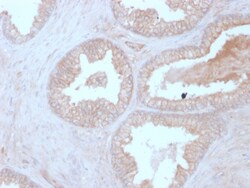
Biotium Calcineurin B / PPP3R1(CALNB/2342), 0.2mg/mL
This antibody recognizes the Calcineurin B alpha protein, encoded by the PPP3R1 (Protein Phosphatase 3 Regulatory Subunit B Alpha) gene. Calcineurin is an enzyme that dephosphorylates serine and threonine residues in proteins. It is a heterodimer of a 59 kDa catalytic A subunit and a 19 kDa regulatory B subunit that is activated by the binding of calcium ions and calmodulin. Calcineurin is expressed in many tissues, but its levels are highest in the brain, where it may play a role in learning and memory. It has many substrates, including NFAT, a transcription factor that is activated by dephosphorylation. Complexes of the immuno-suppressants cyclosporine and FK506 with immunophilin proteins such as cyclophilin and FKBP12 are potent and specific inhibitors of Calcineurin activity. Alterations in Calcineurin activity are suspected to play a role in cardiac hypertrophy and graft versus host disease in organ transplantation. Primary antibodies are available purified, or with a selecti