
Mouse Secondary Antibodies

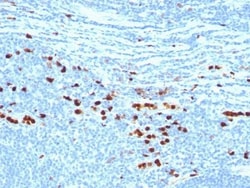
Biotium Calgranulin B / MRP-8/-14 / MAC 387 / S100A8/A9 / Macrophage Ag(MAC387), CF740 conjugate, 0.1mg/mL
Calprotectin is a heteroduplex of Protein S100-A8/A9 (also called MRP-8/14, or Calgranulin A/B). This antibody recognizes the 14 kDa B component (Protein S100-A9) of the complex. Protein S100-A9 is a member of the S100 family of proteins containing 2 EF-hand calcium-binding motifs. Altered expression of this protein is associated with the disease cystic fibrosis. This antibody reacts with neutrophils, monocytes, macrophages, and squamous mucosal epithelia and has been shown as an important marker for identifying macrophages in tissue sections.Primary antibodies are available purified, or with a selection of fluorescent CF Dyes and other labels. CF Dyes offer exceptional brightness and photostability. Note: Conjugates of blue fluorescent dyes like CF405S and CF405M are not recommended for detecting low abundance targets, because blue dyes have lower fluorescence and can give higher non-specific background than other dye colors.

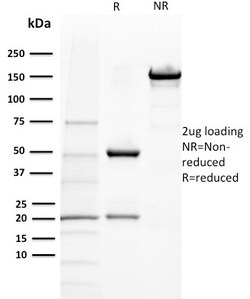
Biotium BAP1 (BRCA1 Associated Protein 1)(BAP1/2432), Biotin conjugate, 0.1mg/mL
The BRCA 1 Associated Protein 1 (BAP1) protein belongs to the ubiquitin C-terminal hydrolase subfamily of de-ubiquitination enzymes that are involved in the removal of ubiquitin from proteins. The encoded enzyme binds to the breast cancer type 1 susceptibility protein (BRCA1) via the RING finger domain of the latter and acts as a tumor suppressor. In addition, the enzyme may be involved in regulation of transcription, regulation of cell cycle and growth, response to DNA damage and chromatin dynamics. Germ line mutations in this gene may be associated with tumor predisposition syndrome (TPDS), which involves increased risk of cancers including malignant mesothelioma, Uveal melanoma and cutaneous melanoma. Primary antibodies are available purified, or with a selection of fluorescent CF Dyes and other labels. CF Dyes offer exceptional brightness and photostability. Note: Conjugates of blue fluorescent dyes like CF405S and CF405M are not recommended for detecting low abundan
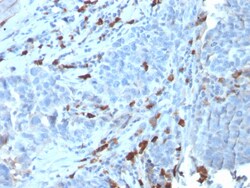
Biotium Human IgM (Immunoglobulin Mu Heavy Chain) (B-Cell Marker)(IGHM/3135R), Biotin conjugate, 0.1mg/mL
Recognizes a protein of 75 kDa, identified as mu heavy chain of human immunoglobulins. It does not cross-react with alpha (IgA), gamma (IgG), epsilon (IgE), or delta (IgD), heavy chains, T-cells, monocytes, granulocytes, or erythrocytes. Monomeric IgM is expressed as a membrane bound antibody on the surface of B cells and as a pentamer when secreted by plasma cells. IgM antibody is prominent in early immune responses to most antigens. Aberrant levels are associated with immune deficiency states, hereditary deficiencies, myeloma, Waldenstrom's macroglobulinemia, chronic infection and hepatocellular disease. This MAb is useful in the identification of leukemias, plasmacytomas, and certain non-Hodgkin's lymphomas. The most common feature of these malignancies is the restricted expression of a single heavy chain class. Demonstration of clonality in lymphoid infiltrates indicates that the infiltrate is clonal and therefore malignant. Primary antibodies are available purified, or w
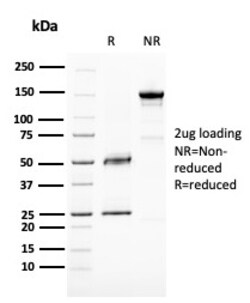
Biotium BAP1 (BRCA1 Associated Protein 1)(BAP1/2667), CF740 conjugate, 0.1mg/mL
The BRCA 1 Associated Protein 1 (BAP1) protein belongs to the ubiquitin C-terminal hydrolase subfamily of de-ubiquitination enzymes that are involved in the removal of ubiquitin from proteins. The encoded enzyme binds to the breast cancer type 1 susceptibility protein (BRCA1) via the RING finger domain of the latter and acts as a tumor suppressor. In addition, the enzyme may be involved in regulation of transcription, regulation of cell cycle and growth, response to DNA damage and chromatin dynamics. Germ line mutations in this gene may be associated with tumor predisposition syndrome (TPDS), which involves increased risk of cancers including malignant mesothelioma, Uveal melanoma and cutaneous melanoma. Primary antibodies are available purified, or with a selection of fluorescent CF Dyes and other labels. CF Dyes offer exceptional brightness and photostability. Note: Conjugates of blue fluorescent dyes like CF405S and CF405M are not recommended for detecting low abundan
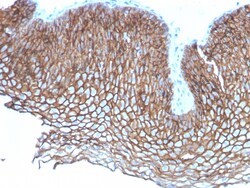
Biotium Desmoglein-3 (Squamous Cell Marker)(DSG3/2837), 1mg/mL
Recognizes a protein of 130 kDa, identified as Desmoglein-3 (DSG3). This MAb is highly specific to Desmoglein-3 and does not cross-react with other members of the Desmoglein-family. DSG3 is a calcium-binding transmembrane glycoprotein component of desmosomes in vertebrate epithelial cells. Research has shown that DSG3 has a very high sensitivity (80%) and specificity (100%) in recognizing squamous cell carcinoma (SqCC). Therefore, DSG3 is considered a very important marker for lung SqCC and can be a useful ancillary marker to separate SqCC from other subtypes of lung cancer. Moreover, studies have shown that DSG3 expression in lung SqCC may indicate a poor prognosis. Primary antibodies are available purified, or with a selection of fluorescent CF Dyes and other labels. CF Dyes offer exceptional brightness and photostability. Note: Conjugates of blue fluorescent dyes like CF405S and CF405M are not recommended for detecting low abundance targets, because blue dyes have low

Biotium AMACR / p504S (Prostate Cancer Marker) (AMACR/2748R), CF568 conjugate, 0.1mg/mL
This antibody recognizes a protein of 42 kDa, which is identified as Alpha-methylacyl-CoA Racemase (AMACR), also known as p504S. It is an enzyme that is involved in bile acid biosynthesis and betbeta-oxidation of branched-chain fatty acids. AMACR is essential in lipid metabolism. It is expressed in cells of premalignant high-grade prostatic intraepithelial neoplasia (HGPIN) and prostate adenocarcinoma. The majority of the carcinoma cells show a distinct granular cytoplasmic staining reaction. AMACR is present at low or undetectable levels in glandular epithelial cells of normal prostate and benign prostatic hyperplasia. A spotty granular cytoplasmic staining is seen in a few cells of the benign glands. AMACR is expressed in normal liver (hepatocytes), kidney (tubular epithelial cells) and gall bladder (epithelial cells). Expression has also been found in lung (bronchial epithelial cells) and colon (colonic surface epithelium). AMACR expression can also be found in hepatocellular c
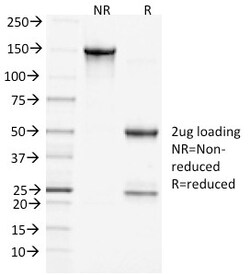
Biotium Clathrin, Heavy Chain(CHC/1432), CF568 conjugate, 0.1mg/mL
Recognizes protein of 192 kDa, which is identified as Clathrin Heavy Chain. Clathrin is composed of three heavy chains and three light chains, which associate non-covalently to form a triskelion structure. Clathrin heavy chain (HC) is composed of a terminal globular domain, a distal segment and a proximal segment containing a light chain-binding site. The proximal segment of the Clathrin HC protein is essential for interactions between Clathrin heavy chains and light chains, which result in the formation of the triskelion structure. Primary antibodies are available purified, or with a selection of fluorescent CF Dyes and other labels. CF Dyes offer exceptional brightness and photostability. Note: Conjugates of blue fluorescent dyes like CF405S and CF405M are not recommended for detecting low abundance targets, because blue dyes have lower fluorescence and can give higher non-specific background than other dye colors.
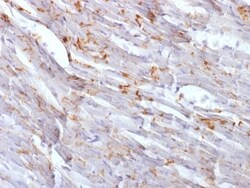
Biotium N-Cadherin / Cadherin-2 / CD325 (NCAD) (CDH2/1573), CF488A conjugate, 0.1mg/mL
This antibody recognizes a protein of ~140 kDa, identified as N-Cadherin (NCAD), also known as CD325. N-cadherin is a 140 kDa protein belonging to a family of transmembrane molecules that mediate calcium-dependent intercellular adhesion. Cadherins are involved in controlling morphogenetic movements during development and regulate cell surface adhesion through homotypic adhesion with the same cadherin species. Expression of N-cadherin has been reported on a variety of normal tissues including neuronal, endothelial and muscle cells, and a subpopulation of early hematopoietic progenitor cells. Results aid in the classification of malignant non-carcinomatous neoplasms including mesotheliomas, chordomas, synovial sarcomas, malignant melanomas, epithelioid sarcomas, epithelioid angiosarcomas, clear cell sarcomas as well as serous and endometrioid tumors of the ovary have been demonstrated to be N-cadherin positive, whereas mucinous tumors are negative. Other N-cadherin-positive neo
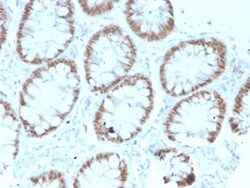
Biotium CDX2 / Caudal Type Homeobox 2 (GI Epithelial Marker)(rCDX2/1690), 0.2mg/mL
The intestine-specific transcription factors CDX1 and CDX2 are important for directing intestinal development, differentiation, proliferation and maintenance of the intestinal phenotype. CDX2 protein expression has been seen in GI carcinomas. Anti-CDX2 has been useful to establish GI origin of metastatic adenocarcinomas and carcinoidsand is especially useful to distinguish metastatic colorectal adenocarcinoma from lung adenocarcinoma. However, mucinous carcinomas of the ovary also express CDX2 protein. It limits the usefulness of this marker in the distinction of metastatic colorectal adenocarcinoma from mucinous carcinoma of the ovary. Primary antibodies are available purified, or with a selection of fluorescent CF Dyes and other labels. CF Dyes offer exceptional brightness and photostability. Note: Conjugates of blue fluorescent dyes like CF405S and CF405M are not recommended for detecting low abundance targets, because blue dyes have lower fluorescence and can give hi
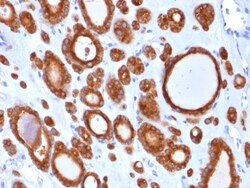
Biotium TPO (Thyroid Peroxidase) (Thyroid Marker)(TPO/1921), CF568 conjugate, 0.1mg/mL
Thyroperoxidase (TPO) is a 933 amino acid, type I transmembrane glycoprotein that plays a key role in thyroid gland function and autoimmunity. It is present as a dimer on the apical surface of thyroid follicular cells. TPO functions in the iodination of tyrosine residues in thyroglobulin and phenoxy-ester formation between pairs of iodinated tyrosines to generate the thyroid hormones, thyroxine and triiodothyronine. Mutations in this gene are associated with several disorders of thyroid hormonogenesis, including congenital hypothyroidism, congenital goiter, and thyroid hormone organification defect IIA. Malignant thyroid tumors exhibit an anomaly in TPO resulting in lower affinity for anti-TPO. This antibody may aid in the differentiation between benign and malignant thyroid tumors. Primary antibodies are available purified, or with a selection of fluorescent CF Dyes and other labels. CF Dyes offer exceptional brightness and photostability. Note: Conjugates of blue fluores
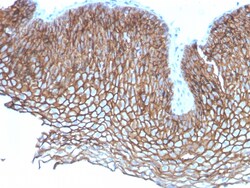
Biotium Desmoglein-3 (Squamous Cell Marker)(DSG3/2837), CF568 conjugate, 0.1mg/mL
Recognizes a protein of 130 kDa, identified as Desmoglein-3 (DSG3). This MAb is highly specific to Desmoglein-3 and does not cross-react with other members of the Desmoglein-family. DSG3 is a calcium-binding transmembrane glycoprotein component of desmosomes in vertebrate epithelial cells. Research has shown that DSG3 has a very high sensitivity (80%) and specificity (100%) in recognizing squamous cell carcinoma (SqCC). Therefore, DSG3 is considered a very important marker for lung SqCC and can be a useful ancillary marker to separate SqCC from other subtypes of lung cancer. Moreover, studies have shown that DSG3 expression in lung SqCC may indicate a poor prognosis. Primary antibodies are available purified, or with a selection of fluorescent CF Dyes and other labels. CF Dyes offer exceptional brightness and photostability. Note: Conjugates of blue fluorescent dyes like CF405S and CF405M are not recommended for detecting low abundance targets, because blue dyes have low
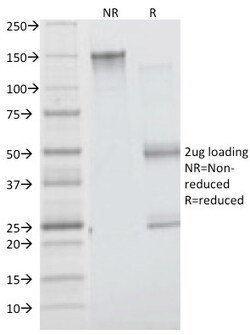
Biotium Insulin Receptor Alpha(INSR/1661), 1mg/mL
The insulin receptor (INSR) is a heterodimeric protein complex that has an intracellular subunit, which is disulfide-linked to a transmembrane segment. The insulin ligand binds to the INSR and initiates molecular signaling pathways that promote glucose uptake in cells and glycogen synthesis. Insulin binding to INSR induces phosphorylation of intra-cellular tyrosine kinase domains and recruitment of multiple SH2 and SH3 domain-containing intracellular proteins that serve as signaling intermediates for pleiotropic effects of insulin. Type 1 diabetes is an autoimmune condition of the endocrine pancreas that results in destruction of insulin secreting cells and a progressive loss in insulin-sensitive glucose uptake by cells. Primary antibodies are available purified, or with a selection of fluorescent CF Dyes and other labels. CF Dyes offer exceptional brightness and photostability. Note: Conjugates of blue fluorescent dyes like CF405S and CF405M are not recommended for dete
Biotium Adiponectin (Marker of Obesity) (ADPN/1370), CF568 conjugate, 0.1mg/mL
Adiponectin is an adipocytokine, hormones produced in adipose tissue. Adiponectin is abundantly present in plasma and has insulin like effect on glucose levels in the blood. Plasma adiponectin levels are low in insulin resistant patients who are obese, have diabetes mellitus type 2 or HIV-lipodystrophy. In women adiponectin levels tend to be higher than in men, which may be due to androgens suppressing adiponectin levels. Furthermore adiponectin and leptin are both indicated in regulating body weight through direct action on the hypothalamus, influencing appetite. Obese people have low adiponectin levels while levels in anorexia patients are high. Adiponectin acts as ligand for various receptors, two of which have been identified, one probably involved in carbohydrate assimilation, the other in tuning the rate of metabolism.Primary antibodies are available purified, or with a selection of fluorescent CF Dyes and other labels. CF Dyes offer exceptional brightness and photostabi
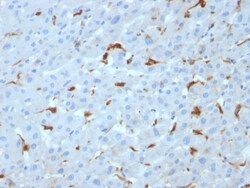
Biotium C1QA / Complement C1q A-Chain(C1QA/2953), CF740 conjugate, 0.1mg/mL
Complement C1q A Chain (C1qa) is a subunit of C1q. C1q is composed of 6 polypeptide chains each of C1qa, C1qb, and C1qc. C1q is a component of the classical complement pathway, and thereby plays an important role in the immune response. Each C1q subunit contains an N-terminal collagen-like region and a C-terminal C1q globular domain. The presence of receptors for C1q on effector cells modulates its activity, which may be antibody-dependent or independent. Macrophages are the primary source of C1q, while anti-inflammatory drugs as well as cytokines differentially regulate expression of the mRNA as well as the protein. C1q deficiency is associated with lupus erythematosus and glomerulonephritis. Primary antibodies are available purified, or with a selection of fluorescent CF Dyes and other labels. CF Dyes offer exceptional brightness and photostability. Note: Conjugates of blue fluorescent dyes like CF405S and CF405M are not recommended for detecting low abundance targets,
Biotium BRCA1 (Breast Marker) (BRCA1/1472), CF568 conjugate, 0.1mg/mL
BRCA1 is a nuclear phosphoprotein that plays a role in maintaining genomic stability, and it also acts as a tumor suppressor. It combines with other tumor suppressors, DNA damage sensors, and signal transducers to form a large multi-subunit protein complex known as the BRCA1-associated genome surveillance complex (BASC). BRCA1 associates with RNA polymerase II, and through the C-terminal domain, also interacts with histone deacetylase complexes. This protein thus plays a role in transcription, DNA repair of double-stranded breaks, and recombination. Mutations in this gene are responsible for approximately 40% of inherited breast cancers and more than 80% of inherited breast and ovarian cancers. Primary antibodies are available purified, or with a selection of fluorescent CF Dyes and other labels. CF Dyes offer exceptional brightness and photostability. Note: Conjugates of blue fluorescent dyes like CF405S and CF405M are not recommended for detecting low abundance targets, b