
Mouse Secondary Antibodies

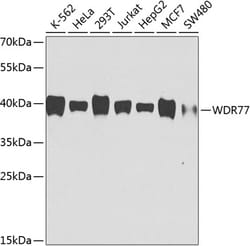
ABclonal Technology WDR77 Mouse mAb

The protein encoded by this gene is an androgen receptor coactivator that forms a complex with protein arginine methyltransferase 5, which modifies specific arginines to dimethylarginines in several spliceosomal Sm proteins. The encoded protein may be involved in the early stages of prostate cancer, with most of the protein being nuclear-localized in benign cells but cytoplasmic in cancer cells. Several transcript variants encoding different isoforms have been found for this gene.


Biotium Tal1(TAL1/3146), CF488A conjugate, 0.1mg/mL
Activation of TAL1 characterizes up to 60% of cases of human T cell acute lymphoblastic leukemia, making it the most frequent gain-of-function mutation observed in this disorder. TAL1 (also designated SCL) is a serine phosphoprotein and basic helix-loop-helix transcription factor known to regulate embryonic hematopoiesis. This transcription factor binds as a heterodimer with E2A and HEB/HTF4 to a nucleotide sequence motif termed the E-box. In addition, leukemogenesis is accelerated dramatically by transgenic co-expression of TAL1 and the catalytic subunit of casein kinase II, a serine/threonine protein kinase known to modulate the activity of other HLH transcription factors. Primary antibodies are available purified, or with a selection of fluorescent CF Dyes and other labels. CF Dyes offer exceptional brightness and photostability. Note: Conjugates of blue fluorescent dyes like CF405S and CF405M are not recommended for detecting low abundance targets, because blue dyes
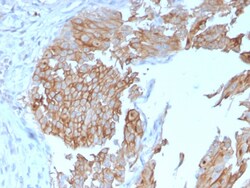
Biotium Uroplakin 1B (Urothelial Differentiation Marker)(UPK1B/3102), CF568 conjugate, 0.1mg/mL
The protein encoded by this gene is a member of the transmembrane 4 superfamily, also known as the tetraspanin family. Most of these members are cell-surface proteins that are characterized by the presence of four hydrophobic domains. The proteins mediate signal transduction events that play a role in the regulation of cell development, activation, growth and motility. This encoded protein is found in the asymmetrical unit membrane (AUM) where it can form a complex with other transmembrane 4 superfamily proteins. It may play a role in normal bladder epithelial physiology, possibly in regulating membrane permeability of superficial umbrella cells or in stabilizing the apical membrane through AUM/cytoskeletal interactions. UPK1B is expressed by terminally differentiated urothelial cells. Primary antibodies are available purified, or with a selection of fluorescent CF Dyes and other labels. CF Dyes offer exceptional brightness and photostability. Note: Conjugates of blue fluo

Biotium CD84(153-4D9), CF594 conjugate, 0.1mg/mL
Recognizes a protein of 74 kDa, identified as CD84. It is expressed on mature B cells and on B-cell lines, including pre-B-cell lines, but not on plasma cell lines. Immunohistochemical studies demonstrated that CD84 strongly expressed on tissues macrophages. CD84 is also highly expressed on platelets and, at low levels on peripheral blood T cells. It is a highly N-glycosylated protein and belongs to immunoglobulin superfamily. It may play a role in leukocyte activation.Primary antibodies are available purified, or with a selection of fluorescent CF Dyes and other labels. CF Dyes offer exceptional brightness and photostability. Note: Conjugates of blue fluorescent dyes like CF405S and CF405M are not recommended for detecting low abundance targets, because blue dyes have lower fluorescence and can give higher non-specific background than other dye colors.
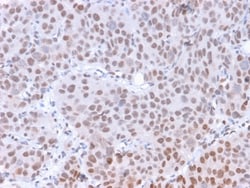
Biotium RNA Polymerase II CTD Repeat YSPTSPS (Phospho S5)(CTD 8A7), 0.2mg/mL
RNA polymerase II (Pol II) is an enzyme that is composed of 12 subunits and is responsible for the transcription of protein-coding genes. Transcription initiation requires Pol II-mediated recruitment of transcription machinery to a target promoter, thereby allowing transcription to begin. The largest subunit of Pol II (referred to as RPB1 or RPB205) is a 1,840 amino acid protein that contains one C2H2-type zinc finger and a C-terminal domain comprised of several heptapeptide repeats. Although Pol II function requires the cooperation of all twelve subunits, the largest subunit conveys Pol II catalytic activity and, together with the second largest subunit, forms the active center of the Pol II enzyme. Additionally, the large subunit participates in forming the DNA-binding domain of Pol II, a groove that is necessary for transcription of the DNA template. Without proper function of the large subunit, mRNA synthesis and subsequent transcription elongation cannot occur.This a


Biotium Calcineurin A / PPP3CA(BF1.1), Biotin conjugate, 0.1mg/mL
This antibody recognizes the Calcineurin A alpha protein, encoded by the PPP3CA (Protein Phosphatase 3 Catalytic Subunit Alpha) gene. Calcineurin is an enzyme that dephosphorylates serine and threonine residues in proteins. It is a heterodimer of a 59 kDa catalytic A subunit and a 19 kDa regulatory B subunit that is activated by the binding of calcium ions and calmodulin. Calcineurin is expressed in many tissues, but its levels are highest in the brain, where it may play a role in learning and memory. It has many substrates, including NFAT, a transcription factor that is activated by dephosphorylation. Complexes of the immuno-suppressants cyclosporine and FK506 with immunophilin proteins such as cyclophilin and FKBP12 are potent and specific inhibitors of Calcineurin activity. Alterations in Calcineurin activity are suspected to play a role in cardiac hypertrophy and graft versus host disease in organ transplantation. Primary antibodies are available purified, or with a selection
Biotium MUC1 / CA15-3 / EMA / CD227 (Epithelial Marker) (MUC1/2729R), CF740 conjugate, 0.1mg/mL
In Western blotting, this antibody recognizes proteins in MW range of 265-400 kDa, identified as different glycoforms of EMA. It binds the DTRP epitope in the tandem repeats. The alpha subunit of EMA has cell adhesive properties. It can act both as an adhesion and an anti-adhesion protein. EMA may provide a protective layer on epithelial cells against bacterial and enzyme attack. The beta subunit contains a C-terminal domain, which is involved in cell signaling, through phosphorylations and protein-protein interactions. In immunohistochemical assays, it superbly stains routine formalin/paraffin carcinoma tissues. Antibody to EMA is useful as a pan-epithelial marker for detecting early metastatic loci of carcinoma in bone marrow or liver.Primary antibodies are available purified, or with a selection of fluorescent CF Dyes and other labels. CF Dyes offer exceptional brightness and photostability. Note: Conjugates of blue fluorescent dyes like CF405S and CF405M are not recommend
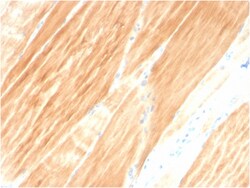
Biotium Sarcomeric Actinin Alpha 2 / ACTN2(ACTN2/3295), 0.2mg/mL
Alpha actinins belong to the spectrin gene superfamily which represents a diverse group of cytoskeletal proteins, including the alpha and beta spectrins and dystrophins. Alpha actinin is an actin-binding protein with multiple roles in different cell types. In non-muscle cells, the cytoskeletal isoform is found along microfilament bundles and adherens-type junctions, where it is involved in binding actin to the membrane. In contrast, skeletal, cardiac, and smooth muscle isoforms are localized to the Z-disc and analogous dense bodies, where they help anchor the myofibrillar actin filaments. This gene encodes a muscle-specific, alpha actinin isoform that is expressed in both skeletal and cardiac muscles. Several transcript variants encoding different isoforms have been found for this gene. Primary antibodies are available purified, or with a selection of fluorescent CF Dyes and other labels. CF Dyes offer exceptional brightness and photostability. Note: Conjugates of blue flu
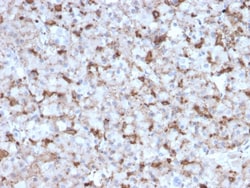
Biotium Prolactin (Pituitary Tumor Marker)(PRL/2643), 1mg/mL
Prolactin is a growth factor that is secreted by the anterior pituitary. It is necessary for the proliferation and differentiation of the mammary glands. Prolactin is useful in the classification of pituitary tumors and study of pituitary disease. It also plays a role in the development of mammary cancer, functioning dually as a mitogen and a differentiating agent. Primary antibodies are available purified, or with a selection of fluorescent CF Dyes and other labels. CF Dyes offer exceptional brightness and photostability. Note: Conjugates of blue fluorescent dyes like CF405S and CF405M are not recommended for detecting low abundance targets, because blue dyes have lower fluorescence and can give higher non-specific background than other dye colors.
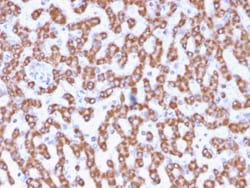
Biotium Prohibitin (Mitochondrial Marker)(PHB/3230), Biotin conjugate, 0.1mg/mL
Recognizes a protein of 30 kDa which is identified as Prohibitin, an evolutionarily conserved protein with homologues found in yeast to man. It is located in the inner membrane of mitochondria. Although prohibitin mRNA and protein expression occurs throughout the cell cycle, maximum levels are detected during the G1/S phase transition and minimum levels are seen in S phase and the G2/mitosis boundary. Prohibitin is located exclusively in the mitochondria with the highest concentration on the inner membrane. Prohibitin is an ideal mitochondrial marker. It shows antiproliferative activity and has been proposed to play a role in normal cell cycle regulation, replicative senescence, cellular immortalization, and tumor suppression. Primary antibodies are available purified, or with a selection of fluorescent CF Dyes and other labels. CF Dyes offer exceptional brightness and photostability. Note: Conjugates of blue fluorescent dyes like CF405S and CF405M are not recommended fo
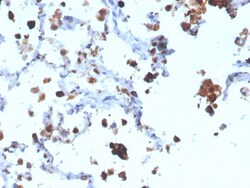
Biotium Napsin A (Lung Adenocarcinoma Marker)(NAPSA/3308), CF740 conjugate, 0.1mg/mL
Napsin is a pepsin-like aspartic proteinase connected with maturation of surfactant protein B. There are two closely related napsins, napsin A and napsin B. Napsin A is expressed as a single chain protein. Immunohistochemical studies revealed high expression levels of napsin A in human lung and kidney but low expression in spleen. Napsin A is expressed in type II pneumocytes and in adenocarcinomas of lung. The high specificity expression of napsin A in adenocarcinomas of lung is useful to distinguish primary lung adenocarcinomas from adenocarcinomas of other organs. Primary antibodies are available purified, or with a selection of fluorescent CF Dyes and other labels. CF Dyes offer exceptional brightness and photostability. Note: Conjugates of blue fluorescent dyes like CF405S and CF405M are not recommended for detecting low abundance targets, because blue dyes have lower fluorescence and can give higher non-specific background than other dye colors.
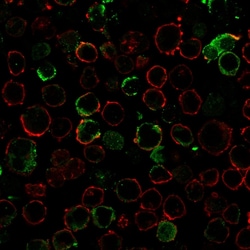
Biotium LMO2 (B-Cell Marker)(LMO2/3147R), CF568 conjugate, 0.1mg/mL
The LMO2 protein has a central and crucial role in hematopoietic development and is highly conserved. It has a particular function in normal and lymphatic endothelial cells involving the regulation of angiogenesis and lymph-angiogenesis. Immunohistochemical studies have also demonstrated expression of LMO2 in both normal germinal center B-cells and germinal center-derived B-cell lymphomas, including follicular lymphoma and diffuse large B-cell lymphoma. The use of anti-LMO2 is valuable as a tool in the identification of lymphomas of B-cell origin. LMO2 is useful in differentiating follicular lymphoma (LMO2 ) from nodal marginal zone lymphoma (LM02-). It also is positive in Hodgkin's and Burkitt's lymphomas. Primary antibodies are available purified, or with a selection of fluorescent CF Dyes and other labels. CF Dyes offer exceptional brightness and photostability. Note: Conjugates of blue fluorescent dyes like CF405S and CF405M are not recommended for detecting low abun
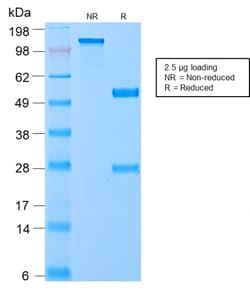
Biotium VLDL-Receptor (Very Low Density Lipoprotein Receptor)(VLDLR/2896R), CF647 conjugate, 0.1mg/mL
VLDLR (very low density lipoprotein receptor) is a member of the LDL receptor gene family, which includes LDL receptor, LRP, megalin, VLDLR and ApoER2. The LDL receptor family is characterized by a cluster of cysteine-rich class A repeats, epidermal growth factor (EGF)-like repeats, YWTD repeats and an O-linked sugar domain. VLDLR associates with RAP (receptor associated protein) during receptor folding, and RAP facilitates the secretion of the extracellular region of VLDLR. VLDLR is thought to mediate the interaction of extracellular Reelin and cytosolic mDab1 (mammalian disabled protein), which activates a tyrosine kinase. This pathway regulates the migration of neurons along the radial glial fiber network during brain development. Primary antibodies are available purified, or with a selection of fluorescent CF Dyes and other labels. CF Dyes offer exceptional brightness and photostability. Note: Conjugates of blue fluorescent dyes like CF405S and CF405M are not recomme
Biotium EGFR (Epidermal Growth Factor Receptor) (GFR/2968R), CF488A conjugate, 0.1mg/mL
This MAb recognizes a protein of 170 kDa, identified as EGFR. EGFR is type I receptor tyrosine kinase with sequence homology to erbB-1, -2, -3 -4 or HER-1, -2, -3 -4. It binds to Epidermal Growth Factor (EGF), Transforming Growth Factor-a (TGF-a), Heparin-binding EGF (HB-EGF), amphiregulin, betacellulin and epiregulin. EGFR is overexpressed in tumors of breast, brain, bladder, lung, gastric, head & neck, esophagus, cervix, vulva, ovary, and endometrium. It is predominantly present in squamous cell carcinomas.Primary antibodies are available purified, or with a selection of fluorescent CF Dyes and other labels. CF Dyes offer exceptional brightness and photostability. Note: Conjugates of blue fluorescent dyes like CF405S and CF405M are not recommended for detecting low abundance targets, because blue dyes have lower fluorescence and can give higher non-specific background than other dye colors.