
Mouse Secondary Antibodies


Biotium Mitochondrial Marker(MTC02), CF740 conjugate, 0.1mg/mL
This MAb recognizes a 60 kDa antigen associated with the mitochondria in human cells. It is a part of a new panel of reagents, which recognizes subcellular organelles or compartments of human cells. These markers may be useful in identification of these organelles in cells, tissues, and biochemical preparations. This MAb recognizes an antigen associated with the mitochondria in human cells only. It can be used to stain the mitochondria in cell or tissue preparations and can be used as a mitochondrial marker in subcellular fractions. It produces a spaghetti-like pattern in normal and malignant cells and may be used to stain mitochondria of cells in fixed or frozen tissue sections. It can also be used with paraformaldehyde fixed frozen tissue or cell preparations. This MAb is an excellent marker for human cells in xenographic model research. It reacts specifically with human cells, including neurons and embryonic stem cells.Primary antibodies are available purified, or with a s

Biotium Insulin(IRDN/794), CF740 conjugate, 0.1mg/mL
Recognizes a polypeptide which is identified as insulin, a 51-amino acid polypeptide composed of A and B chains connected through the C-peptide. Proinsulin, which has very little biological activity, is cleaved by proteases within its cell of origin into the insulin molecule and the C-terminal basic residue. Insulin enhances membrane transport of glucose, amino acids, and certain ions. It also promotes glycogen storage, formation of triglycerides, and synthesis of proteins and nucleic acids. Deficiency of insulin results in diabetes mellitus. The main storage site for insulin is the pancreatic islets. Antibodies to insulin are important as beta-cell and insulinoma marker.Primary antibodies are available purified, or with a selection of fluorescent CF Dyes and other labels. CF Dyes offer exceptional brightness and photostability. Note: Conjugates of blue fluorescent dyes like CF405S and CF405M are not recommended for detecting low abundance targets, because blue dyes have
Biotium Cytokeratin 14(KRT14/532), CF740 conjugate, 0.1mg/mL
Cytokeratin 14 (CK14) belongs to the type I (or A or acidic) subfamily of low molecular weight keratins and exists in combination with keratin 5 (type II or B or basic). CK14 is found in basal cells of squamous epithelia, some glandular epithelia, myoepithelium, and mesothelial cells. Anti-CK14 is useful in differentiating squamous cell carcinomas from poorly differentiated epithelial tumors. Anti-CK14 is one of the specific basal markers for distinguishing between basal and non-basal subtypes of breast carcinomas. Anti-CK14 is also a good marker for differentiation of intraductal from invasive salivary duct carcinoma by the positive staining of basal cells surrounding the in-situ neoplasm as well as for differentiation of benign prostate from prostate carcinoma. Furthermore, this antibody has been useful in separating oncocytic tumors of the kidney from its renal mimics, and in identifying metaplastic carcinomas of the breast.Primary antibodies are available purified, or wit
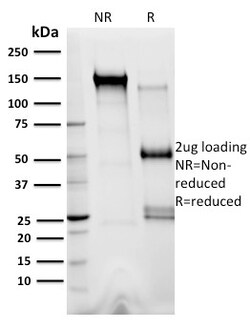
Biotium XRCC3(10F1/6), Biotin conjugate, 0.1mg/mL
The x-ray repair cross-complementing (XRCC) proteins are responsible for efficiently repairing and maintaining genetic stability following DNA base damage. These genes share sequence similarity with the yeast DNA repair protein Rad51. XRCC1 is a protein that facilitates the DNA base excision repair pathway by interacting with DNA ligase III and DNA polymerase to repair DNA single-strand breaks. XRCC2 and XRCC3 are both involved in maintaining chromosome stability during cell division. XRCC2 is required for efficient repair of DNA double-strand breaks by homologous recombination between sister chromatids, and XRCC3 interacts directly with Rad51 to cooperate with Rad51 during recombinational repair. XRCC4 is an accessory factor of DNA Ligase IV that preferentially binds DNA with nicks or broken ends. XRCC4 binds to DNA Ligase IV and enhances its joining activity, and it is also involved in V(D)J recombination. Any defect in one of the known components of the DNA repair/V(D)J re
Biotium Calponin-1(CNN1/832), CF740 conjugate, 0.1mg/mL
Calponin is a calmodulin, F-actin and tropomyosin binding protein, which is thought to be involved in the regulation of smooth muscle contraction. Calponin expression is restricted to smooth muscle cells and has been shown to be a marker of the differentiated (contractile) phenotype of developing smooth muscle. Multiple isoelectric variants of calponin have been identified, however only two molecular weight isoforms exist, a 34 kDa form and a 29 kDa form. Expression of the 29 kDa form, I-calponin, is primarily restricted to muscle of the urogenital tract, whereas the higher molecular weight variant has been demonstrated in vascular and visceral smooth muscle. In Western blotting, this MAb reacts with only the 34 kDa form of calponin in extracts of human aortic medial smooth muscle and is unreactive with fibroblast extracts of cultivated human foreskin. Primary antibodies are available purified, or with a selection of fluorescent CF Dyes and other labels. CF Dyes offer excep

Biotium Interferon gamma (IFNG)(G-23), CF740 conjugate, 0.1mg/mL
This antibody recognizes a protein of 20-25 kDa, identified as human interferon gamma (IFN-γ). Multiple forms exist due to variable glycosylation and under non-denaturing conditions due to dimers and tetramers. T lymphocytes and NK cells mainly produce IFN-γ. It is a pleiotropic cytokine involved in the regulation of nearly all phases of immune and inflammatory responses, including the activation, growth and differentiation of T cell, B cells, macrophages, NK cells and other cell types such as endothelial cells and fibroblasts. It has weak anti-viral and anti-proliferative activity, and potentiates the antiviral and anti-tumor effects of IFN-γ (type I interferon).Primary antibodies are available purified, or with a selection of fluorescent CF Dyes and other labels. CF Dyes offer exceptional brightness and photostability. Note: Conjugates of blue fluorescent dyes like CF405S and CF405M are not recommended for detecting low abundance targets, because blu

Biotium Progesterone(6-5E-3F), CF740 conjugate, 0.1mg/mL
This MAb is specific for progesterone. It exhibits minimal cross reactivity with related compounds in ELISA. It reacts with Progesterone-11a-HMS-BSA: 100%; 5-beta-Pregnane-3,20-dione: 48%; 5-alpha-Pregnane-3,20-dione: 26.4%; 17-alpha-Hydroxyprogesterone: 2.5%; 20-alpha-Hydroxyprogesterone: 0.04%. Progesterone is a steroid hormone synthesized from the cholesterol derivative, pregnenolone, in the cortex of the adrenal gland. Progesterone is secreted by the corpus luteum and acts to prepare the endometrium for the implantation of a fertilized egg. During pregnancy, it is secreted by the placenta to prevent spontaneous abortion and to stimulate the development of mammary tissue to produce milk. Thus, progesterone plays a central role in the reproductive events associated with the establishment and maintenance of pregnancy. Luteinized theca cells of normal ovary secrete progesterone. The determination of progesterone concentrations in the body fluids is of great value for endocrin
Biotium B7-H4 (Immuno-Inhibitory Protein) (B7H4/2652R), CF568 conjugate, 0.1mg/mL
B7-H4 (B7-homolog 4), belongs to the B7 immunoglobulin superfamily of ligand-lymphocyte interacting proteins. Expressed primarily on the membrane of lymphoid cells, B7-H4 is an immuno-inhibitory protein that interacts with receptors on the surface of T lymphocytes, thus mediating cellular and humoral immune responses. Overexpression of the B7-H4 protein is associated with certain malignancies, including ovarian and breast cancer, as its interaction with T cells suppresses tumor-associated immunity. Current research suggests that, similar to Mucin 16 (CA-125), B7-H4 may be a useful biomarker for the early detection of ovarian cancer.Primary antibodies are available purified, or with a selection of fluorescent CF Dyes and other labels. CF Dyes offer exceptional brightness and photostability. Note: Conjugates of blue fluorescent dyes like CF405S and CF405M are not recommended for detecting low abundance targets, because blue dyes have lower fluorescence and can give higher non-s
Biotium BOB.1 (B-Cell Marker) (BOB1/2425), CF740 conjugate, 0.1mg/mL
BOB-1 is a transcriptional coactivator that specifically associates with either POU2F1/OCT1 or POU2F2/OCT2, boosting the promoter activity of those complexes. It is essential for the response of B-cells to antigens, required for the formation of germinal centers, and regilates IL-6 expression. BOB-1 expression in a variety of established B-cell lines, representing different stages of B-cell development, has suggested a constitutive, B-cell-specific expression pattern. LP cells in nodular lymphocyte predominant Hodgkin lymphoma, because they are germinal center-derived, are consistently immuno-positive for BOB-1. Conversely, only some cases of classical Hodgkin lymphoma show BOB-1 immuno-reactivity within the Hodgkin and Reed-Sternberg cells. Expression of BOB-1 has been reported in follicular center cell lymphoma, diffuse large B-cell lymphoma and some cases of acute myeloid leukemia. B-CLL, marginal zone lymphoma, and mantle cell lymphoma may show weak to moderate immunoreactivit
Biotium Thyroglobulin (Thyroidal Cell Marker) (rTGB24), 0.2mg/mL
Thyroglobulin is a 660 kDa dimeric pre-protein with multiple glycosylation sites. It is produced by and processed within the thyroid gland to produce the hormone thyroxine and triiodothyronine. Prior to forming dimers, thyroglobulin monomers undergo conformational maturation in the endoplasmic reticulation. The vast majority of follicular carcinomas of the thyroid will give positive immunoreactivity for anti-thyroglobulin even though sometimes only focally. Poorly differentiated carcinomas of the thyroid are frequently anti-thyroglobulin negative. Adenocarcinomas of other-than-thyroid origin do not react with this antibody. This antibody is useful in identification of thyroid carcinoma of the papillary and follicular types. Presence of thyroglobulin in metastatic lesions establishes the thyroid origin of tumor. Anti-thyroglobulin, combined with anti-calcitonin, can identify medullary carcinomas of the thyroid. Furthermore, anti-thyroglobulin, combined with anti-TTF1, can be a
Biotium Mammaglobin (SCGB2A2) (Breast Cancer Marker) (MGB1/2000), CF568 conjugate, 0.1mg/mL
Mammaglobin is a 93 amino acid glycoprotein with homology to other secretoglobin-uteroglobin family members. It was originally identified as a breast cancer restricted biomarker by differential screening. Mammaglobin related to secretoglobin family that includes human uteroglobin and lipophilin. Mammaglobin antibody stains cytoplasm of normal breast epithelial cells as well as primary and metastatic breast carcinomas. Mammaglobin expression is absent in prostate, kidney, colon, rectum, small intestine, stomach, pancreas, lung, and thyroid tissues. Mammaglobin may be used as part of an immunohistochemical panel for determination of metastatic breast carcinoma and tumor of unknown primary origin.Primary antibodies are available purified, or with a selection of fluorescent CF Dyes and other labels. CF Dyes offer exceptional brightness and photostability. Note: Conjugates of blue fluorescent dyes like CF405S and CF405M are not recommended for detecting low abundance targets, beca
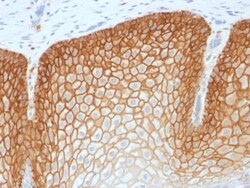
Biotium CD44v4 (Marker of Tumor Metastasis) (CD44v4/1700R), 0.2mg/mL
This antibody recognizes an epitope encoded by exon v4 on the variant portion of human CD44. The CD44 molecule belongs to a family of cellular adhesion molecules found on a wide range of normal and malignant cells in epithelial, mesothelial and hemopoiesis tissues. CD44 is a single gene with 20 exons, of which 10 are normally expressed to encode the basic CD44 (H-CAM) molecule. The additional 10 exons (v1 to v10) are only expressed by alternative splicing of the nuclear RNA. The expression of specific cell adhesion molecule CD44 splice variants has been reported to be associated with metastasis in certain human malignancies.Primary antibodies are available purified, or with a selection of fluorescent CF Dyes and other labels. CF Dyes offer exceptional brightness and photostability. Note: Conjugates of blue fluorescent dyes like CF405S and CF405M are not recommended for detecting low abundance targets, because blue dyes have lower fluorescence and can give higher non-spec
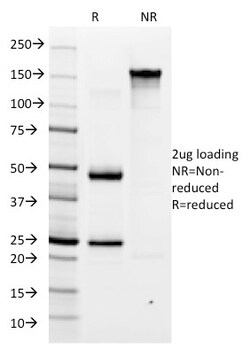
Biotium Helicobacter pylori(HP/1335), 1mg/mL
The spiral shaped bacterium Helicobacter pyloriis strongly associated with inflammation of the stomach and is also implicated in the development of gastric malignancy. H. pyloriis known to cause peptic ulcers and chronic gastritis in human. It is associated with duodenal ulcers and may be involved in development of adenocarcinoma and low-grade lymphoma of mucosa associated lymphoid tissue in the stomach. This antibody stains the individual H. pylori bacterium when it presents on the surface of the epithelium or in the cytoplasm of the epithelial cells in biopsy tissue sections from the antrum and body of the stomach. Primary antibodies are available purified, or with a selection of fluorescent CF Dyes and other labels. CF Dyes offer exceptional brightness and photostability. Note: Conjugates of blue fluorescent dyes like CF405S and CF405M are not recommended for detecting low abundance targets, because blue dyes have lower fluorescence and can give higher non-specific ba

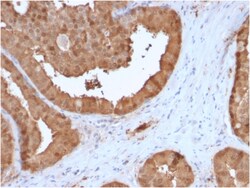
Biotium Lactoylglutathione Lyase(CPTC-GLO1-3), Biotin conjugate, 0.1mg/mL
GLO1 is an enzyme involved in the detoxification of methylgyoxal, a byproduct of glycolysis. GLO1 expression has been demonstrated by several studies to be upregulated in various human malignant tumors, including metastatic melanoma and lung carcinoma, and thus is a target for pharmaceutical development. Primary antibodies are available purified, or with a selection of fluorescent CF Dyes and other labels. CF Dyes offer exceptional brightness and photostability. Note: Conjugates of blue fluorescent dyes like CF405S and CF405M are not recommended for detecting low abundance targets, because blue dyes have lower fluorescence and can give higher non-specific background than other dye colors.