
Rat Secondary Antibodies


Biotium CD86(C86/1146), CF640R conjugate, 0.1mg/mL
Recognizes a protein of 70 kDa, which is identified as CD86. CD86, along with CD80/B71, is an important accessory molecule in T cell co-stimulation via its interaction with CD28 and CD152/CTLA4, a cancer immunotherapy target. It is a type I transmembrane glycoprotein and a member of the immunoglobulin superfamily of cell surface receptors. It is expressed at high levels on resting peripheral monocytes and dendritic cells and at very low density on resting B and T lymphocytes. CD86 expression is rapidly upregulated by B cell specific stimuli with peak expression at 18 to 42 hours after stimulation. Since CD86 has rapid kinetics of induction, it is believed to be the major CD28 ligand expressed early in the immune response. It is also found on malignant Hodgkin and Reed Sternberg (HRS) cells in Hodgkin€™s disease.Primary antibodies are available purified, or with a selection of fluorescent CF Dyes and other labels. CF Dyes offer exceptional brightness and photostability. Note:

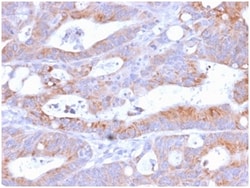
Biotium CD86 (Dendritic Cells Maturation Marker)(C86/2160R), CF594 conjugate, 0.1mg/mL
Recognizes a protein of 70 kDa, which is identified as CD86. CD86 is a type I transmembrane glycoprotein and a member of the immunoglobulin superfamily of cell surface receptors. It is expressed at high levels on resting peripheral monocytes and dendritic cells and at very low density on resting B and T lymphocytes. CD86 expression is rapidly upregulated by B cell specific stimuli with peak expression at 18 to 42 hours after stimulation. CD86, along with CD80/B71, is an important accessory molecule in T cell co-stimulation via its interaction with CD28 and CD152/CTLA4. Since CD86 has rapid kinetics of induction, it is believed to be the major CD28 ligand expressed early in the immune response. It is also found on malignant Hodgkin and Reed Sternberg (HRS) cells in Hodgkin's disease. Primary antibodies are available purified, or with a selection of fluorescent CF Dyes and other labels. CF Dyes offer exceptional brightness and photostability. Note: Conjugates of blue fluorescent

Sino Biological Recombinant Anti-Cadherin-17 Antibody, Rabbit Monoclonal 100 µL
This antibody was obtained from a rabbit immunized with purified, recombinant Rat Cadherin-17 (rR Cadherin-17; Catalog#80283-R08H; P55281; Met1-Met786).
Sino Biological Recombinant Rat interferon-alpha/IFNA5 Protein (His Tag) 20
A DNA sequence encoding the rat IFNA5 (XP_001076062.1) (Met1-Glu189) was expressed, fused with a polyhistidine tag at the C-terminus.
Biotium CD162 (Selectin P Ligand) (PSGL1/1601), CF740 conjugate, 0.1mg/mL
CD162 glycoprotein functions as a high affinity counter-receptor for the cell adhesion molecules P-, E- and L- selectin expressed on myeloid cells and stimulated T lymphocytes. As such, this protein plays a critical role in leukocyte trafficking during inflammation by tethering of leukocytes to activated platelets or endothelia expressing selectins. This protein requires two post-translational modifications, tyrosine sulfation and the addition of the sialyl Lewis x tetrasaccharide (sLex) to its O-linked glycans, for its high-affinity binding activity. Aberrant expression of this gene and polymorphisms in this gene are associated with defects in the innate and adaptive immune response.Primary antibodies are available purified, or with a selection of fluorescent CF Dyes and other labels. CF Dyes offer exceptional brightness and photostability. Note: Conjugates of blue fluorescent dyes like CF405S and CF405M are not recommended for detecting low abundance targets, because b


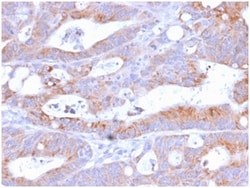
Biotium CD86 (Dendritic Cells Maturation Marker)(C86/2160R), 1mg/mL
Recognizes a protein of 70 kDa, which is identified as CD86. CD86 is a type I transmembrane glycoprotein and a member of the immunoglobulin superfamily of cell surface receptors. It is expressed at high levels on resting peripheral monocytes and dendritic cells and at very low density on resting B and T lymphocytes. CD86 expression is rapidly upregulated by B cell specific stimuli with peak expression at 18 to 42 hours after stimulation. CD86, along with CD80/B71, is an important accessory molecule in T cell co-stimulation via its interaction with CD28 and CD152/CTLA4. Since CD86 has rapid kinetics of induction, it is believed to be the major CD28 ligand expressed early in the immune response. It is also found on malignant Hodgkin and Reed Sternberg (HRS) cells in Hodgkin's disease. Primary antibodies are available purified, or with a selection of fluorescent CF Dyes and other labels. CF Dyes offer exceptional brightness and photostability. Note: Conjugates of blue fluorescent
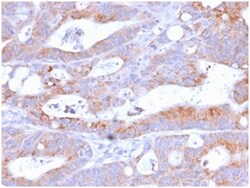
Biotium CD86 (Dendritic Cells Maturation Marker)(C86/2160R), 0.2mg/mL
Recognizes a protein of 70 kDa, which is identified as CD86. CD86 is a type I transmembrane glycoprotein and a member of the immunoglobulin superfamily of cell surface receptors. It is expressed at high levels on resting peripheral monocytes and dendritic cells and at very low density on resting B and T lymphocytes. CD86 expression is rapidly upregulated by B cell specific stimuli with peak expression at 18 to 42 hours after stimulation. CD86, along with CD80/B71, is an important accessory molecule in T cell co-stimulation via its interaction with CD28 and CD152/CTLA4. Since CD86 has rapid kinetics of induction, it is believed to be the major CD28 ligand expressed early in the immune response. It is also found on malignant Hodgkin and Reed Sternberg (HRS) cells in Hodgkin's disease. Primary antibodies are available purified, or with a selection of fluorescent CF Dyes and other labels. CF Dyes offer exceptional brightness and photostability. Note: Conjugates of blue fluorescent
Biotium Isotype Control, Mouse IgG1 Kappa (IGG1/1331), Biotin Conjugate, 0.1 mg/mL
This is a non-reactive mouse monoclonal IgG1 kappa antibody labeled with one of our bright and photostable CF Dyes and other labels. This antibody may serve as a control for a mouse monoclonal IgG1 antibody under identical experimental conditions. Biotium also carries mouse monoclonal isotype control antibodies for IgG2a Kappa (MG2a-53) and IgG2b Kappa (IGG1/1333). Isotype control for antibody-based experiments Available with 9 bright and photostable CF Dyes APC, R-PE, RPE-Astral„¢616, APC-Astral„¢813, and biotin conjugates also available Suitable for western, flow cytometry, ELISA, immunofluorescence, and immunohistologyCF Dyes offer exceptional brightness and photostability; learn more about CF Dyes.
Biotium Isotype Control, Mouse IgG1 Kappa (IGG1/1331), APC-Astral™813 Conjugate, 0.1 mg/mL
This is a non-reactive mouse monoclonal IgG1 kappa antibody labeled with one of our bright and photostable CF Dyes and other labels. This antibody may serve as a control for a mouse monoclonal IgG1 antibody under identical experimental conditions. Biotium also carries mouse monoclonal isotype control antibodies for IgG2a Kappa (MG2a-53) and IgG2b Kappa (IGG1/1333). Isotype control for antibody-based experiments Available with 9 bright and photostable CF Dyes APC, R-PE, RPE-Astral„¢616, APC-Astral„¢813, and biotin conjugates also available Suitable for western, flow cytometry, ELISA, immunofluorescence, and immunohistologyCF Dyes offer exceptional brightness and photostability; learn more about CF Dyes.
Biotium CD162 (Selectin P Ligand) (PSGL1/1601), CF640R conjugate, 0.1mg/mL
CD162 glycoprotein functions as a high affinity counter-receptor for the cell adhesion molecules P-, E- and L- selectin expressed on myeloid cells and stimulated T lymphocytes. As such, this protein plays a critical role in leukocyte trafficking during inflammation by tethering of leukocytes to activated platelets or endothelia expressing selectins. This protein requires two post-translational modifications, tyrosine sulfation and the addition of the sialyl Lewis x tetrasaccharide (sLex) to its O-linked glycans, for its high-affinity binding activity. Aberrant expression of this gene and polymorphisms in this gene are associated with defects in the innate and adaptive immune response.Primary antibodies are available purified, or with a selection of fluorescent CF Dyes and other labels. CF Dyes offer exceptional brightness and photostability. Note: Conjugates of blue fluorescent dyes like CF405S and CF405M are not recommended for detecting low abundance targets, because b