
Protein Labeling Reagents


Biotium CF633 Hydrazide
Our CF dye hydrazides are bright, extremely water-soluble and nontoxic. These properties make the dyes excellent fixable polar tracers for microinjection into cells. Hydrazides also can be used for labeling aldehyde or ketone groups, however, for this application we recommend using the more reactive CF dye aminooxy forms. CF dyes are Biotium's line of next-generation fluorescent dyes with advantages in brightness, photostability, and conjugate specificity compared to other fluorescent dyes. Far-red fluorescent CF633 dye has excitation/emission at 630/650 nm.


Enzo Life Sciences BIO-PROBE 3'-Oligonucleotide labeling kit with bio-16-ddUTP (25Reactions)
Terminal labeling is an ideal procedure for the labeling of oligonucleotides with haptens such as biotin or fluorescein. An oligonucleotide can be synthesized using standard, commercially available reagents and labeled after synthesis in a simple and reproducible enzyme reaction.The BIO-PROBE 3'-Oligonucleotide Labeling Kit with Bio-16-ddUTP contains all reagents required for terminal labeling of oligonucleotides with biotin except the oligonucleotides to be labeled. The BIO-PROBE 3'-Oligonucleotide Labeling Kit provides maximum flexibility for labeling oligonucleotides approximately 15 to 100 nucleotides in length. A standard reaction will label up to 100 picomoles (1 µg of a 30-mer oligonucleotide sequence). A complete kit contains two component packs that are available separately: a Reagent Pack and a Bio-16-ddUTP Dideoxynucleotide Pack. Both packs contain sufficient reagents for 25 labeling reactions. Applications: Southern Blot, Northern Blot, ISH , Dot Blot.
Biotium CD2(1E7E8.G4), CF488A conjugate, 0.1mg/mL
CD2 interacts through its amino-terminal domain with the extracellular domain of CD58 (also designated CD2 ligand) to mediate cell adhesion. CD2/CD58 binding can enhance antigen-specific T cell activation. CD2 is a transmembrane glycoprotein that is expressed on peripheral blood T lymphocytes, NK cells and thymocytes. CD58 is a heavily glycosylated protein with a broad tissue distribution in hematopoietic and other cells, including endothelium. Interaction between CD2 and its counter receptor LFA3 (CD58) on opposing cells optimizes immune system recognition, thereby facilitating communication between helper T lymphocytes and antigen-presenting cells, as well as between cytolytic effectors and target cells.Primary antibodies are available purified, or with a selection of fluorescent CF Dyes and other labels. CF Dyes offer exceptional brightness and photostability. Note: Conjugates of blue fluorescent dyes like CF405S and CF405M are not recommended for detecting low abunda

Biotium CD20(109-3C2), CF568 conjugate, 0.1mg/mL
Recognizes a protein of 30-33 kDa, which is identified as CD20 (Workshop V; Code CD20.12. Workshop IV; Code B17). It recognizes an extracellular domain of CD20. It is a non-Ig differentiation antigen of B-cells and its expression is restricted to normal and neoplastic B-cells, being absent from all other leukocytes and tissues. CD20 is expressed by pre B-cells and persists during all stages of B-cell maturation but is lost upon terminal differentiation into plasma cells. The protein passes through the membrane 4 times with both ends in cytoplasm and exposes one short and one longer loop to the external environment. CD20 is not glycosylated in resting B-cells and its cytoplasmic domains are differentially phosphorylated upon activation. It acts as calcium channel involved in B cell activation and cell cycle progression.Primary antibodies are available purified, or with a selection of fluorescent CF Dyes and other labels. CF Dyes offer exceptional brightness and photostabilit

Biotium CF660C, Succinimidyl Ester
CF Dye Succinimidyl Esters (SE, also known as NHS esters) are amine-reactive fluorescent dyes. SE dyes are commonly used to label antibodies and other proteins on free amine groups, such as lysine residues. CF dyes are Biotium's line of next-generation fluorescent dyes with advantages in brightness, photostability, and conjugate specificity compared to other fluorescent dyes. Far-red fluorescent CF660C dye has excitation/emission at 667/685 nm.
Biotium CD28(C28/75), CF568 conjugate, 0.1mg/mL
Recognizes a glycoprotein of 44-88 kDa, which is identified as CD28. It is the critical T-cell co-stimulatory receptor which provides to the cell the important second activation signal by binding CD80 and CD86 that are expressed by antigen presenting cells. Besides its co-stimulation role, CD28 functions in preventing T-cells from anergic hyporesponsive state or from undergoing premature apoptotic cell death. CD28 is also expressed on human fetal NK cells and some NK cell lines, whereas on murine NK cells the CD28 expression is much broader.Primary antibodies are available purified, or with a selection of fluorescent CF Dyes and other labels. CF Dyes offer exceptional brightness and photostability. Note: Conjugates of blue fluorescent dyes like CF405S and CF405M are not recommended for detecting low abundance targets, because blue dyes have lower fluorescence and can give higher non-specific background than other dye colors.
Biotium Human Kappa Light Chain(KLC264), CF488A conjugate, 0.1mg/mL
This MAb is specific to kappa light chain of immunoglobulin and shows no cross-reaction with lambda light chain or any of the five heavy chains. In mammals, the two light chains in an antibody are always identical, with only one type of light chain, kappa or lambda. The ratio of Kappa to Lambda is 70:30. However, with the occurrence of multiple myeloma or other B-cell malignancies this ratio is disturbed. Antibody to the kappa light chain is reportedly useful in the identification of leukemias, plasmacytomas, and certain non-Hodgkin's lymphomas. Demonstration of clonality in lymphoid infiltrates indicates that the infiltrate is malignant.Primary antibodies are available purified, or with a selection of fluorescent CF Dyes and other labels. CF Dyes offer exceptional brightness and photostability. Note: Conjugates of blue fluorescent dyes like CF405S and CF405M are not recommended for detecting low abundance targets, because blue dyes have lower fluorescence and can gi
Biotium CD10(FR4D11), CF488A conjugate, 0.1mg/mL
CD10 (also known as Common Acute Lymphocytic Leukemia Antigen (CALLA)) is a type II transmembrane protein. It is a cell surface enzyme with neutral metalloendopeptidase activity, which inactivates a variety of biologically active peptides. CD10 is expressed on the cells of lymphoblastic, Burkitt's, and follicular germinal center lymphomas, and on cells from patients with chronic myelocytic leukemia (CML). It is also expressed on the surface of normal early lymphoid progenitor cells, immature B cells within adult bone marrow and germinal center B cells within lymphoid tissue.Primary antibodies are available purified, or with a selection of fluorescent CF Dyes and other labels. CF Dyes offer exceptional brightness and photostability. Note: Conjugates of blue fluorescent dyes like CF405S and CF405M are not recommended for detecting low abundance targets, because blue dyes have lower fluorescence and can give higher non-specific background than other dye colors.
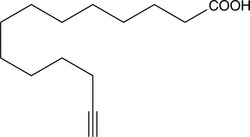
Cayman Chemical Myristic Acid Alkyne, Purity: ≥98%, CAS: 82909-47-5, 5 mg
A form of the 14-carbon myristic acid with an ω-terminal alkyne group; can be used in linking reactions utilizing click chemistry
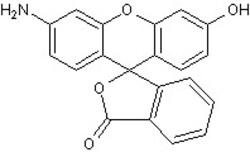
Abcam Rhodol, 5MG
MW 331.3 Da, Purity >95%. Highly fluorescent dye useful for labeling oligonucleotide, antibody and protein studies and for the preparation of peptide and esterase substrates. Rhodol is a structural hybrid of fluorescein and rhodamine. It retains the pH-sensitive properties conferred by a phenolic hydroxyl group, but the amine substituent reduces the pKa values. Rhodol exhibits a high extinction coefficient (~70,000 cm-1M-1) and high quantum yield (~0.8-0.9) in aqueous solution, with absorption maxima at approximately 490 nm and emission maxima between 520 and 545 nm. As with fluorescein-based dyes, the fluorescence excitation profiles of rhodol-based dyes are pH dependent, which can be useful for ratiometric pH determinations intracellularly.
The product is subject to the following: Abcam Restricted Use Statement