Scientists Crack the Mystery of a Massive Sea Star Die-Off
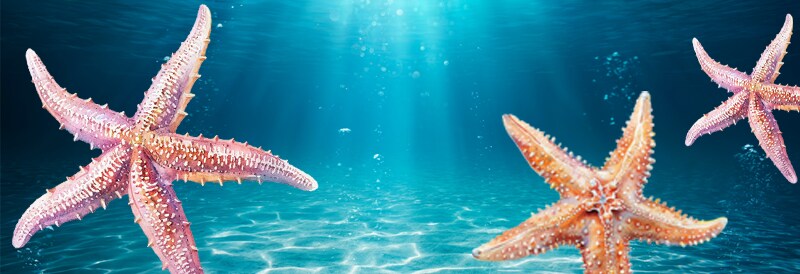
For more than a decade, scientists could not explain a mass die-off of sea stars.
Sea star wasting disease, first widely observed along the Pacific coast, caused infected animals to develop lesions, lose coordination, twist their arms, and begin to disintegrate into a soft mass before death. The outbreak killed billions of sea stars and disrupted coastal ecosystems across North America.
Despite the scale of the die-off, its cause remained uncertain.
Now, researchers say they have identified the culprit. A recent study published in Nature Ecology & Evolution points to a bacterium, Vibrio pectenicida strain FHCF-e, as the driver of the disease.
After years of uncertainty, researchers now have a clearer picture of what causes sea star wasting disease.
Following the Evidence
To test whether the bacterium was responsible, they applied Koch’s postulates, a standard framework for linking a microbe to a disease.
Researchers first identified the bacterium in affected sea stars, then exposed healthy individuals under controlled conditions. The exposed animals developed symptoms consistent with wasting disease, and the same bacterium was re-isolated from the newly infected sea stars.
This approach provided strong evidence that the FHCF-e strain can induce the disease.
Why It Took So Long
Earlier efforts to identify the cause produced conflicting results.
One widely cited study had suggested a viral origin, which aligned with how quickly the disease appeared to spread. When researchers tried to replicate the study’s findings, they struggled to do so consistently.
The disease itself also complicated the search, because infected sea stars did not always show the same symptoms or progression. Some developed lesions, while others had twisted limbs or rapid tissue breakdown, and the timing of death varied widely. This variability led researchers to consider whether multiple pathogens or environmental stressors were involved.
The newly identified bacterium added another layer of difficulty. Vibrio species are common in marine environments and are not inherently harmful, so their presence in diseased animals didn’t raise any red flags.
Field conditions further limited progress. Ocean environments introduce constant variability, including fluctuations in temperature, oxygen levels, and microbial communities. Replicating controlled experiments under these conditions remains challenging.
Ecosystem-Level Consequences
Sea stars play a critical role in maintaining marine ecosystems. As predators, they help regulate populations of species such as sea urchins.
During the die-off, reduced predation allowed sea urchin populations to expand rapidly. In turn, these urchins overgrazed kelp forests, leading to widespread habitat loss. Kelp ecosystems support diverse marine life, so their decline had cascading effects across coastal food webs.
In some regions, including parts of the Oregon coast, populations have shown signs of recovery. However, the long-term stability of these ecosystems remains uncertain.
What the Discovery Changes
Identifying a specific pathogen changes how researchers approach future outbreaks.
With a defined target, scientists can monitor marine environments for the presence of FHCF-e and track its spread more precisely. Early detection may help researchers respond to emerging hotspots.
The findings also highlight the role of environmental conditions. Vibrio bacteria tend to proliferate in warmer waters and may become more virulent under stress. Rising ocean temperatures could therefore increase both the likelihood and severity of similar disease events.
Beyond sea stars, the study offers a framework for investigating other unexplained die-offs. Marine organisms such as corals, as well as certain amphibians and fish, have experienced large-scale declines linked to disease. Applying similarly rigorous methods may help clarify the causes in those cases.
While large-scale intervention in open ocean systems remains difficult, the ability to identify and monitor a pathogen provides a starting point. Efforts to reduce localized stressors, such as pollution or thermal anomalies, may help limit the impact in vulnerable areas.
After years of uncertainty, researchers now have a clearer picture of what causes sea star wasting disease. The next challenge lies in understanding how often similar conditions may arise and how ecosystems will respond.
Sierra McConnell is a Thermo Fisher Scientific staff writer.