
Organo-Metalloid Compounds


tert-Butyldimethylsilanol 95.0+%, TCI America™
CAS: 18173-64-3 Molecular Formula: C6H16OSi Molecular Weight (g/mol): 132.278 MDL Number: MFCD00010673 InChI Key: FGWRMMTYIZKYMA-UHFFFAOYSA-N PubChem CID: 554527 IUPAC Name: tert-butyl-hydroxy-dimethylsilane SMILES: CC(C)(C)[Si](C)(C)O

1-(tert-Butyldimethylsilyl)imidazole 98.0+%, TCI America™
CAS: 54925-64-3 Molecular Formula: C9H18N2Si Molecular Weight (g/mol): 182.34 MDL Number: MFCD00011682 InChI Key: VUENSYJCBOSTCS-UHFFFAOYSA-N Synonym: 1-tert-butyldimethylsilyl-1h-imidazole,1-tert-butyldimethylsilyl imidazole,tert-butyldimethylsilylimidazole,n-tert-butyldimethylsilylimidazole,t-butyldimethylsilylimidazole,1-t-butyldimethylsilyl imidazole,1h-imidazole, 1-1,1-dimethylethyl dimethylsilyl,tbdmsim,imidazole, tbdms derivative,1-tert-butyldimethylsilylimidazole PubChem CID: 171385 IUPAC Name: 1-(tert-butyldimethylsilyl)-1H-imidazole SMILES: CC(C)(C)[Si](C)(C)N1C=CN=C1
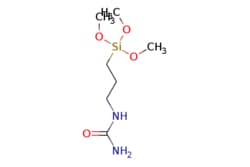
![1-[3-(Trimethoxysilyl)propyl]urea 94.0+%, TCI America™](https://assets.fishersci.com/TFS-Assets/CCG/Chemical-Structures/chemical-structure-cas-23843-64-3.jpg-250.jpg)
1-[3-(Trimethoxysilyl)propyl]urea 94.0+%, TCI America™
CAS: 23843-64-3 Molecular Formula: C7H18N2O4Si Molecular Weight (g/mol): 222.32 MDL Number: MFCD00216654 InChI Key: LVACOMKKELLCHJ-UHFFFAOYSA-N Synonym: (3-Ureidopropyl)trimethoxysilane PubChem CID: 90280 IUPAC Name: [3-(trimethoxysilyl)propyl]urea SMILES: CO[Si](CCCNC(N)=O)(OC)OC
eMolecules Trimethoxysilyl propyl urea | 23843-64-3 | MFCD00216654 | 25g
Oakwood Chemical | Trimethoxysilyl propyl urea | 25g | 537725015 | S18475 | | 23843-64-3 | MFCD00216654 | 222.316 | C7H18N2O4Si
If you are unable to find the chemical you are looking for, make sure you are logged into your fishersci.com account and click on the following link:
eMolecules Building Block Tool


Medchemexpress LLC 5,7,4'-Trimethoxyflavone | 5631-70-9 | 25 MG

5,7,4'-Trimethoxyflavone can be isolated from the medicinal plant Kaempferia parviflora (KP). It acts as a CFTR activator with an EC50 of 64 μM, induces apoptosis, and increases the proteolytic activation of caspase-3. This compound also causes the degradation of ADP-ribose polymerase (PARP) protein, exhibits antitumor activity, and can be used to prevent skin aging and oxidative stress.
- CFTR activator with an EC50 of 64 μM
- Induces apoptosis
- Increases proteolytic activation of caspase-3
- Causes degradation of ADP-ribose polymerase (PARP) protein
- Exhibits antitumor activity
- Prevents skin aging and oxidative stress
- Isolated from the medicinal plant Kaempferia parviflora
Medchemexpress LLC 5,7,4'-Trimethoxyflavone | 5631-70-9 | 1 ML
5,7,4'-Trimethoxyflavone (MTF) is a compound isolated from the medicinal plant *Kaempferia parviflora*. It acts as a CFTR activator and demonstrates diverse biological activities, including inducing apoptosis and exhibiting antitumor properties. This compound can also help prevent skin aging and oxidative stress.
- CFTR activator with an EC50 of 64 μM
- Induces apoptosis in SNU-16 cells
- Increases proteolytic activation of caspase-3
- Degrades ADP-ribose polymerase (PARP) protein
- Exhibits antitumor activity
- Helps prevent skin aging and oxidative stress
- Inhibits cell proliferation and TNF-α induced ROS
Medchemexpress LLC 5,7,4'-Trimethoxyflavone | 5631-70-9 | 50 MG
5,7,4'-Trimethoxyflavone (MTF) can be isolated from the medicinal plant Kaempferia parviflora. It acts as a CFTR activator and induces apoptosis by increasing proteolytic activation of caspase-3 and degrading ADP-ribose polymerase (PARP) protein. This compound also exhibits antitumor activity and can be used to prevent skin aging and oxidative stress. In vitro studies have shown its ability to inhibit cell proliferation and induce apoptosis in SNU-16 cells, as well as its anti-inflammatory and anti-oxidative effects in HDFs cells.
- Isolated from the medicinal plant Kaempferia parviflora.
- Acts as a CFTR activator with an EC50 of 64 μM.
- Induces apoptosis, increases proteolytic activation of caspase-3, and degrades PARP protein.
- Exhibits antitumor activity.
- Prevents skin aging and oxidative stress.
- Demonstrated cytotoxicity in SNU-16 cells.