
Benzenoids


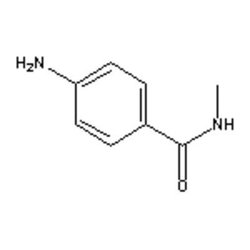
Accela Chembio Inc 4-amino-n-methylbenzamide | 25g | 6274-22-2 | MFCD00665792 | 97+% | Shelf Life: 2160 Days | Light Sensitive

4-amino-n-methylbenzamide | 25g | 6274-22-2 | MFCD00665792 | 97+% | Shelf Life: 2160 Days | Light Sensitive

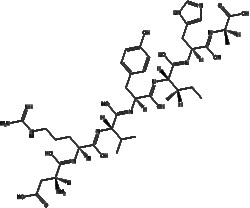
Apexbio Technology LLC A 779 159432-28-7 1mg
A 779 (CAS 159432-28-7) is a selective antagonist of the angiotensin-(1-7)/Mas receptor By competitively inhibiting angiotensin-(1-7) a bioactive peptide of the renin-angiotensin system (RAS) involved in cardiovascular and renal homeostasis A 779 enables detailed study of Mas receptor-mediated signaling In vivo A 779 blocks the antidiuretic and pressor effects of angiotensin-(1-7) in rats and modulates the response to bradykinin potentiation by ACE inhibition It has been used to explore interactions among angiotensin receptors and the role of Mas signaling in cardiovascular and renal physiology
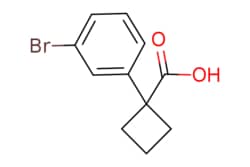
eMolecules 1-(3-Bromophenyl)cyclobutanecarboxylic acid | 926261-31-6 | MFCD08443228 | 1g
Combi-Blocks | 1-(3-Bromophenyl)cyclobutanecarboxylic acid | 1g | 117531329 | HC-2992 | 98.000 | 926261-31-6 | MFCD08443228 | 255.111 | C11H11BrO2
If you are unable to find the chemical you are looking for, make sure you are logged into your fishersci.com account and click on the following link:
eMolecules Building Block Tool
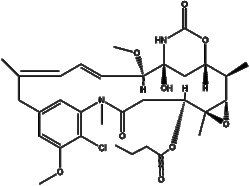
Apexbio Technology LLC Ansamitocin P-3 66547-09-9 50mg
Ansamitocin P-3 (CAS 66547-09-9) is a small-molecule inhibitor targeting tubulin It is designed to disrupt microtubule assembly by potently inhibiting tubulin polymerization thereby affecting cellular processes reliant on microtubule dynamics Ansamitocin P-3 exerts its biological activity primarily through inhibition of tubulin polymerization In cell-based studies Ansamitocin P-3 demonstrates cytotoxicity with IC50 values of approximately 4 10 g/ml in human lung carcinoma A-549 and colon carcinoma HT-29 cells and 2 10 g/ml in breast carcinoma MCF-7 cells Additionally it inhibits ciliary regeneration in Tetrahymena cells at concentrations around 1 M Based on these pharmacological properties Ansamitocin P-3 holds research potential in oncology particularly in studies of microtubule dynamics anticancer drug mechanisms and ciliogenesis