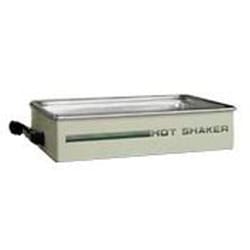
Incubator Accessories


Hach Company Distributor for 24 12 Btl
Distributor for 24 Bottle Standard and 12 Bottle BasesDistributor arm for 24 bottle sampling with standard portable base

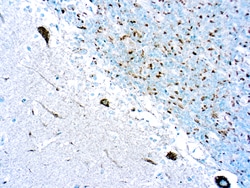
Diagnostic Biosystems PAN-TRK Pan-TRK
Neurotrophic tyrosine kinase receptor (NTRK) is a family of 3 proto-oncogenes including NTRK1, NTRK2, and NTRK3 which encode Trk A, Trk B, and Trk C proteins, respectively. The latter are involved in biological processes such as neuronal survival, differentiation, and plasticity under physiological circumstances. In various cancers, oncogenic fusionsinvolving the kinase domain of NTRK1, 2, or 3 are present. Pan-Trk IHC is a time- and tissue-efficient screen for NTRK fusions, particularly in driver-negative advanced malignancies and potential cases of secretory carcinoma and congenital fibrosarcoma. Pan-Trk IHC can help determine whether translation occurs for novel NTRK rearrangements.

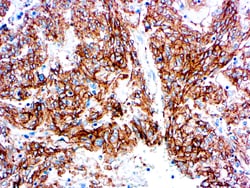
Diagnostic Biosystems CD117/C-KIT CD117/c-kit
This antibody reacts with a 145 kDa protein. CD117/c-kit is a transmembrane receptor tyrosine kinase and is expressed in many tissues and cells. CD117/ckit is involved in the development of several lineages of stem cells, such as germ cells, neural crest derived melanocytes and hematopoietic precursor cells. This antibody can be used in the identification of gastrointestinal stromaltumors.

Bellco Glass, Inc. EZFlow Membrane Disc Filter, PES, 0.45µm, 25mm, Non-Sterile, 50/PK
EZFlow PES Membrane Disc Filters are ideal for use in a wide variety of aqueous filtration applications. Constructed from Foxx’s low-protein-binding, low-extractable hydrophilic polyethersulfone, these filters provide super-fast flow rates and high throughput when filtering media, buffers, and other filtrates common to microbiological and life science applications. PES Disc Filters are available in two porosities: 0.2µm for sterilization and complete bacterial retention, and 0.45µm for particulate removal and clarification. Both porosities are available in industry standard 13, 25, 47, and 90mm diameters. PES Disc Filters are autoclavable and gamma-stable.USP Class VIAutoclavable SpecificationsFilter Diameter: 25mmFilter Pore Size: 0.45µmFilter Material: PES
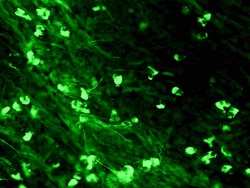
Diagnostic Biosystems IGA-FITC IgA-FITC
This antibody reacts with the alpha chain of human IgA. Traces of contaminating antibodies have been removed by solid phase absorption with human plasma proteins. This antibody is well suited for tissue section staining but may also be used for other applications.
Bellco Glass, Inc. EZBio MPC Connector, Female MPC to 3/8" HB, PC, Non-Valved, 50/PK
EZBio MPC Connector, Female MPC to 3/8" HB, PC, Non-Valved, 50/PK
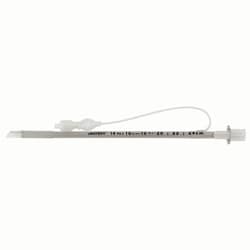
Med Vet International Silicone 6.0mm Endotracheal Tube with Wire Reinforcement, J0629E
The tube has a metal wire reinforcement that spirals the length of the tube. This reinforcement gives rigidity and prevents any possible occlusion. Features: Graduations to aid in depth placement. Radiopaque line for location confirmation. Fully transparent to allow observation for development of blood or mucus. Lateral Murphy eye.
Enterprise Technology Solutions Extra Capacity Reinforced Hang
Extra Capacity Reinforced Hanging File Folders with Box Bottom 2 Capacity Letter Size 1/5-Cut Tabs Green 25/Box
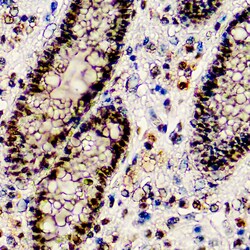
Diagnostic Biosystems BAP1 BAP1 (BAP1/2667)
BAP1 (BRCA1-Associated Protein 1) was initially identified as a protein that binds to BRCA1. BAP1 is a tumor suppressor that is believed to mediate its effects through chromatin modulation, transcriptional regulation, and possibly via the ubiquitin-proteasome system and the DNA damage response pathway. Germline mutations of BAP1 confer increased susceptibility for the development of several tumors, including uveal melanoma, epithelioid atypical Spitz tumors, cutaneous melanoma, and mesothelioma. Somatic BAP1 mutations are seen in cutaneous melanocytic tumors (epithelioid atypical Spitztumors and melanoma), uveal melanoma, mesothelioma, clear cell renal cell carcinoma, and other tumors. BAP1 immunohistochemistry is particularly useful in differentiating malignant mesothelioma (nuclear negative) vs. reactive mesothelial proliferation (nuclear positive).

Chemglass Life Sciences Glass Filled PTFE Bushing, 25.4mm

Glass Filled PTFE Bushing, 25.4mm. Grease-Free PTFE stirrer bearing designed for use in moderate vacuum applications. Bearing consists of a threaded glass adapter having a 45/50 inner joint, a saddle o-ring, a bushing with compression and locking nut, and a precision PTFE inner bearing. The saddle o-ring provides only glass and PTFE contact with the reaction, while allowing for the vacuum tight seal. Design of the bearing permits replacement of the saddle o-ring at a fraction of the cost of the entire bearing.
Enterprise Technology Solutions Pendaflex Premium Reinforced E
Premium Reinforced Expanding File Pockets 7 Expansion Legal Size Red Fiber 5/box
Bellco Glass, Inc. EZBio MPC Connector, Female MPC to 3/8" HB, PC, Non-Valved, 5/PK
EZBio MPC Connector, Female MPC to 3/8" HB, PC, Non-Valved, 5/PK
Enterprise Technology Solutions Pendaflex Premium Reinforced E
Premium Reinforced Expanding File Pockets 5 25 Expansion Letter Size Red Fiber 5/box
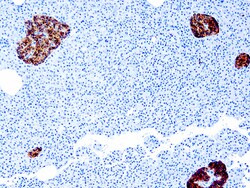
Diagnostic Biosystems CHROMOGRANIN A Chromogranin A (SP12)
This antibody recognizes Chromogranin A. Chromogranin A (a protein of 439 amino acid which is encoded on chromosome 14) is present in neuroendocrine cells throughout the body, including the neuroendocrine cells of the large and small intestine, adrenal medulla and pancreatic islets. It is an excellent marker for carcinoid tumors, pheochromocytomas, paragangliomas, and other neuroendocrine tumors. Coexpression of chromogranin A and neuron specific enolase (NSE) is common in neuroendocrine neoplasms.