
Universal Pipette Tips
Disposable pipette tips designed to fit single and multichannel pipettes from most manufacturers; offer acceptable performance compared to pipette specific tips and can be used with a variety of pipette models.
Single-use universal pipette tips are designed for compatibility with most mechanical and electronic single and multichannel pipettors.
Universal pipette tips are available in a range of types, sizes, colors, styles, and packaging configurations and may be designed for specific purposes or tasks.
- Capacity or volume based on the pipettor size
- Filters to reduce contamination and cross-contamination
- Color
- Sterility or autoclavability
- Tip style: beveled, tapered, wide bore, round, flat, or gel-loading
- Length: short or extended
- Purity: metal-free or DNase-, RNase-, ATP-, Bioburden-, PCR inhibitor-, endotoxin-, or pyrogen-free for genomic and biologic applications
- Surface treatments to reduce retention
- Packaging options to help facilitate re-stocking or eliminate waste

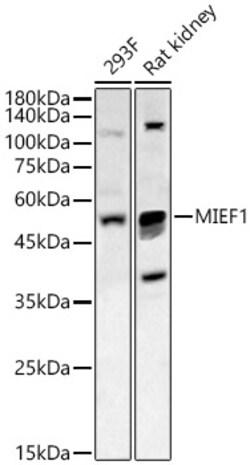
ABclonal Technology MIEF1 Rabbit pAb

Enables ADP binding activity, GDP binding activity, and identical protein binding activity. Involved in several processes, including positive regulation of mitochondrial fission, positive regulation of mitochondrial translation, and positive regulation of protein targeting to membrane. Located in mitochondrial matrix and mitochondrial outer membrane. Colocalizes with mitochondrial large ribosomal subunit.

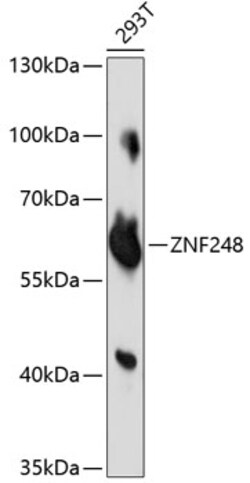
ABclonal Technology ZNF248 Rabbit pAb
Predicted to enable DNA-binding transcription repressor activity, RNA polymerase II-specific and RNA polymerase II transcription regulatory region sequence-specific DNA binding activity. Predicted to be involved in negative regulation of transcription by RNA polymerase II. Predicted to be located in nucleus.
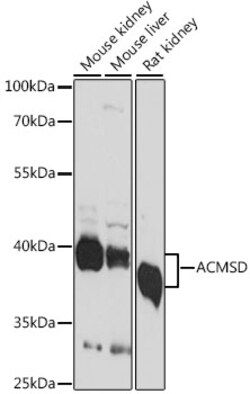
ABclonal Technology ACMSD Rabbit pAb
The neuronal excitotoxin quinolinate is an intermediate in the de novo synthesis pathway of NAD from tryptophan, and has been implicated in the pathogenesis of several neurodegenerative disorders. Quinolinate is derived from alpha-amino-beta-carboxy-muconate-epsilon-semialdehyde (ACMS). ACMSD (ACMS decarboxylase, EC 4.1.1.45) can divert ACMS to a benign catabolite and thus prevent the accumulation of quinolinate from ACMS.
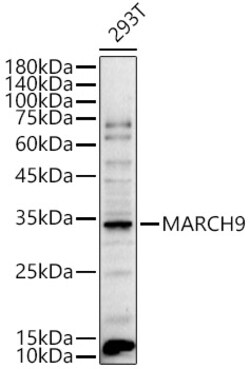
ABclonal Technology MARCH9 Rabbit pAb
MARCH9 is a member of the MARCH family of membrane-bound E3 ubiquitin ligases (EC 6.3.2.19). MARCH enzymes add ubiquitin (see MIM 191339) to target lysines in substrate proteins, thereby signaling their vesicular transport between membrane compartments. MARCH9 induces internalization of several membrane glycoproteins and directs them to the endosomal compartment (Bartee et al., 2004 [PubMed 14722266], Hoer et al., 2007 [PubMed 17174307]).
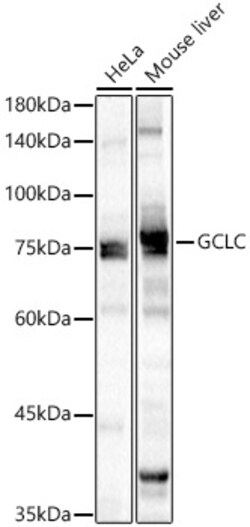
ABclonal Technology GCLC Rabbit pAb
Glutamate-cysteine ligase, also known as gamma-glutamylcysteine synthetase is the first rate-limiting enzyme of glutathione synthesis. The enzyme consists of two subunits, a heavy catalytic subunit and a light regulatory subunit. This locus encodes the catalytic subunit, while the regulatory subunit is derived from a different gene located on chromosome 1p22-p21. Mutations at this locus have been associated with hemolytic anemia due to deficiency of gamma-glutamylcysteine synthetase and susceptibility to myocardial infarction.
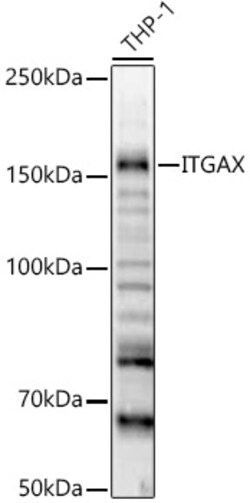
ABclonal Technology ITGAX Rabbit pAb
This gene encodes the integrin alpha X chain protein. Integrins are heterodimeric integral membrane proteins composed of an alpha chain and a beta chain. This protein combines with the beta 2 chain (ITGB2) to form a leukocyte-specific integrin referred to as inactivated-C3b (iC3b) receptor 4 (CR4). The alpha X beta 2 complex seems to overlap the properties of the alpha M beta 2 integrin in the adherence of neutrophils and monocytes to stimulated endothelium cells, and in the phagocytosis of complement coated particles. Two transcript variants encoding different isoforms have been found for this gene.
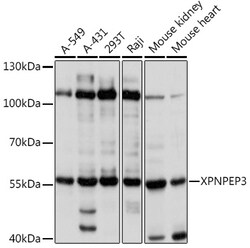
ABclonal Technology XPNPEP3 Rabbit pAb
The protein encoded by this gene belongs to the family of X-pro-aminopeptidases that utilize a metal cofactor, and remove the N-terminal amino acid from peptides with a proline residue in the penultimate position. This protein has been shown to localize to the mitochondria of renal cells, and have a role in ciliary function. Mutations in this gene are associated with nephronophthisis-like nephropathy-1. Alternatively spliced transcript variants encoding different isoforms have been noted for this gene, however, expression of some of these isoforms in vivo is not known.
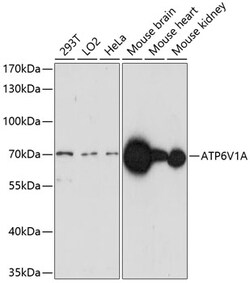
ABclonal Technology ATP6V1A Rabbit pAb
This gene encodes a component of vacuolar ATPase (V-ATPase), a multisubunit enzyme that mediates acidification of eukaryotic intracellular organelles. V-ATPase dependent organelle acidification is necessary for such intracellular processes as protein sorting, zymogen activation, receptor-mediated endocytosis, and synaptic vesicle proton gradient generation. V-ATPase is composed of a cytosolic V1 domain and a transmembrane V0 domain. The V1 domain consists of three A and three B subunits, two G subunits plus the C, D, E, F, and H subunits. The V1 domain contains the ATP catalytic site. The V0 domain consists of five different subunits a, c, c, c", and d. Additional isoforms of many of the V1 and V0 subunit proteins are encoded by multiple genes or alternatively spliced transcript variants. This encoded protein is one of two V1 domain A subunit isoforms and is found in all tissues. Transcript variants derived from alternative polyadenylation exist.
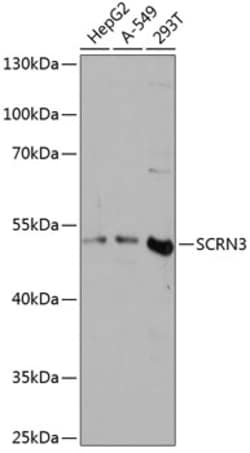
ABclonal Technology SCRN3 Rabbit pAb
Predicted to enable cysteine-type exopeptidase activity and dipeptidase activity. Predicted to be involved in proteolysis.
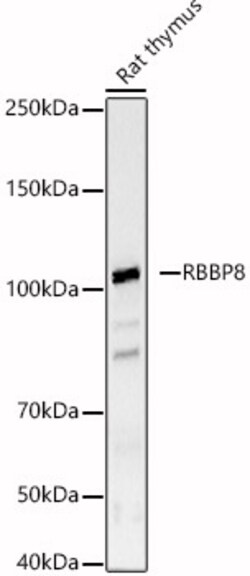
ABclonal Technology RBBP8 Rabbit pAb
The protein encoded by this gene is a ubiquitously expressed nuclear protein. It is found among several proteins that bind directly to retinoblastoma protein, which regulates cell proliferation. This protein complexes with transcriptional co-repressor CTBP. It is also associated with BRCA1 and is thought to modulate the functions of BRCA1 in transcriptional regulation, DNA repair, and/or cell cycle checkpoint control. It is suggested that this gene may itself be a tumor suppressor acting in the same pathway as BRCA1. Three transcript variants encoding two different isoforms have been found for this gene. More transcript variants exist, but their full-length natures have not been determined.
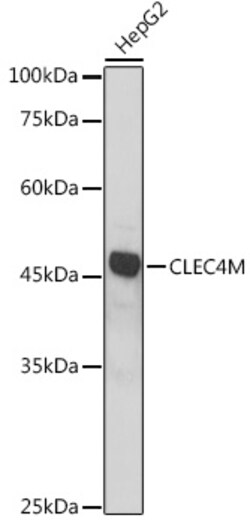
ABclonal Technology CLEC4M Rabbit pAb
This gene encodes a C-type lectin involved in cell adhesion and pathogen recognition. It recognizes a range of pathogens, including tuberculosis mycobacteria, Ebola, HIV-1, influenza A, West Nile virus, and SARS-CoV. The protein has four domains: a C-terminal carbohydrate recognition domain, a flexible neck domain, a transmembrane region, and an N-terminal cytoplasmic domain for internalization. This gene is related to CD209 (DC-SIGN) but differs in viral recognition and expression. It is highly expressed in endothelial cells of the liver, lymph node, and placenta. Polymorphisms in the neck domain are linked to resistance to SARS infection.
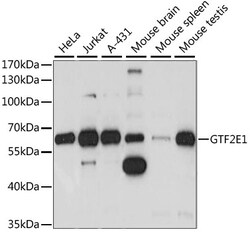
ABclonal Technology GTF2E1 Rabbit pAb
Enables RNA polymerase II general transcription initiation factor activity. Involved in transcription by RNA polymerase II. Located in cytosol and nucleoplasm. Part of transcription factor TFIID complex and transcription preinitiation complex.
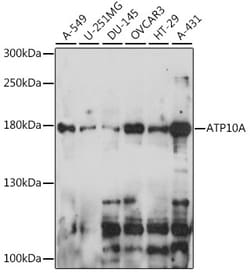
ABclonal Technology ATP10A Rabbit pAb
The protein encoded by this gene belongs to the family of P-type cation transport ATPases, and to the subfamily of aminophospholipid-transporting ATPases. The aminophospholipid translocases transport phosphatidylserine and phosphatidylethanolamine from one side of a bilayer to another. This gene is maternally expressed. It maps within the most common interval of deletion responsible for Angelman syndrome, also known as happy puppet syndrome.
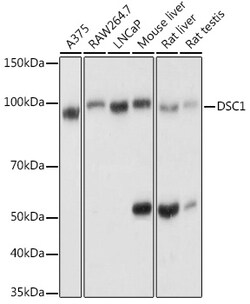
ABclonal Technology DSC1 Rabbit pAb
The protein encoded by this gene is a calcium-dependent glycoprotein that is a member of the desmocollin subfamily of the cadherin superfamily. These desmosomal family members, along with the desmogleins, are found primarily in epithelial cells where they constitute the adhesive proteins of the desmosome cell-cell junction and are required for cell adhesion and desmosome formation. A subtype of IgA pemphigus, a life-threatening autoimmune disease, is characterized by the presence of autoantibodies that target the encoded protein. The desmosomal family members are arranged in two clusters on chromosome 18. Alternative splicing of this gene results in multiple transcript variants. At least one of these variants encodes a preproprotein that is proteolytically processed to generate the mature protein.
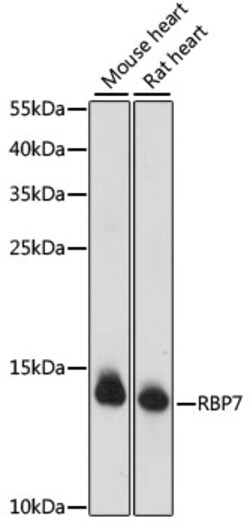
ABclonal Technology RBP7 Rabbit pAb
The protein encoded by this gene is a member of the cellular retinol-binding protein (CRBP) family, whose members are required for vitamin A stability and metabolism. The encoded protein binds all-trans-retinol and is structurally similar to other CRBPs, however, it has a lower binding affinity for retinol than other CRBPs.