
Universal Pipette Tips
Disposable pipette tips designed to fit single and multichannel pipettes from most manufacturers; offer acceptable performance compared to pipette specific tips and can be used with a variety of pipette models.
Single-use universal pipette tips are designed for compatibility with most mechanical and electronic single and multichannel pipettors.
Universal pipette tips are available in a range of types, sizes, colors, styles, and packaging configurations and may be designed for specific purposes or tasks.
- Capacity or volume based on the pipettor size
- Filters to reduce contamination and cross-contamination
- Color
- Sterility or autoclavability
- Tip style: beveled, tapered, wide bore, round, flat, or gel-loading
- Length: short or extended
- Purity: metal-free or DNase-, RNase-, ATP-, Bioburden-, PCR inhibitor-, endotoxin-, or pyrogen-free for genomic and biologic applications
- Surface treatments to reduce retention
- Packaging options to help facilitate re-stocking or eliminate waste

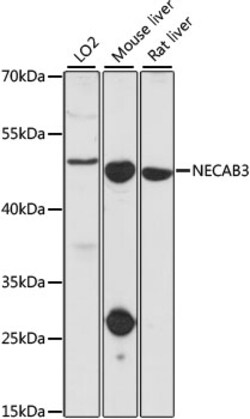
ABclonal Technology NECAB3 Rabbit pAb

The protein encoded by this gene interacts with the amino-terminal domain of the neuron-specific X11-like protein (X11L), inhibits the association of X11L with amyloid precursor protein through a non-competitive mechanism, and abolishes the suppression of beta-amyloid production by X11L. This protein, together with X11L, may play an important role in the regulatory system of amyloid precursor protein metabolism and beta-amyloid generation. The protein is phosphorylated by NIMA-related expressed kinase 2, and localizes to the Golgi apparatus. Multiple transcript variants encoding different isoforms have been found for this gene.

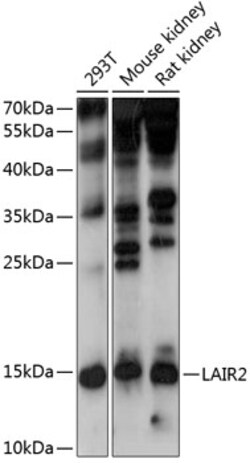
ABclonal Technology LAIR2 Rabbit pAb
The protein encoded by this gene is a member of the immunoglobulin superfamily. It was identified by its similarity to leukocyte-associated immunoglobulin-like receptor 1, a membrane-bound receptor that modulates innate immune response. The protein encoded by this locus is a soluble receptor that may play roles in both inhibition of collagen-induced platelet aggregation and vessel formation during placental implantation. This gene maps to a region of 19q13.4, termed the leukocyte receptor cluster, which contains 29 genes in the immunoglobulin superfamily. Alternatively spliced transcript variants have been described for this gene.
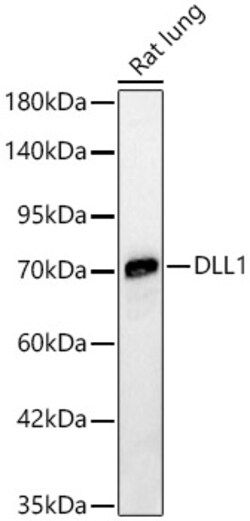
ABclonal Technology DLL1 Rabbit pAb
DLL1 is a human homolog of the Notch Delta ligand and is a member of the delta/serrate/jagged family. It plays a role in mediating cell fate decisions during hematopoiesis. It may play a role in cell-to-cell communication.
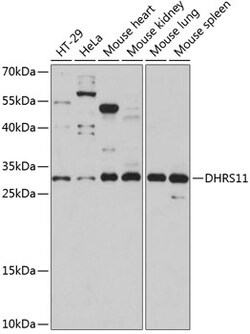
ABclonal Technology DHRS11 Rabbit pAb
Enables 17-beta-hydroxysteroid dehydrogenase (NADP+) activity, 17-beta-ketosteroid reductase activity, and 3-keto sterol reductase activity. Involved in steroid biosynthetic process. Predicted to be located in extracellular region.
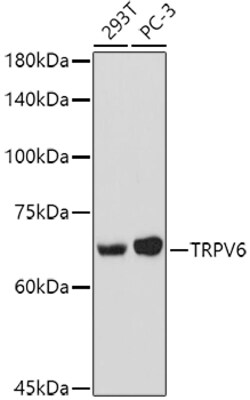
ABclonal Technology TRPV6 Rabbit pAb
This gene encodes a member of a family of multipass membrane proteins that functions as calcium channels. The encoded protein contains N-terminal ankyrin repeats, which are required for channel assembly and regulation. Translation initiation for this protein occurs at a non-AUG start codon that is decoded as methionine. This gene is situated next to a closely related gene for transient receptor potential cation channel subfamily V member 5 (TRPV5). This locus has experienced positive selection in non-African populations, resulting in several non-synonymous codon differences among individuals of different genetic backgrounds.
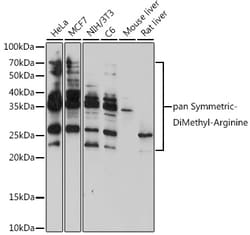
ABclonal Technology pan-Symmetric Di-Methyl Arginine Rabbit pAb
The methylation of arginine residues in proteins is a post-translational modification that contributes to a wide range of biological processes. Many cytokines involved in T cell development and activation utilize the common cytokine receptor γ-chain (γc) and the kinase JAK3 for signal transduction.
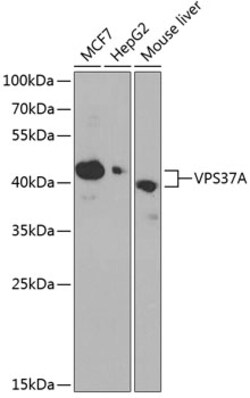
ABclonal Technology VPS37A Rabbit pAb
This gene belongs to the VPS37 family, and encodes a component of the ESCRT-I (endosomal sorting complex required for transport I) protein complex, required for the sorting of ubiquitinated transmembrane proteins into internal vesicles of multivesicular bodies. Expression of this gene is downregulated in hepatocellular carcinoma, and mutations in this gene are associated with autosomal recessive spastic paraplegia-53. A related pseudogene has been identified on chromosome 5. Alternatively spliced transcript variants have been found for this gene.
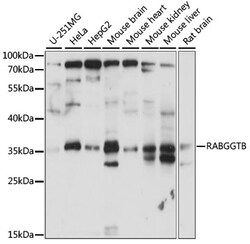
ABclonal Technology RABGGTB Rabbit pAb
This gene encodes the beta-subunit of the enzyme Rab geranylgeranyl-transferase (RabGGTase), which belongs to the protein prenyltransferase family. RabGGTase catalyzes the post-translational addition of geranylgeranyl groups to C-terminal cysteine residues of Rab GTPases. Three small nucleolar RNA genes are present in the intronic regions of this gene. Alternately spliced transcript variants have been observed for this gene. A pseudogene associated with this gene is located on chromosome 3.
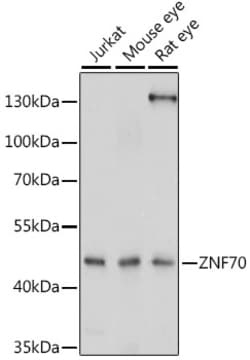
ABclonal Technology ZNF70 Rabbit pAb
Predicted to enable DNA-binding transcription factor activity, RNA polymerase II-specific and RNA polymerase II transcription regulatory region sequence-specific DNA binding activity. Predicted to be involved in regulation of transcription by RNA polymerase II. Predicted to be located in nucleus.
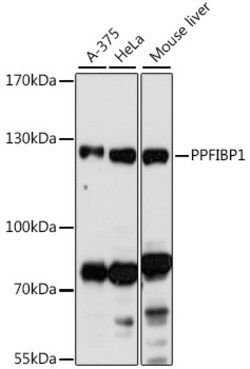
ABclonal Technology PPFIBP1 Rabbit pAb
The protein encoded by this gene is a member of the LAR protein-tyrosine phosphatase-interacting protein (liprin) family. Liprins interact with members of LAR family of transmembrane protein tyrosine phosphatases, which are known to be important for axon guidance and mammary gland development. It has been proposed that liprins are multivalent proteins that form complex structures and act as scaffolds for the recruitment and anchoring of LAR family of tyrosine phosphatases. This protein was found to interact with S100A4, a calcium-binding protein related to tumor invasiveness and metastasis. In vitro experiment demonstrated that the interaction inhibited the phosphorylation of this protein by protein kinase C and protein kinase CK2. Alternatively spliced transcript variants encoding distinct isoforms have been reported.
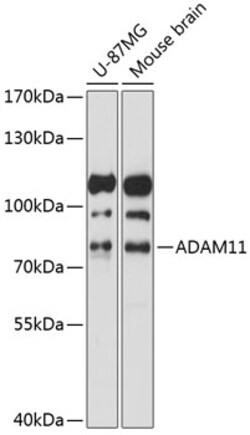
ABclonal Technology ADAM11 Rabbit pAb
This gene encodes a member of the ADAM (a disintegrin and metalloprotease) protein family. Members of this family are membrane-anchored proteins structurally related to snake venom disintegrins, and have been implicated in a variety of biological processes involving cell-cell and cell-matrix interactions, including fertilization, muscle development, and neurogenesis. The encoded preproprotein is proteolytically processed to generate the mature protease. This gene represents a candidate tumor suppressor gene for human breast cancer based on its location within a minimal region of chromosome 17q21 previously defined by tumor deletion mapping. Alternative splicing results in multiple transcript variants, at least one of which encodes an isoform that is proteolytically processed.
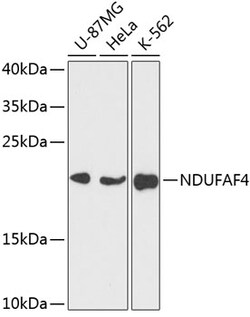
ABclonal Technology NDUFAF4 Rabbit pAb
NADHubiquinone oxidoreductase (complex I) catalyzes the transfer of electrons from NADH to ubiquinone (coenzyme Q) in the first step of the mitochondrial respiratory chain, resulting in the translocation of protons across the inner mitochondrial membrane. This gene encodes a complex I assembly factor. Mutations in this gene are a cause of mitochondrial complex I deficiency.
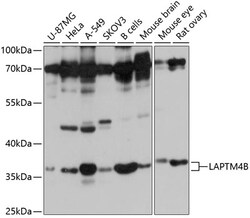
ABclonal Technology LAPTM4B Rabbit pAb
Enables ceramide binding activity, enzyme binding activity, and phosphatidylinositol bisphosphate binding activity. Involved in several processes, including negative regulation of macromolecule metabolic process, regulation of lysosomal membrane permeability, and regulation of lysosome organization. Located in several cellular components, including endosome, lysosomal membrane, and plasma membrane.
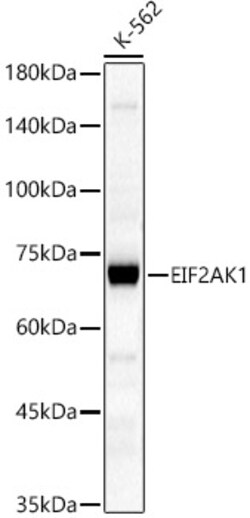
ABclonal Technology EIF2AK1 Rabbit pAb
The protein encoded by this gene acts at the level of translation initiation to downregulate protein synthesis in response to stress. The encoded protein is a kinase that can be inactivated by hemin. Two transcript variants encoding different isoforms have been found for this gene.
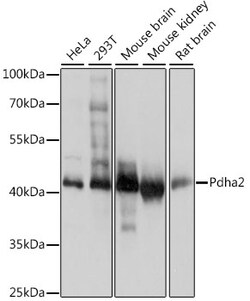
ABclonal Technology PDHA2 Rabbit pAb
Predicted to enable pyruvate dehydrogenase (acetyl-transferring) activity. Predicted to contribute to pyruvate dehydrogenase (NAD+) activity. Predicted to be involved in acetyl-CoA biosynthetic process from pyruvate. Predicted to act upstream of or within mitochondrial acetyl-CoA biosynthetic process from pyruvate. Located in mitochondrion. Is expressed in nervous system and testis. Orthologous to human PDHA2 (pyruvate dehydrogenase E1 subunit alpha 2).