
Universal Pipette Tips
Disposable pipette tips designed to fit single and multichannel pipettes from most manufacturers; offer acceptable performance compared to pipette specific tips and can be used with a variety of pipette models.
Single-use universal pipette tips are designed for compatibility with most mechanical and electronic single and multichannel pipettors.
Universal pipette tips are available in a range of types, sizes, colors, styles, and packaging configurations and may be designed for specific purposes or tasks.
- Capacity or volume based on the pipettor size
- Filters to reduce contamination and cross-contamination
- Color
- Sterility or autoclavability
- Tip style: beveled, tapered, wide bore, round, flat, or gel-loading
- Length: short or extended
- Purity: metal-free or DNase-, RNase-, ATP-, Bioburden-, PCR inhibitor-, endotoxin-, or pyrogen-free for genomic and biologic applications
- Surface treatments to reduce retention
- Packaging options to help facilitate re-stocking or eliminate waste

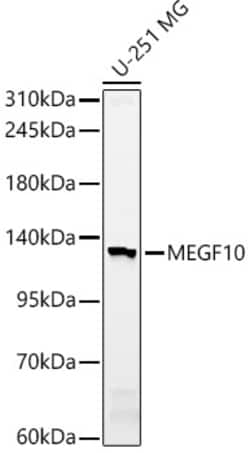
ABclonal Technology MEGF10 Rabbit pAb

This gene encodes a member of the multiple epidermal growth factor-like domains protein family. The encoded protein plays a role in cell adhesion, motility and proliferation, and is a critical mediator of apoptotic cell phagocytosis as well as amyloid-beta peptide uptake in the brain. Expression of this gene may be associated with schizophrenia, and mutations in this gene are a cause of early-onset myopathy, areflexia, respiratory distress, and dysphagia (EMARDD) as well as congenital myopathy with minicores. Alternatively spliced transcript variants have been observed for this gene.

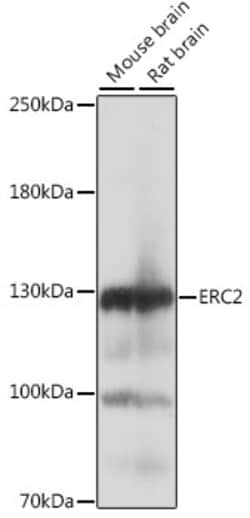
ABclonal Technology ERC2 Rabbit pAb
This gene encodes a protein that belongs to the Rab3-interacting molecule (RIM)-binding protein family. Members of this protein family form part of the cytomatrix at the active zone (CAZ) complex and function as regulators of neurotransmitter release. Alternative splicing results in multiple transcript variants.
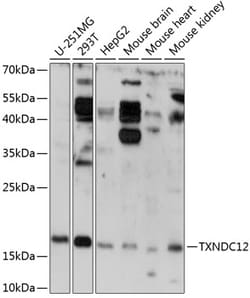
ABclonal Technology TXNDC12 Rabbit pAb
This gene encodes a member of the thioredoxin superfamily. Members of this family are characterized by a conserved active motif called the thioredoxin fold that catalyzes disulfide bond formation and isomerization. This protein localizes to the endoplasmic reticulum and has a single atypical active motif. The encoded protein is mainly involved in catalyzing native disulfide bond formation and displays activity similar to protein-disulfide isomerases. This protein may play a role in defense against endoplasmic reticulum stress. Alternate splicing results in both coding and non-coding variants.
![ABclonal Technology [KO Validated] PRKAR1A Rabbit pAb](https://assets.fishersci.com/TFS-Assets/CCG/product-images/5000138061.jpg-250.jpg)
ABclonal Technology [KO Validated] PRKAR1A Rabbit pAb
cAMP is a signaling molecule that activates cAMP-dependent protein kinase, which transduces signals through phosphorylation of target proteins. The inactive kinase is a tetramer of two regulatory and two catalytic subunits. cAMP dissociates this holoenzyme into a dimer of regulatory subunits bound to four cAMP and two free catalytic subunits. This gene encodes one of the regulatory subunits and was found to down-regulate liver gene expression in hepatoma-fibroblast hybrids. Mutations in this gene cause Carney complex (CNC). The gene can fuse with the RET protooncogene to form the PTC2 chimeric oncogene in thyroid tumors. A nonconventional nuclear localization sequence suggests its role in DNA replication by transporting the RFC40 subunit. Several splice variants encoding different isoforms have been observed.
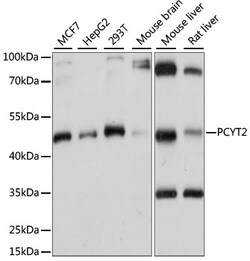
ABclonal Technology PCYT2 Rabbit pAb
This gene encodes an enzyme that catalyzes the formation of CDP-ethanolamine from CTP and phosphoethanolamine in the Kennedy pathway of phospholipid synthesis. Alternative splicing results in multiple transcript variants.
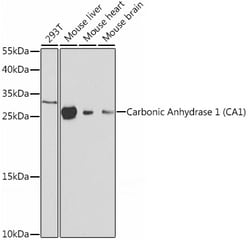
ABclonal Technology Carbonic Anhydrase 1 (CA1) Rabbit pAb
Carbonic anhydrases (CAs) are a large family of zinc metalloenzymes that catalyze the reversible hydration of carbon dioxide. They participate in a variety of biological processes, including respiration, calcification, acid-base balance, bone resorption, and the formation of aqueous humor, cerebrospinal fluid, saliva and gastric acid. They show extensive diversity in tissue distribution and in their subcellular localization. This CA1 gene is closely linked to the CA2 and CA3 genes on chromosome 8. It encodes a cytosolic protein that is found at the highest level in erythrocytes. Allelic variants of this gene have been described in some populations. Alternative splicing and the use of alternative promoters results in multiple transcript variants.
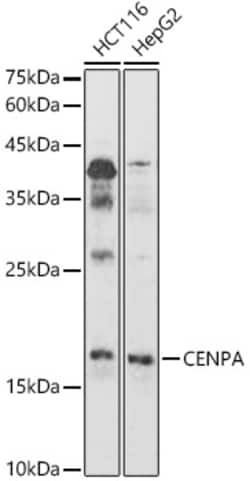
ABclonal Technology CENPA Rabbit pAb
Centromeres are the differentiated chromosomal domains that specify the mitotic behavior of chromosomes. This gene encodes a centromere protein which contains a histone H3 related histone fold domain that is required for targeting to the centromere. Centromere protein A is proposed to be a component of a modified nucleosome or nucleosome-like structure in which it replaces 1 or both copies of conventional histone H3 in the (H3-H4)2 tetrameric core of the nucleosome particle. The protein is a replication-independent histone that is a member of the histone H3 family. Alternative splicing results in multiple transcript variants encoding distinct isoforms.
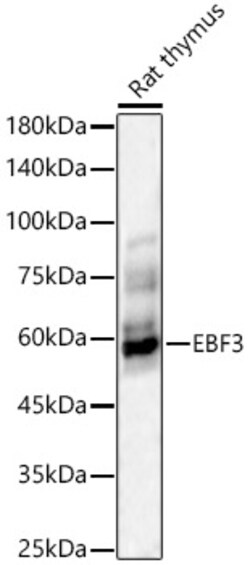
ABclonal Technology EBF3 Rabbit pAb
This gene encodes a member of the early B-cell factor (EBF) family of DNA binding transcription factors. EBF proteins are involved in B-cell differentiation, bone development and neurogenesis, and may also function as tumor suppressors. The encoded protein inhibits cell survival through the regulation of genes involved in cell cycle arrest and apoptosis, and aberrant methylation or deletion of this gene may play a role in multiple malignancies including glioblastoma multiforme and gastric carcinoma.
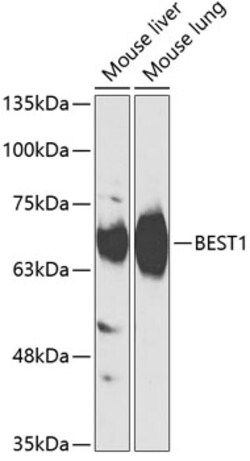
ABclonal Technology BEST1 Rabbit pAb
This gene encodes a member of the bestrophin gene family. This small gene family is characterized by proteins with a highly conserved N-terminus with four to six transmembrane domains. Bestrophins may form chloride ion channels or may regulate voltage-gated L-type calcium-ion channels. Bestrophins are generally believed to form calcium-activated chloride-ion channels in epithelial cells but they have also been shown to be highly permeable to bicarbonate ion transport in retinal tissue. Mutations in this gene are responsible for juvenile-onset vitelliform macular dystrophy (VMD2), also known as Best macular dystrophy, in addition to adult-onset vitelliform macular dystrophy (AVMD) and other retinopathies. Alternative splicing results in multiple variants encoding distinct isoforms.
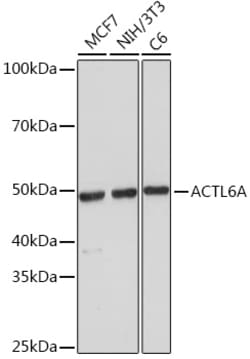
ABclonal Technology ACTL6A Rabbit mAb
This gene encodes a family member of actin-related proteins (ARPs), which share significant amino acid sequence identity to conventional actins. Both actins and ARPs have an actin fold, which is an ATP-binding cleft, as a common feature. The ARPs are involved in diverse cellular processes, including vesicular transport, spindle orientation, nuclear migration and chromatin remodeling. This gene encodes a 53 kDa subunit protein of the BAF (BRG1/brm-associated factor) complex in mammals, which is functionally related to SWI/SNF complex in S. cerevisiae and Drosophila, the latter is thought to facilitate transcriptional activation of specific genes by antagonizing chromatin-mediated transcriptional repression. Together with beta-actin, it is required for maximal ATPase activity of BRG1, and for the association of the BAF complex with chromatin/matrix. Three transcript variants that encode two different protein isoforms have been described.
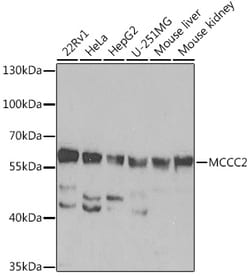
ABclonal Technology MCCC2 Rabbit pAb
This gene encodes the small subunit of 3-methylcrotonyl-CoA carboxylase. This enzyme functions as a heterodimer and catalyzes the carboxylation of 3-methylcrotonyl-CoA to form 3-methylglutaconyl-CoA. Mutations in this gene are associated with 3-Methylcrotonylglycinuria, an autosomal recessive disorder of leucine catabolism. Alternative splicing results in multiple transcript variants encoding distinct isoforms.
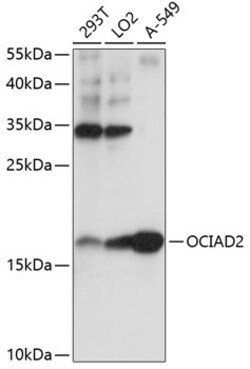
ABclonal Technology OCIAD2 Rabbit pAb
Predicted to be involved in endocytosis, hematopoietic stem cell homeostasis, and positive regulation of receptor signaling pathway via JAK-STAT. Predicted to act upstream of or within response to bacterium. Predicted to be located in Golgi apparatus, endosome, and lysosome.
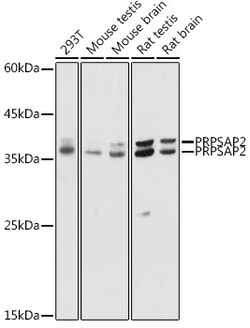
ABclonal Technology PRPSAP2 Rabbit pAb
This gene encodes a protein that associates with the enzyme phosphoribosylpyrophosphate synthetase (PRS). PRS catalyzes the formation of phosphoribosylpyrophosphate which is a substrate for synthesis of purine and pyrimidine nucleotides, histidine, tryptophan and NAD. PRS exists as a complex with two catalytic subunits and two associated subunits. This gene encodes a non-catalytic associated subunit of PRS. Alternate splicing results in multiple transcript variants.
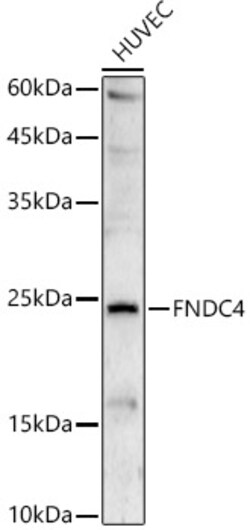
ABclonal Technology FNDC4 Rabbit pAb
Involved in response to transforming growth factor beta. Predicted to be located in endoplasmic reticulum and extracellular space. Predicted to be active in extracellular region and plasma membrane.
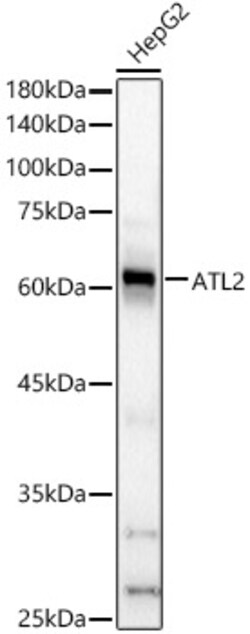
ABclonal Technology ATL2 Rabbit pAb
Enables identical protein binding activity. Involved in Golgi organization, endoplasmic reticulum tubular network membrane organization, and protein homooligomerization. Located in endoplasmic reticulum tubular network membrane. Is integral component of membrane.