
Protein Molecular Weight Markers


S2 Media 15x100mm Chameleon™ COLOREX™ mSuperCARBA (RUO), 10/pack
Chameleon™ COLOREX™ mSuperCARBA™ (RUO) is a selective and differential, chromogenic culture medium used for the qualitative direct detection of gastrointestinal colonization of Carbapenem Resistant Enterobacteria (CRE), including OXA-48 producers. Test specimens include rectal swab and stools, as well as food industry samples including livestock and poultry. For Research Use Only (RUO). Not for use in diagnostic procedures unless Laboratory Developed Test (LDT) validation with the product has been completed. Further identification, susceptibility testing, and epidemiological typing should be performed on suspect colonies.• Product meets CLSI performance criteria.• Chameleon™ COLOREX™ mSuperCARBA™ should be used by trained professionals within a laboratory setting. • For in vitro diagnostic (IVD) use.• Product is not intended for use in the diagnosis or treatment of disease or other human conditions.

![ABclonal Technology [KO Validated] EBP1/PA2G4 Rabbit pAb](https://assets.fishersci.com/TFS-Assets/CCG/product-images/5000108961.jpg-250.jpg)
ABclonal Technology [KO Validated] EBP1/PA2G4 Rabbit pAb

This gene encodes an RNA-binding protein that is involved in growth regulation. This protein is present in pre-ribosomal ribonucleoprotein complexes and may be involved in ribosome assembly and the regulation of intermediate and late steps of rRNA processing. This protein can interact with the cytoplasmic domain of the ErbB3 receptor and may contribute to transducing growth regulatory signals. This protein is also a transcriptional co-repressor of androgen receptor-regulated genes and other cell cycle regulatory genes through its interactions with histone deacetylases. This protein has been implicated in growth inhibition and the induction of differentiation of human cancer cells. Six pseudogenes, located on chromosomes 3, 6, 9, 18, 20 and X, have been identified.
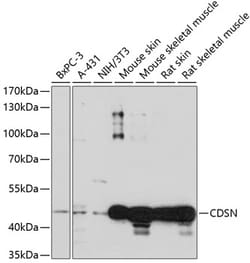
ABclonal Technology CDSN Rabbit pAb
This gene encodes a protein found in corneodesmosomes, which localize to human epidermis and other cornified squamous epithelia. The encoded protein undergoes a series of cleavages during corneocyte maturation. This gene is highly polymorphic in human populations, and variation has been associated with skin diseases such as psoriasis, hypotrichosis and peeling skin syndrome. The gene is located in the major histocompatibility complex (MHC) class I region on chromosome 6.

STEMCELL Technologies EasySepTM Human CD8 T Cell
Large-scale immunomagnetic isolation of untouched human CD8plus T cells - 1 x 10.10 cells

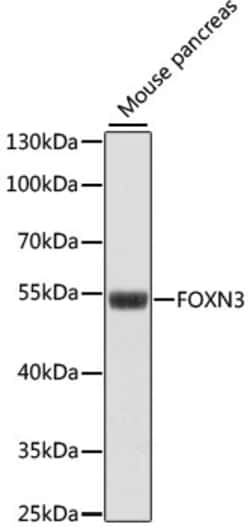
ABclonal Technology FOXN3 Rabbit pAb
This gene is a member of the forkhead/winged helix transcription factor family. Checkpoints are eukaryotic DNA damage-inducible cell cycle arrests at G1 and G2. Checkpoint suppressor 1 suppresses multiple yeast checkpoint mutations including mec1, rad9, rad53 and dun1 by activating a MEC1-independent checkpoint pathway. Alternative splicing is observed at the locus, resulting in distinct isoforms.
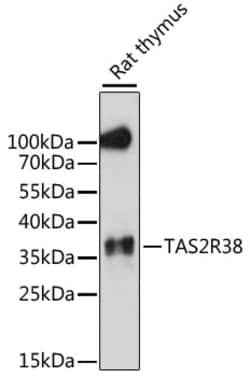
ABclonal Technology TAS2R38 Rabbit pAb
This gene encodes a seven-transmembrane G protein-coupled receptor that controls the ability to taste glucosinolates, a family of bitter-tasting compounds found in plants of the Brassica sp. Synthetic compounds phenylthiocarbamide (PTC) and 6-n-propylthiouracil (PROP) have been identified as ligands for this receptor and have been used to test the genetic diversity of this gene. Although several allelic forms of this gene have been identified worldwide, there are two predominant common forms (taster and non-taster) found outside of Africa. These alleles differ at three nucleotide positions resulting in amino acid changes in the protein (A49P, A262V, and V296I) with the amino acid combination PAV identifying the taster variant (and AVI identifying the non-taster variant).
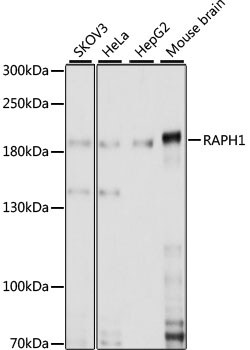
ABclonal Technology RAPH1 Rabbit pAb
This gene encodes a protein that belongs to the Mig10/Rap1-interacting adaptor molecule/Lamellipodin family of adapter proteins, which function in cell migration. Members of this family contain pleckstrin-homology domains, Ras-association domains, and proline-rich C-termini. The protein encoded by this gene regulates actin dynamics through interaction with Ena/Vasodilator proteins as well as direct binding to filamentous actin to regulate actin network assembly. Alternative splicing results in multiple transcript variants.
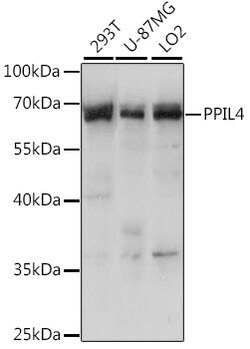
ABclonal Technology PPIL4 Rabbit pAb
This gene is a member of the cyclophilin family of peptidylprolyl isomerases. The cyclophilins are a highly conserved family, members of which play an important role in protein folding, immunosuppression by cyclosporin A, and infection of HIV-1 virions.
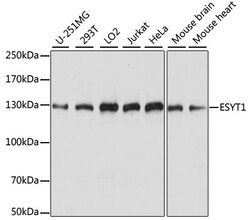
ABclonal Technology ESYT1 Rabbit pAb
Enables identical protein binding activity. Predicted to be involved in endoplasmic reticulum-plasma membrane tethering and lipid transport. Located in endoplasmic reticulum. Is integral component of endoplasmic reticulum membrane.
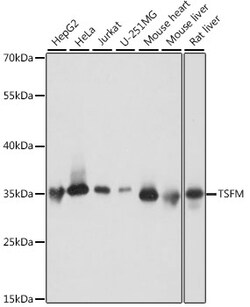
ABclonal Technology TSFM Rabbit pAb
This gene encodes a mitochondrial translation elongation factor. The encoded protein is an enzyme that catalyzes the exchange of guanine nucleotides on the translation elongation factor Tu during the elongation step of mitchondrial protein translation. Mutations in this gene are associated with combined oxidative phosphorylation deficiency-3 syndrome. Alternate splicing results in multiple transcript variants.
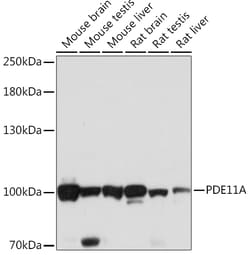
ABclonal Technology PDE11A Rabbit pAb
The 3,5-cyclic nucleotides cAMP and cGMP function as second messengers in a wide variety of signal transduction pathways. 3,5-cyclic nucleotide phosphodiesterases (PDEs) catalyze the hydrolysis of cAMP and cGMP to the corresponding 5-monophosphates and provide a mechanism to downregulate cAMP and cGMP signaling. This gene encodes a member of the PDE protein superfamily. Mutations in this gene are a cause of Cushing disease and adrenocortical hyperplasia. Multiple transcript variants encoding different isoforms have been found for this gene.
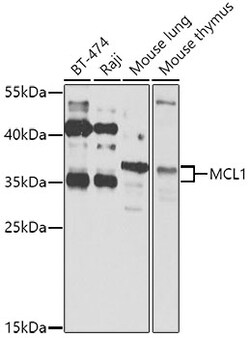
ABclonal Technology MCL1 Rabbit pAb
This gene encodes an anti-apoptotic protein, which is a member of the Bcl-2 family. Alternative splicing results in multiple transcript variants. The longest gene product (isoform 1) enhances cell survival by inhibiting apoptosis while the alternatively spliced shorter gene products (isoform 2 and isoform 3) promote apoptosis and are death-inducing.
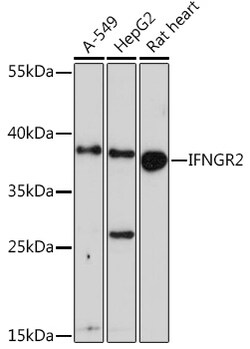
ABclonal Technology IFNGR2 Rabbit pAb
This gene (IFNGR2) encodes the non-ligand-binding beta chain of the gamma interferon receptor. Human interferon-gamma receptor is a heterodimer of IFNGR1 and IFNGR2. Defects in IFNGR2 are a cause of mendelian susceptibility to mycobacterial disease (MSMD), also known as familial disseminated atypical mycobacterial infection. MSMD is a genetically heterogeneous disease with autosomal recessive, autosomal dominant or X-linked inheritance.
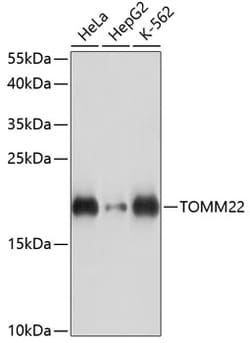
ABclonal Technology TOMM22 Rabbit pAb
The protein encoded by this gene is an integral membrane protein of the mitochondrial outer membrane. The encoded protein interacts with TOMM20 and TOMM40, and forms a complex with several other proteins to import cytosolic preproteins into the mitochondrion.

ABclonal Technology CCDC124 Rabbit pAb
Enables RNA binding activity. Predicted to be involved in cell division. Located in cytosol and plasma membrane.