
General Cell Lines and Cell Cultures



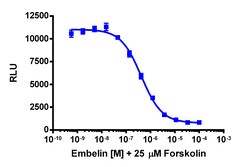
Eurofins Discoverx cAMP Hunter CHO-K1 GPR84 Gi Cell Line, 2 vials. (95-0158C2)
The cAMP Hunter GPR84 Gi cell line is a stable, engineered cell line for use in studying drug candidates (small molecules or biologics) targeting GPCRs. This cell line enables assessment of ligand (e.g. embelin) based activation of GPR84 GPCR activity via detection of decreasing levels of intracellular cAMP. This product uses EFC technology. The cells overexpress wild type GPR84, a naturally Gi/Go coupled GPCR. Upon activation of GPR84, the decrease in levels of intracellular cAMP leads to a decreased signal from EFC when the cAMP detection kit is applied. This stable modified cell line is provided as two vials of cryopreserved cells. For detailed product information, User Manual and datasheet, visit www.discoverx.com/gpcr.


Biochain Institute Inc Frozen Tissue Section - Parkinson's Disease: Brain: Amygdala, 5 slides/PK
BioChain's tissue products are based on the sample repository network established following the IRB-approved ethical standard and procedures. BioChain's Frozen Tissue Slides are ideal for rapidly identifying cellular localization of RNA or protein. A single human adult normal tissue with 5-10 um thickness is mounted on a positively charged glass slide. The slides are fixed and dehydrated with acetone for consistent results with in situ hybridization and immunohistochemistry. More organs may be available upon request.

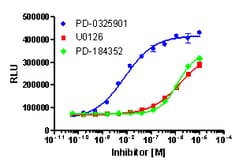
Eurofins Discoverx InCELL Hunter A549 MEK1 Kinase Binding Cell Line, 2 vials. (96-0040C15)
The InCELL Hunter A549 MEK1 Kinase Binding Cell Line is a stable, engineered cell line for use in studying small molecule drug candidates that engage with kinases. This cell line enables assessment of compound-engagement-based stabilization of MEK1 via detection of MEK1 levels. This product uses EFC technology. The cell line included overexpresses MEK1 target protein fused to ProLabel. In the absence of compound that binds and stabilizes the target, this protein is denatured by the heat treatment and no EFC signal is produced. When compound engages and heat-stabilizes the target, EA contained in the detection reagent produces EFC signal. This stable modified cell line is provided as two vials of cryopreserved cells. For detailed product information, User Manual and datasheet, visit www.discoverx.com/kinases.

ATCC Prevotella intermedia; Strain VPI 4197; genomic DNA
Genomic DNA from Prevotella intermedia strain VPI 4197 (ATCC 25611). This whole-genome sequenced product can be used in PCR or other molecular biology applications.

Eurofins Discoverx PTGER1 Gq Calcium Signaling Cell-Based Assay Kit (CHO-K1)
The PTGER1 Gq Stable Cell Line Calcium Signaling Assay (CHO-K1) contains a stable clonal cell line used to measure PTGER1 (GPCR) activation via an increase in intracellular calcium. This is a complete kit that includes the cell vials and all required reagents needed for cell culture and running the assay.
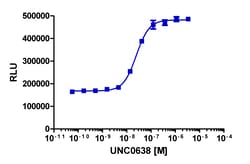
Eurofins Discoverx InCELL Hunter A549 GLP Methyltransferase Cell Line, 2 vials. (96-0045C15)
The InCELL Hunter A549 GLP Methyltransferase Cell Line is a stable, engineered cell line for use in studying small molecule drug candidates that engage with regulators of epigenetics pathways. This cell line enables assessment of compound-engagement-based stabilization of GLP via detection of GLP levels. This product uses EFC technology. The cell line included overexpresses GLP target protein fused to ProLabel. In the absence of compound that binds and stabilizes the target, this protein is degraded and no EFC signal is produced. When compound engages and stabilizes the target, EA contained in the detection reagent produces EFC signal. This stable modified cell line is provided as two vials of cryopreserved cells. For detailed product information, User Manual and datasheet, visit www.discoverx.com/epigenetics.
Discovery Life Sciences AS PBMC Act Tx
PBMCs Peripheral Blood Mononuclear Cells are immune cells isolated from whole blood and viably cryopreserved providing a foundational material for immunology studies cell therapy research and functional immune assays
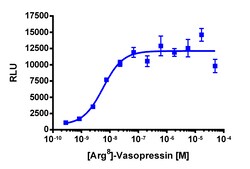
Eurofins Discoverx PathHunter AVPR1B Activated GPCR Internalization U2OS Cell Line, 2 vials. (93-0722C3)
The PathHunter AVPR1B Activated GPCR internalization cell line is a stable, engineered cell line for use in studying drug candidates (small molecules or biologics) affecting GPCR activation and internalization. This cell line uses EFC technology to measure ligand-induced internalization of AVPR1B via detection of localization to the early endosome. The included cell line overexpresses EA-tagged β-Arrestin-2 as well as a ProLink-tagged early endosome protein and untagged AVPR1B. Upon ligand-induced receptor activation, β-Arrestin-2 is recruited to the activated GPCR and the resulting AVPR1B-arrestin complex is internalized to the early endosome, leading to production of EFC signal. This stable modified cell line is provided as two vials of cryopreserved cells. For detailed product information, User Manual and datasheet, visit www.discoverx.com/gpcr.

ATCC Human papilloma virus; type 16 genome; purified phagemid DNA
pHPV-16 purified plasmid DNA is a clone of HPV16 that has been linearized at the unique BamHI site and cloned into the XhoI site of the pBluescript SK- vector. This product has applications for molecular biology.
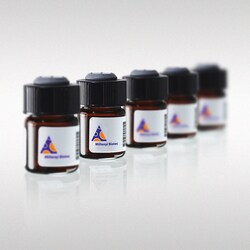
Miltenyi Biotec, Inc. REAlease CD56 MicroBead Kit, human
Positive isolation from PBMCs with releasable MicroBeads and antibody fragments
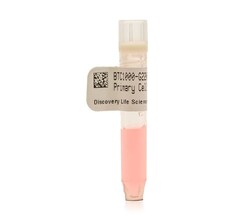
Discovery Life Sciences Bladder Cancer PD L1 DTC
DTC Dissociated Tumor and Tissue Cells start as fresh solid tumor tissue collected during surgery are enzymatically and mechanically dissociated into single cells and are delivered as viably cryopreserved cells for functional assays cell culture and single cell genomics
Discovery Life Sciences MM Tx Naive PBMC
PBMCs Peripheral Blood Mononuclear Cells are immune cells isolated from whole blood and viably cryopreserved providing a foundational material for immunology studies cell therapy research and functional immune assays
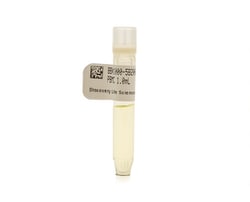
Discovery Life Sciences Pancreatic Ca Actv Tx IO PBMC
PBMCs Peripheral Blood Mononuclear Cells are immune cells isolated from whole blood and viably cryopreserved providing a foundational material for immunology studies cell therapy research and functional immune assays
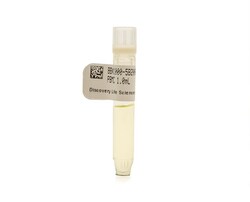
Discovery Life Sciences AML Active Tx PBMC
PBMCs Peripheral Blood Mononuclear Cells are immune cells isolated from whole blood and viably cryopreserved providing a foundational material for immunology studies cell therapy research and functional immune assays