
Primary Antibody Matched Pairs

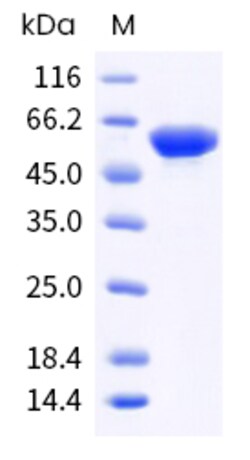
Human CES1 Protein 50ug (Sino Biological)
A DNA sequence encoding the Human CES1 (NP_001020365) (Met1-Leu567) was expressed with a polyhistidine tag at the C-terminus.

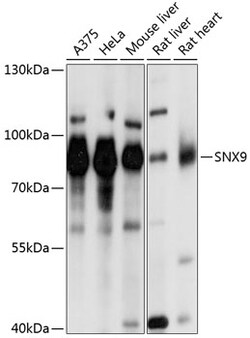
ABclonal Technology SNX9 Rabbit pAb

This gene encodes a member of the sorting nexin family. Members of this family contain a phosphoinositide binding domain, and are involved in intracellular trafficking. The encoded protein does not contain a coiled coil region, like some family members, but does contain a SRC homology domain near its N-terminus. The encoded protein is reported to have a variety of interaction partners, including of adaptor protein 2 , dynamin, tyrosine kinase non-receptor 2, Wiskott-Aldrich syndrome-like, and ARP3 actin-related protein 3. The encoded protein is implicated in several stages of intracellular trafficking, including endocytosis, macropinocytosis, and F-actin nucleation.

Bioss CD55 - Extracellular region An
CD55 (Extracellular region) Primary Antibody Unconjugated Host Species Mouse Target Species Human Clonality Monoclonal Applications WB IP M033Concentration Size 100 ul Storage Buffer PBS 1 mg/ml BSA 0 05% NaN3 and 50% glycerol
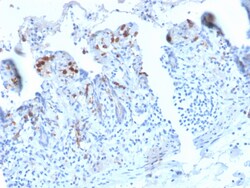
Biotium CD209 / DC-SIGN (Pathogen Receptor on Dendritic Cells)(C209/2749R), CF740 conjugate, 0.1mg/mL
DC-SIGN is a transmembrane receptor that is expressed on the surface of dendritic cells and macrophages. It is involved in the innate immune system and recognizes numerous evolutionarily divergent pathogens ranging from parasites to viruses. The protein is organized into three distinct domains: an N-terminal transmembrane domain, a tandem-repeat neck domain and C-type lectin carbohydrate recognition domain. The extracellular region consisting of the C-type lectin and neck domains has a dual function as a pathogen recognition receptor and a cell adhesion receptor by binding carbohydrate ligands on the surface of microbes and endogenous cells. The neck region is important for homo-oligomerization, which allows the receptor to bind multivalent ligands with high avidity. Primary antibodies are available purified, or with a selection of fluorescent CF Dyes and other labels. CF Dyes offer exceptional brightness and photostability. Note: Conjugates of blue fluorescent dyes like C

Genscript Corporation CD27 Ligand/CD70 Trimer His
CD70 also named CD27 ligand (CD27L) is a type II transmembrane glycoprotein belonging to the TNF superfamily (TNFSF) and has been designated TNFSF7 CD70 is a cytokine that binds to CD27 Plays a role in T-cell activation Induces the proliferation of costimulated T-cells and enhances the generation of cytolytic T-cells


Medchemexpress LLC Glutaminyl-peptide cyclotransferase, human recombinant (His-tag) | 37257-21-9 | >95.0% | 10 UG
Recombinant human glutaminyl-peptide cyclotransferase (QPCT) expressed in Sf9 insect cells, supplied as an N-terminal His-tagged, lyophilized protein (10 μg). The enzyme catalyzes formation of N-terminal pyroglutamate residues in peptides and is used in studies of peptide processing and amyloid-beta modifications.
- Recombinant human enzyme expressed in Sf9 insect cells.
- N-terminal His tag facilitates purification and detection.
- Purity greater than 95% by reducing SDS-PAGE.
- Molecular weight approximately 38 kDa.
- Lyophilized from 20 mM Tris, 500 mM NaCl, pH 7.4, with glycerol and stabilizers.
- Store frozen and use aliquots to avoid freeze-thaw cycles.
- Do not reconstitute below 100 μg/mL in water when preparing stock solutions.
Biotium Perforin-1 (Pore Forming Protein) (Apoptosis Marker) (PRF1/2468), CF740 conjugate, 0.1mg/mL
Perforin is a pore-forming protein that leads to osmotic lysis of the target cells and subsequently enables granzymes to enter the target cells and activate apoptosis. Perforin has structural and functional similarities to complement component 9 (C9). Like C9, this protein creates transmembrane tubules and is capable of lysing non-specifically a variety of target cells. It is one of the main cytolytic proteins of cytolytic granules, and is known to be a key effector molecule for T-cell- and natural killer-cell-mediated cytolysis. Defects in this gene cause familial hemophagocytic lymphohistiocytosis type 2 (HPLH2), a rare and lethal autosomal recessive disorder of early childhood. The expression of perforin is reportedly upregulated in activated CD8 T-cells, natural killer cells and some CD4 T-cells.Primary antibodies are available purified, or with a selection of fluorescent CF Dyes and other labels. CF Dyes offer exceptional brightness and photostability. Note: Conjugates of
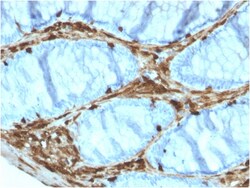
Biotium Annexin A1 / (Hairy Cell Leukemia Marker)(ANXA1/3566), CF647 conjugate, 0.1mg/mL
Annexin A1 belongs to the annexin family. It plays a role in glucocorticoid-mediated down-regulation of the early phase of the inflammatory response. In resting conditions Annexin A1 is localized to the cytoplasm. Upon activation it is mobilized to the membrane and secreted. Annexin A1 and contains 4 annexin repeats. A pair of annexin repeats may form one binding site for calcium and a phospholipid. Expression of the ANXA1 gene is upregulated in hairy cell leukemia (HCL). Detection of ANXA1 provides a simple, highly sensitive and specific assay for diagnosing HCL. Annexin A1 has also been found to be protective against DNA damage induced by heat in breast cancer cells, suggesting it is involved in tumor suppressive and protective activities, and also is associated with treatment resistance. Primary antibodies are available purified, or with a selection of fluorescent CF Dyes and other labels. CF Dyes offer exceptional brightness and photostability. Note: Conjugates of blue
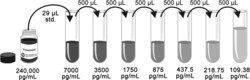
Sino Biological Human respiratory syncytial virus (RSV) Fusion Glycoprotein / RSV-F ELISA Pair Set 5Plates
Human respiratory syncytial virus (RSV) Fusion Glycoprotein / RSV-F ELISA Pair Set
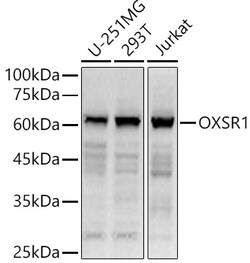
ABclonal Technology OXSR1 Rabbit pAb
The product of this gene belongs to the Ser/Thr protein kinase family of proteins. It regulates downstream kinases in response to environmental stress, and may play a role in regulating the actin cytoskeleton.
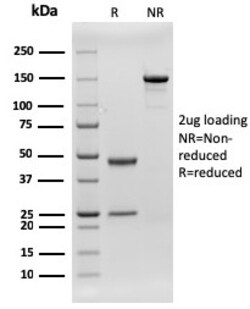
Biotium CD79b (B-Cell Marker)(rIGB/1842), CF740 conjugate, 0.1mg/mL
CD79 (also designated Ig chains, designated CD79B or B29. The B cell antigen receptor complex (BCR) is formed by the association of CD79 with a membrane immunoglobulin, such as IgM or IgD. The membrane immunoglobulins IgM and IgD achieve surface expression and antigen presentation function in response to CD79 association. The cytoplasmic tails of both CD79A and CD79B contain an ITAM (immuno-receptor tyrosine-based activation) motif, which acts to initiate the BCR signaling reactions by binding to and activating tyrosine kinases. Primary antibodies are available purified, or with a selection of fluorescent CF Dyes and other labels. CF Dyes offer exceptional brightness and photostability. Note: Conjugates of blue fluorescent dyes like CF405S and CF405M are not recommended for detecting low abundance targets, because blue dyes have lower fluorescence and can give higher non-specific background than other dye colors.
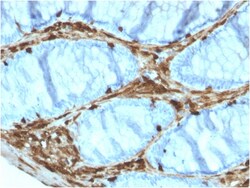
Biotium Annexin A1 / (Hairy Cell Leukemia Marker)(ANXA1/3566), CF740 conjugate, 0.1mg/mL
Annexin A1 belongs to the annexin family. It plays a role in glucocorticoid-mediated down-regulation of the early phase of the inflammatory response. In resting conditions Annexin A1 is localized to the cytoplasm. Upon activation it is mobilized to the membrane and secreted. Annexin A1 and contains 4 annexin repeats. A pair of annexin repeats may form one binding site for calcium and a phospholipid. Expression of the ANXA1 gene is upregulated in hairy cell leukemia (HCL). Detection of ANXA1 provides a simple, highly sensitive and specific assay for diagnosing HCL. Annexin A1 has also been found to be protective against DNA damage induced by heat in breast cancer cells, suggesting it is involved in tumor suppressive and protective activities, and also is associated with treatment resistance. Primary antibodies are available purified, or with a selection of fluorescent CF Dyes and other labels. CF Dyes offer exceptional brightness and photostability. Note: Conjugates of blue

Human IFNG ELISA Pair Set 15PP (Sino Biological)
Each vial contains 19 ng of recombinant Human Interferon Gamma/IFN gamma/IFNG. Reconstitute with 1 mL Dilution Buffer. After reconstitution, store at -20℃ to -80℃ in a manual defrost freezer. A seven-point standard curve using 2-fold serial in Dilution Buffer, and a high standard of 1400 pg/mL is recommended.
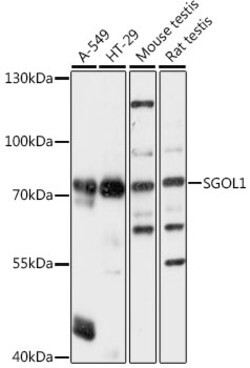
ABclonal Technology SGOL1 Rabbit pAb
The protein encoded by this gene is a member of the shugoshin family, believed to protect centromeric cohesin from cleavage during mitotic prophase by preventing phosphorylation of a cohesin subunit. Reduced expression leads to premature loss of centromeric cohesion, sister chromatid mis-segregation, and mitotic arrest. This protein also protects a subset of cohesin on chromosome arms during prophase. An isoform lacking exon 6 plays a role in centriolar cohesion. Mutations in this gene are linked to Chronic Atrial and Intestinal Dysrhythmia (CAID) syndrome, which involves Sick Sinus Syndrome and Chronic Intestinal Pseudo-obstruction. Fibroblasts from CAID patients show increased cell proliferation and higher senescence rates. Pseudogenes of this gene are found on chromosomes 1 and 7, and alternative splicing generates multiple transcript variants.
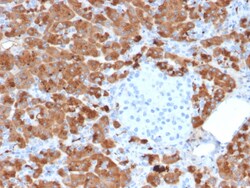
Biotium Carboxypeptidase A1 / CPA1 (Pancreatic Cancer Marker)(CPA1/2712), CF740 conjugate, 0.1mg/mL
Carboxypeptidase A1 (CPA1) is a secreted zinc metalloprotease that is highly expressed in pancreatic tissue. It catalyzes the release of C-terminal amino acids from a variety of proteins, thereby playing a key role in protein digestion and degradation. Human pancreatic procarboxypeptidase A exists as three different active forms, two of which are carboxypeptidase A1 (CPA1) and carboxypeptidase A2 (CPA2). Abnormal levels of CPA1 are associated with pancreatic cancer, suggesting a possible role in either tumor progression or tumor suppression events. Primary antibodies are available purified, or with a selection of fluorescent CF Dyes and other labels. CF Dyes offer exceptional brightness and photostability. Note: Conjugates of blue fluorescent dyes like CF405S and CF405M are not recommended for detecting low abundance targets, because blue dyes have lower fluorescence and can give higher non-specific background than other dye colors.