
Mouse Secondary Antibodies


Meridian Life Science Mab to P. falciparum HRP-2
Plasmodium falciparum (Malaria) Histidine-Rich Protein 2 (HRP-2)


Meridian Life Science MAb to P. falciparum HRP-2
Plasmodium falciparum (Malaria) Histidine-Rich Protein 2 (HRP-2)

Biotium Lung Specific Antigen(LSA120), CF740 conjugate, 0.1mg/mL
LSA120 MAb is directed against a lung cell antigen. It shows a well-defined reactivity with cells of the lung lineage at all stages of maturation. Non-lung lineages are negative by immuno-histology. Although the exact identity of its antigen has yet to be determined, it has been shown to be distinct from MOC-52 and UM-A9 proteins. This MAb is useful in the identification of normal and neoplastic human lung cells.Primary antibodies are available purified, or with a selection of fluorescent CF Dyes and other labels. CF Dyes offer exceptional brightness and photostability. Note: Conjugates of blue fluorescent dyes like CF405S and CF405M are not recommended for detecting low abundance targets, because blue dyes have lower fluorescence and can give higher non-specific background than other dye colors.

Meridian Life Science Mab to P. falciparum HRP-2
Plasmodium falciparum (Malaria) Histidine-Rich Protein 2 (HRP-2)


Cayman Chemical aCardIac ActInTerm Rabb 100uL
An isomer of vitamin D3 increases tibia ash weight and bone mineralization in vitamin D-deficient chicks at 1 3 and 10 Ug/day induces intestinal calcium transport and bone calcium mobilization in anephric rats fed a low-calcium and vitamin D-deficient diet at 25 Ug/animal

Biotium Muscle Specific Actin(HHF35), CF740 conjugate, 0.1mg/mL
This antibody recognizes actin of skeletal, cardiac, and smooth muscle cells. It is not reactive with other mesenchymal cells except for myoepithelium. Actin can be resolved on the basis of its isoelectric points into three distinctive components: alpha, beta, and gamma in order of increasing isoelectric point. Anti-muscle specific actin recognizes alpha and gamma isotypes of all muscle groups. Non-muscle cells such as vascular endothelial cells and connective tissues are non-reactive. Also, neoplastic cells of non-muscle-derived tissue such as carcinomas, melanomas, and lymphomas are negative.It stains tumors of smooth muscle (leiomyomas and leiomyosarcomas) as well as skeletal muscle (rhabdomyomas and rhabdomyosarcomas).Primary antibodies are available purified, or with a selection of fluorescent CF Dyes and other labels. CF Dyes offer exceptional brightness and photostability. Note: Conjugates of blue fluorescent dyes like CF405S and CF405M are not recommended for det
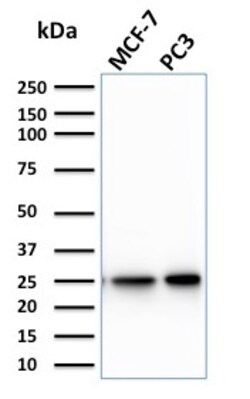
Biotium Calcineurin B homologous protein 2 / HCC Antigen 520(CPTC-CHP2-1), 1mg/mL
Calcineurin B homologous protein 2, also known as hepatocellular carcinoma-associated antigen 520, is a 196 amino acid protein that contains 4 EF-hand domains and plays a potential role in transmembrane Na/H exchange. By binding to and activating NHE-1, CHP2 increases the pH and works to protect cells from serum deprivation-induced death. Though not typically detected in normal tissues, CHP2 is highly expressed in malignantly transformed cells and is therefore considered to be a tumor-associated antigen. Ectopic expression of CHP2 promotes proliferation of HEK293 cells and knockdown of CHP2 mRNA in HepG2 cells inhibits cell proliferation. Like calcineurin B, CHP2 can bind to and stimulate phosphatase activity of calcineurin A and activate the calcineurin/NFAT signaling pathway. Primary antibodies are available purified, or with a selection of fluorescent CF Dyes and other labels. CF Dyes offer exceptional brightness and photostability. Note: Conjugates of blue fluorescent dyes
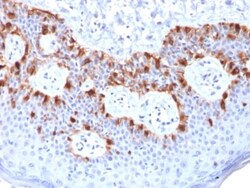
Biotium MART-1 / Melan-A / MLANA (Melanoma Marker) (rMLANA/788), Biotin conjugate, 0.1mg/mL
This antibody recognizes a protein doublet of 20-22 kDa, identified as MART-1 (Melanoma Antigen Recognized by T cells 1) or Melan-A. MART-1 is a newly identified melanocyte differentiation antigen recognized by autologous cytotoxic T lymphocytes. Seven other melanoma associated antigens recognized by autologous cytotoxic T cells include MAGE-1, MAGE-3, tyrosinase, gp100, gp75, BAGE-1, and GAGE-1. Subcellular fractionation shows that MART-1 is present in melanosomes and endoplasmic reticulum. This MAb labels melanomas and other tumors showing melanocytic differentiation. It is also a useful positive-marker for angiomyolipomas. It does not stain tumor cells of epithelial, lymphoid, glial, or mesenchymal origin.Primary antibodies are available purified, or with a selection of fluorescent CF Dyes and other labels. CF Dyes offer exceptional brightness and photostability. Note: Conjugates of blue fluorescent dyes like CF405S and CF405M are not recommended for detecting low abu
Biotium ARF1 (Golgi Apparatus Marker)(3F1), 1mg/mL
The ADP-ribosylation factor (ARF) family comprises a group of structurally and functionally conserved proteins, which are members of the Ras superfamily of regulatory GTP-binding proteins. The ARF family is divided functionally into the ARF and the ARF-like proteins. ARF's share more than 60% sequence identity, appear to be ubiquitous in eukaryotes, and are highly conserved evolutionarily. ARF is involved in intracellular protein traffic to and within the Golgi complex. ARF has a number of disparate activities including maintenance of organelle integrity, assembly of coat proteins, as a co-factor for cholera toxin and as an activator of phospholipase D. Primary antibodies are available purified, or with a selection of fluorescent CF Dyes and other labels. CF Dyes offer exceptional brightness and photostability. Note: Conjugates of blue fluorescent dyes like CF405S and CF405M are not recommended for detecting low abundance targets, because blue dyes have lower fluorescenc
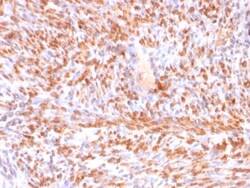
Biotium Calponin-1 (Smooth Muscle Marker) (rCNN1/832), 1mg/mL
Calponin is a calmodulin, F-actin and tropomyosin binding protein, which is thought to be involved in the regulation of smooth muscle contraction. Calponin expression is restricted to smooth muscle cells and has been shown to be a marker of the differentiated (contractile) phenotype of developing smooth muscle. Multiple isoelectric variants of calponin have been identified, however only two molecular weight isoforms exist, a 34 kDa form and a 29 kDa form. Expression of the 29 kDa form, I-calponin, is primarily restricted to muscle of the urogenital tract, whereas the higher molecular weight variant has been demonstrated in vascular and visceral smooth muscle. In Western blotting, this MAb reacts with only the 34 kDa form of calponin in extracts of human aortic medial smooth muscle and is unreactive with fibroblast extracts of cultivated human foreskin.Primary antibodies are available purified, or with a selection of fluorescent CF Dyes and other labels. CF Dyes offer excep
Biotium S100A (Melanoma Marker) (S1/61), CF740 conjugate, 0.1mg/mL
S100A and S100B proteins are two members of the S100 family of calcium binding proteins. S100A is composed of an alpha and a beta chain whereas S100B is composed of two beta chains. This antibody is specific against an epitope located on the alpha-chain (i.e. in S-100A and S-100B) but not on the beta-chain of S-100 (i.e. in S-100B). This antibody can be used to localize S-100A in various tissue sections. S-100 protein has been found in normal melanocytes, Langerhans cells, histiocytes, chondrocytes, lipocytes, skeletal and cardiac muscle, epithelial and myoepithelial cells of the breast, salivary and sweat glands. Neoplasms derived from these cells also express S-100 protein. Almost all malignant melanomas and cases of histiocytosis X are positive for S-100 protein.Primary antibodies are available purified, or with a selection of fluorescent CF Dyes and other labels. CF Dyes offer exceptional brightness and photostability. Note: Conjugates of blue fluorescent dyes like CF
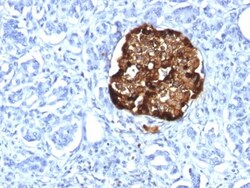
Biotium Chromogranin A / CHGA (Neuroendocrine Marker) (CHGA/1815R), CF740 conjugate, 0.1mg/mL
Chromogranin A is present in neuroendocrine cells throughout the body, including the neuroendocrine cells of the large and small intestine, adrenal medulla and pancreatic islets. It is an excellent marker for carcinoid tumors, pheochromocytomas, paragangliomas, and other neuroendocrine tumors. Co-expression of chromogranin A and neuron specific enolase (NSE) is common in neuroendocrine neoplasms. Reportedly, co-expression of certain keratins and chromogranin indicates neuroendocrine lineage. The presence of strong anti-chromogranin staining and absence of anti-keratin staining should raise the possibility of paraganglioma. The co-expression of chromogranin and NSE is typical of neuroendocrine neoplasms. Most pituitary adenomas and prolactinomas readily express chromogranin.Primary antibodies are available purified, or with a selection of fluorescent CF Dyes and other labels. CF Dyes offer exceptional brightness and photostability. Note: Conjugates of blue fluorescent dyes
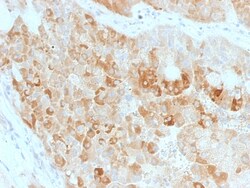
Biotium ROR2(ROR2/1911), 0.2mg/mL
ROR2 (receptor tyrosine kinase-like orphan receptor 2), also known as neurotrophic tyrosine kinase receptor-related 2 (NTRKR2), is a single pass transmembrane tyrosine-protein kinase receptor. It contains a cytoplasmic tyrosine kinase domain, distally located serine-threonine-rich domains, an extracellular immunoglobulin-like domain, a cysteine-rich domain and a kringle domain. ROR2 is important for skeletal and endocrine development and is required for cartilage and growth plate development. It promotes the differentiation of osteoblasts and plays an important role in the early formation of chondrocytes. ROR2 sequesters and associates with Dlxin-1 affecting the transcriptional function of Msx-2. ROR2 also interacts with canoncial Wnt-1 and Wnt-3, regulating their signaling pathways. Defects in ROR2 can result in the autosomal dominant skeletal disorder, brachydactyly type B1, or the autosomal recessive skeletal disorder, Robinow syndrome. Primary antibodies are available pur
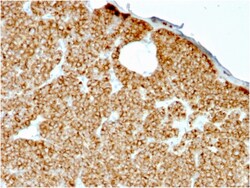
Biotium Parathyroid Hormone (PTH) (N-Terminal)(rPTH/911), 0.2mg/mL
Epitope of this MAb maps in the N-terminus of PTH, a hormone produced by the parathyroid gland that regulates the concentration of calcium and phosphorus in extracellular fluid. This hormone elevates blood Ca2 levels by dissolving the salts in bone and preventing their renal excretion. It is produced in the parathyroid gland as an 84 amino acid single chain polypeptide. It can also be secreted as N-terminal truncated fragments or C-terminal fragments after intracellular degradation, as in case of hypercalcemia. Defects in this gene are a cause of familial isolated hypoparathyroidism (FIH); also called autosomal dominant hypoparathyroidism or autosomal dominant hypocalcemia. FIH is characterized by hypocalcemia and hyperphosphatemia due to inadequate secretion of parathyroid hormone. Symptoms are seizures, tetany and cramps. FIH exist both as autosomal dominant and recessive forms of hypoparathyroidism. Primary antibodies are available purified, or with a selection of fluores