
Mouse Secondary Antibodies

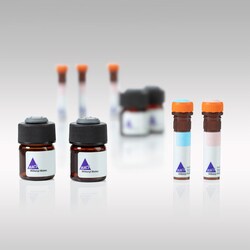
Miltenyi Biotec, Inc. CD255 (TWEAK)-PE, mouse, REA1212, 100 t
Identification and enumeration of CD255 (TWEAK)+ cells by flow cytometry.
This product is subject to the following: Miltenyi Biotec, Inc. Terms and Conditions of Sale For Products and Services

ABclonal Technology ABflo 450 Mouse anti-Human CD3

The protein encoded by this gene is the CD3-epsilon polypeptide which together with CD3-gamma -delta and -zeta and the T-cell receptor alpha beta and gamma delta heterodimers forms the T-cell receptor-CD3 complex This complex plays an important role in coupling antigen recognition to several intracellular signal-transduction pathways The genes encoding the epsilon gamma and delta polypeptides are located in the same cluster on chromosome 11 The epsilon polypeptide plays an essential role in T-cell development Defects in this gene cause immunodeficiency This gene has also been linked to a susceptibility to type I diabetes in women

Cayman Chemical N-benzyl para-fluoro Norfentanyl (hydrochloride), Purity: ≥98%, CAS: 2748624-34-0, 1 mg
An analytical reference standard that is structurally similar to known opioids; intended for research and forensic applications
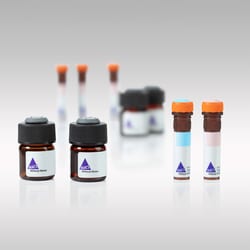
Miltenyi Biotec, Inc. Anti-TdT-PE, human, mouse, 19-3, 100 t
Identification and enumeration of TdT+ cells by flow cytometry.
This product is subject to the following: Miltenyi Biotec, Inc. Terms and Conditions of Sale For Products and Services
Cayman Chemical (±)-α-Tocopherol, Purity: ≥95%, CAS: 10191-41-0, 100 g
A biologically active form of vitamin E; inhibits brominated diphenyl ether-47-induced increases in ROS and PGE2 production in HTR-8/SVneo cells at 20 μM; inhibits lipid peroxidation in HepG2 cells (IC50 = 24.5 μM)
ABclonal Technology PE Mouse anti-Human CD45RO mAb
The protein encoded by this gene is a member of the protein tyrosine phosphatase (PTP) family PTPs are known to be signaling molecules that regulate a variety of cellular processes including cell growth differentiation mitosis and oncogenic transformation This PTP contains an extracellular domain a single transmembrane segment and two tandem intracytoplasmic catalytic domains and thus is classified as a receptor type PTP This PTP has been shown to be an essential regulator of T- and B-cell antigen receptor signaling It functions through either direct interaction with components of the antigen receptor complexes or by activating various Src family kinases required for the antigen receptor signaling This PTP also suppresses JAK kinases and thus functions as a regulator of cytokine receptor signaling Alternatively spliced transcripts variants of this gene which encode distinct isoforms have been reported
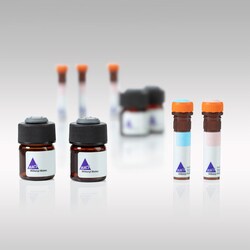
Miltenyi Biotec, Inc. Anti-IgD pure, human, REA740, 0,1ml
Identification and enumeration of IgD+ cells by mass cytometry.
This product is subject to the following: Miltenyi Biotec, Inc. Terms and Conditions of Sale For Products and Services
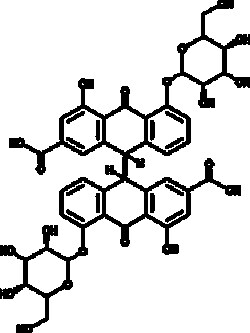
Cayman Chemical Sennoside A, Purity: ≥98%, CAS: 81-27-6, 10 mg
A dianthrone glycoside with laxative and gastroprotective activities; increases the amplitude of distal colon contractions in circular and longitudinal muscle and decreases the amplitude of proximal colon contractions in circular muscle ex vivo in mice at 30 mg/kg; increases the gastric emptying rate and increases the intestinal transport rate of a charcoal meal in mice at 100 mg/kg; increases the concentration of PGE2 in AGS gastric cells in vitro; increases gastric juice pH and decreases gastric juice secretion volume and total acid output in pylorus-ligated rats at 100 mg/kg; reduces lesion indices by 43.1 and 36% in HCl/ethanol-induced gastritis and indomethacin-induced gastric ulcer rat models, respectively, at 100 mg/kg; a non-competitive inhibitor of bovine serum monoamine oxidase in vitro (IC50 = 17 µM)

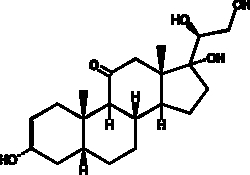
Cayman Chemical α-Cortolone, Purity: ≥98%, CAS: 516-42-7, 10 mg
A metabolite of cortisol; urinary levels are decreased in patients with severe anorexia nervosa and in postmenopausal women with adenocarcinoma compared to postmenopausal women without adenocarcinoma
Miltenyi Biotec, Inc. CD96 (TACTILE) Antibody, anti-human, PE, REAfinity™
Identification and enumeration of CD96 (TACTILE)+ cells by flow cytometry.
This product is subject to the following: Miltenyi Biotec, Inc. Terms and Conditions of Sale For Products and Services
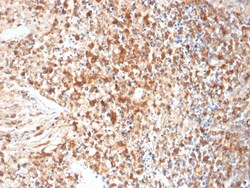
Biotium HSV1 (Herpes Simplex Virus Type I)(HSVI/2095), 1mg/mL
The antibody reacts with HSV type 1 specific antigen. It is suitable for detection of HSV in human cellular material obtained from superficial lesions or biopsies and for the early identification of HSV in infected tissue cultures. The herpes simplex virus (HSV) (also known as cold sore, night fever or fever blister) is a virus that causes a contagious disease. There are two main types of Herpes Simplex Virus (HSV), 1 and 2. The HSV-1 strain generally appears in the orafacial organs. HSV2 usually resides in the sacral ganglion at the base of the spine. All herpes viruses are morphologically identical: they have a large double-stranded DNA genome and the virion consists of an icosahedral nucleo-capsid, which is surrounded by a lipid bilayer envelope. UL42, the processivity subunit of the HSV-1DNA polymerase binds DNA as a monomer and is essential for the replication of the virus. UL42 reduces the rate of dissociation from primer-template DNA, but it does not reduce the rate of elon
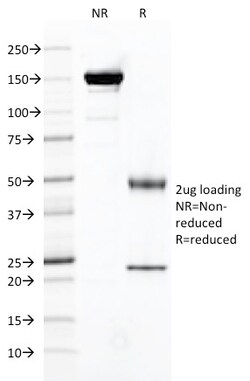
Biotium FOLH1 / PSMA (Prostate Epithelial Marker)(FOLH1/2121), Biotin conjugate, 0.1mg/mL
Folate hydrolase 1 (FOLH1), also known as Prostate-specific membrane antigen (PSMA), is a type II transmembrane glycoprotein belonging to the M28 peptidase family. FOLH1 has two enzymatic activities, one as a prostate-specific integral membrane folate hydrolase and the other as a carboxypeptidase. In the prostate the protein is up-regulated in cancerous cells and is used as an effective diagnostic and prognostic indicator of prostate cancer. Primary antibodies are available purified, or with a selection of fluorescent CF Dyes and other labels. CF Dyes offer exceptional brightness and photostability. Note: Conjugates of blue fluorescent dyes like CF405S and CF405M are not recommended for detecting low abundance targets, because blue dyes have lower fluorescence and can give higher non-specific background than other dye colors.
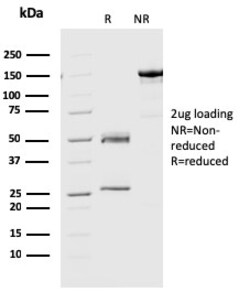
Biotium Geminin / DNA Replication Inhibitor(CPTC-GMMN-1), CF740 conjugate, 0.1mg/mL
Geminin is a nuclear protein that regulates the initiation of DNA replication during the cell cycle. DNA replication requires the coordinated association of Cdc6 and minichromosome maintenance (MCM) proteins with chromatin. Geminin blocks this assembly of the MCM into the prereplication complex and, in turn, prevents replication from occurring. Expression of Geminin fluctuates throughout the cell cycle with Geminin levels lowest at G1. Throughout S, G2 and M phases, Geminin levels are consistently elevated followed by a decrease during mitosis. The initiation of DNA replication is dependent on the degradation of Geminin during mitosis and the absence of Geminin throughout G1 phase. Geminin degradation is mediated by the anaphasepromoting complex (APC), which specifically targets B-type cyclins and other proteins containing a destruction box motif for degradation by ubiquitinmediated proteolysis. While geminin expression is essential in maintaining chromosomal integrity, it is freq
Biotium Cytokeratin, LMW(KRTL/1077), 0.2mg/mL
This MAb recognizes the 56.5 kDa (CK10); 50 kDa (CK14); 50 kDa (CK15); 48 kDa (CK16); 40 kDa (CK19) keratins of the acidic (Type I or LMW) subfamily. Twenty human keratins are resolved with two-dimensional gel electrophoresis into acidic (pI 6.0) subfamilies. The acidic keratins have molecular weights (MW) of 56.5, 55, 51, 50, 50 , 48, 46, 45, and 40 kDa. Many studies have shown the usefulness of keratins as markers in cancer research and tumor diagnosis.Primary antibodies are available purified, or with a selection of fluorescent CF Dyes and other labels. CF Dyes offer exceptional brightness and photostability. Note: Conjugates of blue fluorescent dyes like CF405S and CF405M are not recommended for detecting low abundance targets, because blue dyes have lower fluorescence and can give higher non-specific background than other dye colors.