Fluorescent in situ hybridization Reagents
- (3)
- (6)
- (12)
- (9)
- (3)
- (3)
- (6)
- (88)
- (76)
- (4)
- (208)
- (3)
- (8)
- (2)
- (16)
- (77)
- (2)
- (211)
- (1)
- (2)
- (17)
- (85)
- (7)
- (15)
Filtered Search Results
Abnova™ MEN1/CEN11p FISH Probe
Labeled FISH probes for identification of gene amplification using Fluoresecent In Situ Hybridization Technique.
| Includes | DAPI Counterstain (1500 ng/mL ) 250 uL |
|---|---|
| Content And Storage | Store at 4°C in the dark. |
| Product Type | MEN1/CEN11p FISH Probe |
| Label or Dye | FITC,Texas Red |
| Probe | MEN1, CEN11p |
| For Use With (Application) | Fluorescent In Situ Hybridization (Cell), Fluorescent In Situ Hybridization (Formalin/PFA-fixed paraffin-embedded sections) |
| Location | 11q13, 11p11.12 |
Abnova™ IGH/SOX5 DY (FITC/Texas Red) Translocation FISH Probe
Labeled FISH probes for identification of gene translocation using Fluorescent In Situ Hybridization Technique.
| Includes | DAPI Counterstain (1500 ng/mL ) 250 uL |
|---|---|
| Content And Storage | Store at 4°C in the dark. |
| Product Type | IGH/SOX5 DY Translocation FISH Probe |
| Label or Dye | FITC,Texas Red |
| Probe | Approx. 1550kb/1200kb |
| For Use With (Application) | Fluorescent In Situ Hybridization (Cell), Fluorescent In Situ Hybridization (Formalin/PFA-fixed paraffin-embedded sections) |
| Species | Human |
| Source | Genomic DNA |
| Location | 14q32/12p12.2 |
Abnova™ CXCL1/CEN4q FISH Probe
Labeled FISH probes for identification of gene amplification using Fluoresecent In Situ Hybridization Technique.
| Includes | DAPI Counterstain (1500 ng/mL ) 250 uL |
|---|---|
| Content And Storage | Store at 4°C in the dark. |
| Product Type | CXCL1/CEN4q FISH Probe |
| Label or Dye | FITC,Texas Red |
| Probe | CXCL1, CEN4q |
| For Use With (Application) | Fluorescent In Situ Hybridization (Cell), Fluorescent In Situ Hybridization (Formalin/PFA-fixed paraffin-embedded sections) |
| Location | 4q21, 4q12 |
Abnova™ EWSR1 Split FISH Probe
Labeled FISH probes for identification of gene split using Fluoresecent In Situ Hybridization Technique.
| Includes | DAPI Counterstain (1500 ng/mL ) 250 uL |
|---|---|
| Content And Storage | Store at 4°C in the dark. |
| Product Type | EWSR1 Split FISH Probe |
| Label or Dye | FITC,Texas Red |
| Probe | EWSR1, EWSR1 |
| For Use With (Application) | Fluorescent In Situ Hybridization (Cell), Fluorescent In Situ Hybridization (Formalin/PFA-fixed paraffin-embedded sections) |
| Location | 22q12, 22q12 |
Abnova™ PML/RARA DY Translocation FISH Probe
Labeled FISH probes for identification of gene translocation using Fluorescent In Situ Hybridization Technique.
| Includes | DAPI Counterstain (1500 ng/mL ) 250 uL |
|---|---|
| Content And Storage | Store at 4°C in the dark. |
| Product Type | PML/RARA DY Translocation FISH Probe |
| Label or Dye | FITC,Texas Red |
| Probe | RARA, PML |
| For Use With (Application) | Fluorescent In Situ Hybridization (Cell), Fluorescent In Situ Hybridization (Formalin/PFA-fixed paraffin-embedded sections) |
| Location | 17q21.2, 15q24.1 |
Abnova™ SDHB/CEN1p FISH Probe
Labeled FISH probes for identification of gene amplification using Fluoresecent In Situ Hybridization Technique.
| Includes | DAPI Counterstain (1500 ng/mL ) 250 uL |
|---|---|
| Content And Storage | Store at 4°C in the dark. |
| Product Type | SDHB/CEN1p FISH Probe |
| Label or Dye | FITC,Texas Red |
| Probe | SDHB, CEN1p |
| For Use With (Application) | Fluorescent In Situ Hybridization (Cell), Fluorescent In Situ Hybridization (Formalin/PFA-fixed paraffin-embedded sections) |
| Location | 1p36.13, 1p13.3 |
Abnova™ TERC/CEN3q (Texas Red/FITC) FISH Probe
Labeled FISH probes for identification of gene amplification using Fluoresecent In Situ Hybridization Technique.
| Includes | DAPI Counterstain (1500 ng/mL ) 250 uL |
|---|---|
| Content And Storage | Store at 4°C in the dark. |
| Description | Labeled FISH probes for identification of gene amplification using Fluoresecent In Situ Hybridization Technique. |
| Product Type | TERC/CEN3q FISH Probe |
| Label or Dye | FITC,Texas Red |
| Probe | Approx. 230kb/500kb |
| For Use With (Application) | Fluorescent In Situ Hybridization (Cell), Fluorescent In Situ Hybridization (Formalin/PFA-fixed paraffin-embedded sections) |
| Species | Human |
| Source | Genomic DNA |
| Location | 3q26/3q12.1 |
Abnova™ FKHR Split FISH Probe
Labeled FISH probes for identification of gene split using Fluoresecent In Situ Hybridization Technique.
| Includes | DAPI Counterstain (1500 ng/mL ) 250 uL |
|---|---|
| Content And Storage | Store at 4°C in the dark. |
| Product Type | FKHR Split FISH Probe |
| Label or Dye | FITC,Texas Red |
| Probe | FKHR, FKHR |
| For Use With (Application) | Fluorescent In Situ Hybridization (Cell) |
| Location | 13q14.1, 13q14.1 |
Abnova™ TPM4/CEN19q FISH Probe
Labeled FISH probes for identification of gene amplification using Fluoresecent In Situ Hybridization Technique.
| Includes | DAPI Counterstain (1500 ng/mL ) 250 uL |
|---|---|
| Content And Storage | Store at 4°C in the dark. |
| Product Type | TPM4/CEN19q FISH Probe |
| Label or Dye | FITC,Texas Red |
| Probe | TPM4, CEN19q |
| For Use With (Application) | Fluorescent In Situ Hybridization (Cell) |
| Location | 19p13.1, 19q12 |
Abnova™ 6q Subtelomere (DEAC) FISH Probe
Labeled FISH probes for identification of subtelomere aberrations using Fluorescent In Situ Hybridization Technique.
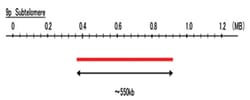
Abnova™ 9p Subtelomere (FITC) FISH Probe
Labeled FISH probes for identification of subtelomere aberrations using Fluorescent In Situ Hybridization Technique.
Abnova™ 10p Subtelomere (Texas Red) FISH Probe
Labeled FISH probes for identification of subtelomere aberrations using Fluorescent In Situ Hybridization Technique.
Abnova™ 8q Subtelomere (FITC) FISH Probe
Labeled FISH probes for identification of subtelomere aberrations using Fluorescent In Situ Hybridization Technique.
Abnova™ 10q Subtelomere (DEAC) FISH Probe
Labeled FISH probes for identification of subtelomere aberrations using Fluorescent In Situ Hybridization Technique.
Abnova™ 5p Subtelomere (Cy5) FISH Probe
Labeled FISH probes for identification of subtelomere aberrations using Fluorescent In Situ Hybridization Technique.