
Bioactive Small Molecules

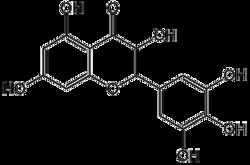
AdipoGen Myricetin (25 mg)

Chemical. CAS: 529-44-2. Formula: C15H10O8. MW: 318.24. Myricetin is a naturally occurring flavonol with powerful antioxidant property. It also exhibits a wide range of additional effects that include, anticancer, antidiabetic, neuroprotective and anti-inflammatory activities. It is also used as a preserving agent to extend the shelf life of foods containing oils and fats, based on it's ability to protect lipids against oxidation. Myricetin has been shown to suppress cancer cell invasion and metastasis, to induce cell cycle arrest and apoptosis of cancer cells and to inhibit their proliferation. Myricetin inhibits NLRP3 inflammasome activation via reduction of ROS-dependent ubiquitination of ASC and promotion of ROS-independent NLRP3 ubiquitination.

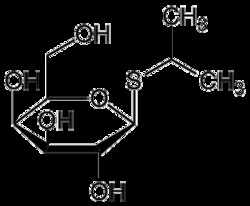
AdipoGen IPTG (10 g)
Chemical. CAS: 367-93-1. Formula: C9H18O5S. MW: 238.30. IPTG is a molecular biology reagent. It is a beta-Galactosidase activity inducer in several bacteria, by binding and inhibiting the lac repressor and it is used in gene cloning together with X-Gal, in a technique called blue/white screening. It is used in the concentration range of 100µM - 1.5mM to induce protein expression. IPTG distinguishes between recombinant and non-recombinant plasmids carrying the beta-galactosidase gene.

AdipoGen DAF-4T (1 mg)
Chemical. CAS: 212558-80-0. Formula: C20H7O5N3Cl2. MW: 440.19. Fluorescent reference compound for DAF-4 DA (CDX-D0216). Spectral data: lambdaEx=505nm; lambdaEm=530nm.
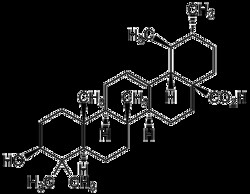
AdipoGen Ursolic acid (500 mg)
Chemical. CAS: 77-52-1. Formula: C30H48O3. MW: 456.711. Ursolic acid is a pentacyclic triterpenoid that has been isolated from M. pumila. Ursolic acid has diverse biological effects, including anti-inflammatory, anticancer, antidiabetic, antiobesity, neuroprotective, cardioprotective, hepatoprotective, antioxidant and antiviral and antibacterial effects. Effects relevant to its anticancer properties include, apoptosis and autophagy induction, preventing angiogenesis, microtubule-destabilizing, induction of cell cycle arrest and inhibition of tumor growth. Ursolic acid inhibits NF-kappa signaling through suppression of IkappaBalpha kinase and p65 phosphorylation. It has been shown to enhance pancreatic beta-cell function in diabetic mice and activates the TGR5 receptor to enhance GLP-1 secretion. Its antiobesity potential is related to inhibiting pancreatic lipase and adipogenesis and increasing insulin sensitivity and inhibiting alpha-glucosidase.

AdipoGen BAPTA (free acid) (250 mg)
Chemical. CAS: 85233-19-8. Formula: C22H24N2O10. MW: 476.4. BAPTA is a membrane-impermeable highly selective calcium chelator and is useful for manipulating extracellular Ca2+ levels, with 105-fold greater affinity for Ca2+ than for Mg2+. The presence of four carboxylic acid functional groups allows for the binding of two calcium ions. BAPTA and its derivatives can be used as calcium indicators, since the absorption maximum for BAPTA changes when it is complexed with calcium (absorption maxima free/complexed = 254/274 nm, emission maxima free/complexed = 363/363 nm). Key advantages of BAPTA include relative insensitivity toward intracellular pH change and fast release of calcium. This product is a high quality and sensitive compound for calcium signaling studies, investigation of signal transduction, apoptotic cascades and neuroscience research.

AdipoGen Mitomycin C (25 mg)
Chemical. CAS: 50-07-7. Formula: C15H18N4O5. MW: 334.33. Mitomycin C (MMC) is an antitumor antibiotic. This product is an alkylating agent that specifically targets the guanine nucleoside sequence 5‘-CpG-3‘. It inhibits DNA synthesis by covalently reacting with DNA, forming crosslinks between complementary strands of DNA. This interaction prevents separation of complementary DNA strands, inhibiting DNA replication. Mitomycin C causes the cross-linking of double-stranded DNA, which results in mutagenesis, inhibition of DNA synthesis, initiation of DNA repair events, and activation of apoptosis. In tissue culture, this compound decreases cell viability and suppresses mitosis, and causes disorganization of nucleus and the production of giant cells. Mitomycin C has strong antitumor activity, especially against Ehrlich ascites tumor cells, and strong bactericidal action against gram-positive and gram-negative bacteria.

AdipoGen Calcein-AM Solution (1 mg)
Chemical. CAS: 148504-34-1. Formula: C46H46N2O23. MW: 994.86. Calcein AM is a non-fluorescent cell permeable and hydrophobic probe that, upon entering live cells, is cleaved by intracellular esterases, releasing the membrane-impermeable, hydrophilic, and intensely bright green fluorescent calcein. Better retained by viable cells than fluorescein, carboxyfluorescein, or BCECF, due to its low cytotoxicity. It can be used as an indicator of cell viability (dead cells lack cytoplasmic esterases), cell-cell communication, cytotoxicity or changes in intracellular calcium, fluoride, iron or mercury. Calcein-AM is a neutral substrate for multidrug resistance-associated protein 1 (MRP1) and multidrug resistance protein 3 (MDR3, P-glycoprotein 3) and has been used in flow cytometry studies to analyze the function of P-gp and MRP. Used as a cytosolic fluorophore in mitochondrial permeability studies to image pore transition.

AdipoGen D-(+)-Xylose (1 kg)
Chemical. CAS: 58-86-6. Formula: C5H10O5. MW: 150.13. D-(+)-Xylose is classified as a monosaccharide of the aldopentose type, which means that it contains five carbon atoms and includes an aldehyde functional group. It is derived from hemicellulose, one of the main constituents of biomass. Like most sugars, it can adopt several structures depending on conditions. With its free aldehyde group, it is a reducing sugar. D-(+)-Xylose has been used as one of the component to stimulate microbial activity, for the enhancement of biofilm formation, as a part of biochemical tests for the identification of B. cereus group and for substrate screening characterization. Estimation of D-(+)-Xylose in the urine after oral administration, is useful in diagnosing absorption of carbohydrates and malabsorption of non-pancreatic molecules. D-(+)-Xylose plays a significant role in the biologically conversion of plant biomass to fuels and chemicals.
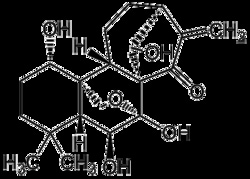
AdipoGen Oridonin (5 mg)
Chemical. CAS: 28957-04-2. Formula: C20H28O6. MW: 364.43. Oridonin is a diterpenoid that has been found in R. rubescens and has anti-inflammatory and anticancer, antimicrobial and neuroprotective properties. The regulatory anticancer mechanisms include induction of apoptosis and autophagy, inhibition of proliferation, inhibition of angiogenesis, cell cycle arrest. It is an inhibitor of the TLR4/p38-MAPK and TLR4/NF-kappa signaling pathways and PPARgamma. Oridonin is a high affinity inhibitor of NLRP3 inflammasome assembly and activation (Kd = 52.5 nM). It inhibits inflammation in wild-type, but not Nlrp3-/-, mice in a model of high-fat diet-induced type 2 diabetes. Also inhibits glial activation, decreases inflammatory cytokine release, attenuates synaptic loss and improves behavioural deficits in Abeta1-42 treated mice.
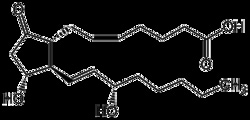
AdipoGen Prostaglandin E2 (10 mg)
Chemical. CAS: 363-24-6. Formula: C20H32O5. MW: 352.47. Prostaglandin E2 is one of the most typical lipid mediators produced from arachidonic acid (AA) by cyclooxygenase (COX) as the rate-limiting enzyme and acts on four kinds of receptor subtypes (EP1, EP2, EP3 and EP4) with high binding affinity. It is a regulator of numerous physiological functions ranging from reproduction to neuronal, metabolic and immune functions. It acts as a pro-inflammatory mediator, but also exerts anti-inflammatory responses. As pro-inflammatory mediator, PGE2 contributes to the regulation of the cytokine expression profile of DCs and has been reported to bias T cell differentiation towards a T helper (Th) 1 or Th2 response. It exerts anti-inflammatory actions on innate immune cells like neutrophils, monocytes and NK cells. Prostaglandin E2 also facilitates tumor progression.

AdipoGen Micafungin sodium (25 mg)
Chemical. CAS: 208538-73-2. Formula: C56H70N9NaO23S. MW: 1292.26. Semisynthetic. Micafungin is a semisynthetic echinocandin antifungal. Micafungin inhibits the enzyme beta(1,3)-D-Glucan synthase, consequently 1,3-beta-D-glucan synthesis and thereby disturbing the integrity of the fungal cell wall. It has fungicidal activity against virtually all species of Candida, including those resistant to fluconazole, and is fungistatic against Aspergillus spp. The target enzyme does not exist in mammalian systems.
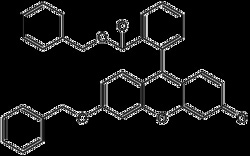
AdipoGen Dibenzylfluorescein (500 mg)
Chemical. CAS: 97744-44-0. Formula: C34H24O5. MW: 512.55. Dibenzylfluorescein is a fluorogenic probe that acts as a substrate for specific cytochrome P450 (CYP) isoforms, including CYP3A4, CYP2C8, CYP2C9, CYP2C19 and aromatase (CYP19). It is dealkylated by these CYP isoforms to produce fluorescein benzyl ether, which is further hydrolyzed to fluorescein by the addition of base (typically 2 M NaOH). Dibenzylfluorescein is typically used near its apparent Km value of 0.87-1.9 µM. The fluorescence of fluorescein is evaluated using excitation/emission wavelengths of 485/538nm. Dibenzylfluorescein is used to detect changes in CYP catalytic activity caused by drugs or disease.
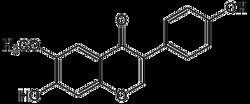
AdipoGen Glycitein (25 mg)
Chemical. CAS: 40957-83-3. Formula: C16H12O5. MW: 284.26. Glycitein is an O-methylated isoflavone. This phytoestrogen is reported to have weak estrogenic activity, displacing estradiol binding at the estrogen receptor in vitro. It suppresses the proliferation of osteoblasts and promotes differentiation from its progenitor. It has also been shown to have antioxidant properties and to inhibit c-Jun N-terminal kinase. It also has been shown to inhibit glioma cell invasion through down-regulation of MMP-3 and MMP-9 gene expression, or to induce reactive oxygen species-dependent apoptosis and G0/G1 cell cycle arrest through the MAPK/STAT3/NF-kappa pathway in human gastric cancer cells.
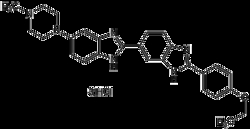
AdipoGen Hoechst 33342 Solution (5 ml)
Chemical. CAS: 23491-52-3. Formula: C27H28N6O . 3HCl . xH2O. MW: 561.93. The Hoechst stains are a family of fluorescent stains for labeling DNA in fluorescence microscopy. The blue fluorescent Hoechst dye is a cell permeable nucleic acid stain that has multiple applications, including sensitive detection of DNA in the presence of RNA in agarose gels, automated DNA determination, sensitive determination of cell number and chromosome sorting. Useful vital stain for the flow cytometric recognition of DNA damage and other viability measurements by monitoring the emission spectral shifts of the dyes. Hoechst 33342 is a cell-permeable, benzimidazole dye that stains DNA by binding to the minor groove of adenine and thymine-rich sequences. It emits blue fluorescence (excitation 350 nm/emission maximum 461 nm) when bound to double stranded DNA and is useful as a marker of nuclei for cell cycle studies and to distinguish nuclear morphology in apoptotic cells.
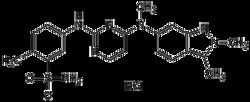
AdipoGen Pazopanib . hydrochloride (250 mg)
Chemical. CAS: 635702-64-6. Formula: C21H23N7O2S . HCl. MW: 437.5 . 36.5. Pazopanib is a potent and selective multi-targeted receptor tyrosine kinase inhibitor. It is an orally available angiogenesis inhibitor targeting vascular endothelial growth factor receptor (VEGFR), platelet-derived growth factor receptor (PDGFR) and c-kit. It inhibits the VEGF receptors VEGFR1, VEGFR2, and VEGFR3 (IC50s = 10, 30, and 47 nM, respectively, in a cell-free enzyme assay) and also inhibits PDGFR, FGFR, c-Kit and c-fms with IC(50) values of 84nM, 74nM, 140nM and 146nM, respectively, all key proteins responsible for tumor growth and angiogenesis. Pazopanib is an anti-tumor and anti-angiogenic agent. It inhibits upregulation of the surface adhesion proteins ICAM-1 and VCAM-1 induced by VEGF in multiple myeloma cells co-cultured with human umbilical vein endothelial cells (HUVECs) and decreases multiple myeloma cell adhesion to HUVECs.