
Protein Labeling Reagents

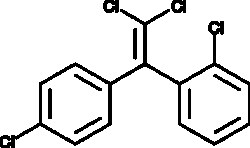
Cayman Chemical ANTIBODY o p-DDE 10mg
A metabolite and degradation product of the pesticide DDT; accumulates in various fish and sediment surrounding a DDT manufacturing plant; inhibits estrogen binding to rtERs (IC50 = 3.2 μM); induces concentration-dependent secretion of estradiol by granulosa and theca cell co-cultures isolated from porcine ovarian follicles; induces concentration-dependent secretion of estradiol by granulosa and theca cell co-cultures isolated from porcine ovarian follicles; increases degeneration of ovarian follicles and reduces testicular size in Japanese medaka (O. latipes)

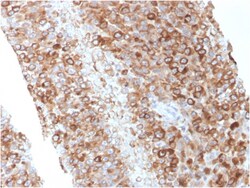
Biotium CD63 (Late Endosomes Marker)(LAMP3/2881), Biotin conjugate, 0.1mg/mL
This MAb recognizes protein of 26 kDa-60 kDa, which is identified as CD63. The tetraspanins are integral membrane proteins expressed on cell surface and granular membranes of hematopoietic cells and are components of multi-molecular complexes with specific integrins. The tetraspanin CD63 is a lysosomal membrane glycoprotein that translocates to the plasma membrane after platelet activation. CD63 is expressed on activated platelets, monocytes and macrophages, and is weakly expressed on granulocytes, T cell and B cells. It is located on the basophilic granule membranes and on the plasma membranes of lymphocytes and granulocytes. CD63 is a member of the TM4 superfamily of leukocyte glycoproteins that includes CD9, CD37 and CD53, which contain four transmembrane regions. CD63 may play a role in phagocytic and intracellular lysosome-phagosome fusion events. CD63 deficiency is associated with Hermansky-Pudlak syndrome and is strongly expressed during the early stages of melanoma pr

Medchemexpress LLC 5-carboxyfluorescein azide (FAM azide, 5-isomer) | 510758-23-3 | 95.0% | 458.42 | C24H18N4O6 | 50mg

FAM azide 5-isomer is a Click Chemistry labeling reagent

Medchemexpress LLC Dde biotin-PEG4-azide | 1802907-93-2 | 99.4% | C32H53N7O8S | 10MG
Dde Biotin-PEG4-azide is a biotinylated PEG4 azide reagent for introducing a biotin tag into alkyne-containing biomolecules via Cu(I)-catalyzed azide-alkyne cycloaddition (click chemistry). It contains a removable Dde protecting group and a PEG4 spacer to improve solubility and provide defined linker length for probe construction and conjugation workflows.
- Provides a biotin handle for affinity capture and detection.
- Contains a PEG4 spacer to improve solubility and reduce steric hindrance.
- Features an azide functional group for copper-catalyzed click chemistry with alkynes.
- Includes a Dde removable protecting group for orthogonal deprotection.
- Supplied at high chemical purity for reliable conjugation results.
- Suitable for protein labeling, probe synthesis, and linker construction.

Biotium CD63 (Late Endosomes Marker) (LAMP3/2990R), Biotin conjugate, 0.1mg/mL
This MAb recognizes protein of 26 kDa-60 kDa, which is identified as CD63. Its epitope is different from that of MAb LAMP3/529. The tetraspanins are integral membrane proteins expressed on cell surface and granular membranes of hematopoietic cells and are components of multi-molecular complexes with specific integrins. The tetraspanin CD63 is a lysosomal membrane glycoprotein that translocates to the plasma membrane after platelet activation. CD63 is expressed on activated platelets, monocytes and macrophages, and is weakly expressed on granulocytes, T cell and B cells. It is located on the basophilic granule membranes and on the plasma membranes of lymphocytes and granulocytes. CD63 is a member of the TM4 superfamily of leukocyte glycoproteins that includes CD9, CD37 and CD53, which contain four transmembrane regions. CD63 may play a role in phagocytic and intracellular lysosome-phagosome fusion events. CD63 deficiency is associated with Hermansky-Pudlak syndrome and is strongly
Cayman Chemical C6 Biotin Ganglioside GM1 d1
An affinity probe for ganglioside GM1 binding partners; has been used to detect ganglioside GM1 binding partners in vitro
AdipoGen Biotin Sulfone
Chemical. CAS 40720-05-6. Formula C10H16N2O5S. Molecular Weight 276.31. Biotin sulfone is an oxidized form of biotin and is as efficient as biotin in streptavidin binding and it binds to avidin with a binding ratio of 0.332 compared with biotin. Biotinylated synthetic oligosaccharides are an attractive tool, as streptavidin coated plates and beads are commercially available and widely use in serological assays. As biotin is chemically reactive, and not compatible with carbohydrate protecting group manipulation, the use of biotin sulfone tagged oligomannosides BSTO for antigen immobilization in candidiasis or allergy diagnosis has been used. The use of biotin sulfone also offers a convenient solution for both oligosaccharide synthesis and immobilization on microspheres and surface plasmon resonance sensors.
eMolecules 533-48-2 | (4R,5S)-5-Methyl-2-oxo-4-imidazolidinehexanoic acid | AA Blocks LLC | MFCD00213804 | 214.265 | C10H18N2O3 | 0.000 | C[C@@H]1NC(=O)N[C@@H]1CCCCCC(O)=O | 250mg | 862839475
(4R,5S)-5-Methyl-2-oxo-4-imidazolidinehexanoic acid | AA Blocks LLC | 533-48-2 | MFCD00213804 | 214.265 | C10H18N2O3 | 0.000 | C[C@@H]1NC(=O)N[C@@H]1CCCCCC(O)=O | 250mg | 862839475
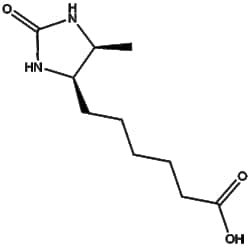
Apexbio Technology LLC D-Desthiobiotin 533-48-2 100mg
D-Desthiobiotin (CAS 533-48-2) is a derivative of biotin lacking the thiophene ring It binds to avidin and streptavidin with lower affinity compared to biotin enabling reversible interaction in affinity purification and protein chromatography protocols This property facilitates gentle elution of biotinylated proteins or other biomolecules without harsh conditions D-Desthiobiotin is widely employed for the labeling detection and isolation of proteins and cells in biochemical and cell-based assays providing an efficient tool for applications requiring temporary and specific capture of biomolecular targets

Medchemexpress LLC Desthiobiotin-NHS ester | 80750-24-9 | MFCD08062086 | 98.0% | 311.33 g·mol⁻¹ | C14H21N3O5 | 50 MG
Desthiobiotin-NHS ester is an amine-reactive biotinylation reagent (N-hydroxysuccinimide ester) used to covalently label primary amines on proteins and other biomolecules. The desthiobiotin tag binds streptavidin with lower affinity than biotin, allowing reversible capture and mild elution for affinity workflows. The compound is provided as a dry solid intended for storage at low temperature and use in standard bioconjugation protocols.
- Reacts with primary amines to form stable amide bonds.
- Enables reversible streptavidin-based capture and mild elution.
- High purity for reliable conjugation results.
- Suitable for protein labeling, affinity purification, and probe construction.
- Available in small-scale packages for laboratory use.

Medchemexpress LLC Desthiobiotin polyethyleneoxide iodoacetamide | 00-00-0 | MFCD06202009 | 97.7% | C21H38IN5O6 | 10MG
Desthiobiotin polyethyleneoxide iodoacetamide is a cysteine-reactive labeling reagent for chemoproteomic workflows that derivatizes thiol groups for enrichment and analysis. It couples a desthiobiotin affinity tag to targets via a polyethylene oxide spacer and an iodoacetamide electrophile that alkylates cysteine residues. Supplied for research use only.
- Enables selective labeling of cysteine residues for downstream enrichment and mass spectrometry analysis.
- Includes desthiobiotin affinity tag for reversible streptavidin-based capture.
- Polyethylene oxide spacer improves solubility and reduces steric hindrance.
- Iodoacetamide electrophile provides rapid and specific thiol alkylation under mild conditions.
- Provided with reported purity suitable for proteomic applications.
Medchemexpress LLC Desthiobiotin-Iodoacetamide | 2924824-04-2 | C14H25IN4O3 | 25 MG
Desthiobiotin-Iodoacetamide is a chemical compound that functions as an ADC linker, facilitating the attachment of cytotoxins to antibodies in antibody-drug conjugates. It also serves as a probe for labeling Oridonin-treated cell lysis. This product is for research use only and has not been fully validated for medical applications.
- Functions as an ADC linker
- Acts as a probe for labeling cell lysis treated with Oridonin
- Purity of 99.51% (LCMS)
- Appears as a white to off-white solid