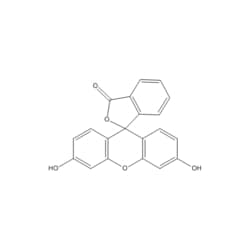
Protein Labeling Reagents
- (110)
- (1)
- (17)
- (2)
- (1)
- (7)
- (1)
- (38)
- (2)
- (1)
- (17)
- (7)
- (4)
- (15)
- (16)
- (8)
- (2)
- (1)
- (10)
- (5)
- (17)
- (1)
- (2)
- (16)
- (6)
- (6)
- (5)
- (15)
- (89)
- (17)
- (8)
- (66)
- (2)
- (2)
- (38)
- (4)
- (18)
- (3)
- (17)
- (5)
- (6)
- (1)
- (22)
- (2)
- (2)
- (2)
- (6)
- (6)
- (12)
- (27)
- (1)
- (2)
- (1)
- (11)
- (1)
- (4)
- (30)
- (1)
- (1)
- (2)
- (8)
- (6)
- (5)
- (5)
- (5)
- (5)
- (1)
- (6)
- (47)
- (2)
- (3)
- (3)
- (5)
- (5)
- (41)
- (44)
- (35)
Filtered Search Results
Biotium c-Myb(MYB286), CF568 conjugate, 0.1mg/mL
The highly leukemogenic avian retrovirus E26 contains two oncogenes, v-Myb and v-Ets, which are expressed together as a fusion protein. The cellular homolog of v-Myb, designated c-Myb, encodes a transcription factor. Deletion or disruption of a negative regulatory domain mapping within the carboxy-terminal domain of c-Myb results in enhanced transactivating capacity and in parallel, leads to activation of its ability to transform hemopoietic cells. c-Myb is expressed preferentially, but not exclusively, in immature hemopoietic cells and its expression decreases as cells differentiate.Primary antibodies are available purified, or with a selection of fluorescent CF Dyes and other labels. CF Dyes offer exceptional brightness and photostability. Note: Conjugates of blue fluorescent dyes like CF405S and CF405M are not recommended for detecting low abundance targets, because blue dyes have lower fluorescence and can give higher non-specific background than other dye colors.
Non-distribution item offered as a customer accommodation; additional freight charges may apply.
Learn More
Biotium Milk Fat Globulin(MFG-06), CF488A conjugate, 0.1mg/mL
Recognizes a protein of 40-45 kDa, identified as human milk fat globule membrane protein (HMFG). HMFG is present on normal human breast epithelial cells and cell lines derived from breast carcinomas, as well as to the outer surface of the human milk fat globule. HMFG is considered as a differentiation marker. It is useful as specific breast epithelial marker and can also provide a tool to study the role of the cell surface in normal and neoplastic mammary development.Primary antibodies are available purified, or with a selection of fluorescent CF Dyes and other labels. CF Dyes offer exceptional brightness and photostability. Note: Conjugates of blue fluorescent dyes like CF405S and CF405M are not recommended for detecting low abundance targets, because blue dyes have lower fluorescence and can give higher non-specific background than other dye colors.
Non-distribution item offered as a customer accommodation; additional freight charges may apply.
Learn More
Biotium CD4(C4/206), CF488A conjugate, 0.1mg/mL
Recognizes a protein of 55 kDa, identified as CD4. CD4 is a membrane glycoprotein of T lymphocytes that interacts with major histocompatibility complex class II antigens and is also a receptor for the human immunodeficiency virus. This protein is expressed not only in T lymphocytes, but also in B cells, macrophages, and granulocytes. It is also expressed in specific regions of the brain. The protein functions to initiate or augment the early phase of T-cell activation, and may function as an important mediator of indirect neuronal damage in infectious and immune-mediated diseases of the central nervous system. Multiple alternatively spliced transcript variants encoding different isoforms have been identified.Primary antibodies are available purified, or with a selection of fluorescent CF Dyes and other labels. CF Dyes offer exceptional brightness and photostability. Note: Conjugates of blue fluorescent dyes like CF405S and CF405M are not recommended for detecting low
Non-distribution item offered as a customer accommodation; additional freight charges may apply.
Learn More
Biotium CD86(BU63), CF488A conjugate, 0.1mg/mL
Recognizes a protein of 70 kDa, which is identified as CD86. CD86, along with CD80/B71, is an important accessory molecule in T cell co-stimulation via its interaction with CD28 and CD152/CTLA4, a cancer immunotherapy target. It is a type I transmembrane glycoprotein and a member of the immunoglobulin superfamily of cell surface receptors. It is expressed at high levels on resting peripheral monocytes and dendritic cells and at very low density on resting B and T lymphocytes. CD86 expression is rapidly upregulated by B cell specific stimuli with peak expression at 18 to 42 hours after stimulation. Since CD86 has rapid kinetics of induction, it is believed to be the major CD28 ligand expressed early in the immune response. It is also found on malignant Hodgkin and Reed Sternberg (HRS) cells in Hodgkin's disease.Primary antibodies are available purified, or with a selection of fluorescent CF Dyes and other labels. CF Dyes offer exceptional brightness and photostability. N
Non-distribution item offered as a customer accommodation; additional freight charges may apply.
Learn More
Biotium CD27(203.6), CF488A conjugate, 0.1mg/mL
Recognizes a protein of a disulfide-linked 120 kDa dimer, identified as CD27 (Workshop VI; Code 6T-028). CD27 is expressed on the majority of peripheral T cells, medullary thymocytes, memory-type B cells, and natural killer cells. It is a transmembrane phosphoglycoprotein that belongs to the tumor necrosis factor receptor (TNFR) superfamily. CD27 binds to its ligand CD70, a member of the TNF family, and induces T-cell co-stimulation and B-cell activation. It also interacts with TRAFs and is involved in activation of NFB and SAPK/JNK and induces apoptosis.Primary antibodies are available purified, or with a selection of fluorescent CF Dyes and other labels. CF Dyes offer exceptional brightness and photostability. Note: Conjugates of blue fluorescent dyes like CF405S and CF405M are not recommended for detecting low abundance targets, because blue dyes have lower fluorescence and can give higher non-specific background than other dye colors.
Non-distribution item offered as a customer accommodation; additional freight charges may apply.
Learn More
Biotium CD25(143-13), CF568 conjugate, 0.1mg/mL
Recognizes a protein of 55 kDa, identified as CD25 (Workshop IV; Code A27). CD25 is expressed on activated T- and B-cells and activated monocytes/macrophages. With respect to lymphomas, CD25 is present on malignant cells of Hodgkin's disease, HTLV-1 adult T-cell leukemia, cutaneous T-cell lymphoma, and hair cell leukemia. Increased levels of soluble CD25 are observed in the leukemias/lymphomas and inflammatory/ autoimmune diseases. CD25 molecule alone appears to function as a low affinity receptor and associates with CD122 (IL-2R beta chain, p75) and CD132 (common gamma chain) to form the high affinity IL-2 receptor complex. CD25 antibodies detect three epitope regions, A, B and C. This MAb recognizes the epitope B, which is located at residue 3-104 of CD25 and can effectively block IL-2 binding to CD25.Primary antibodies are available purified, or with a selection of fluorescent CF Dyes and other labels. CF Dyes offer exceptional brightness and photostability. Note: Con
Non-distribution item offered as a customer accommodation; additional freight charges may apply.
Learn More
Biotium CD53(161-2), CF488A conjugate, 0.1mg/mL
Recognizes a protein of 33-55 kDa, identified as CD53 (Workshop VI; Code N-L033). It is expressed on monocytes and macrophages, dendritic cells, osteoblasts and osteoclasts, and on T and B cells from every stage of differentiation but is absent from platelets, red blood cells. CD53 appears to be the marker with widest reactivity as well as the marker with the strictest specificity to hematopoietic cells. CD53 is a type III membrane with both termini in the cytoplasm and two loops in the extracellular environment. This molecule, in common with other members of tetraspan family, is involved in cellular activation as part of a signal transduction complex involving other membrane glycoproteins. CD53 crosslinking induces calcium flux on human monocyte and B cells. Cross-linking of CD53 promotes activation of resting human B-lymphocytes. This MAb recognizes CD53 transfected cells and partially inhibits T-cell proliferation induced by CD3 antibody (clone: UCHT1).Primary antibodies a
Non-distribution item offered as a customer accommodation; additional freight charges may apply.
Learn More
Biotium HER-2 / CD340(HRB2/273), CF568 conjugate, 0.1mg/mL
This MAb is specific to c-erbB-2/HER-2 and shows minimal cross-reaction with other members of the family. C-erbB-2/HER-2 is a member of the EGFR family. Receptors of this family are located on the plasma membrane and consist of an extracellular ligand-binding domain that is connected to a large intracellular domain by a single transmembrane sequence. c-erbB-2/HER-2 protein is over-expressed in a variety of carcinomas especially those of breast and ovary.Primary antibodies are available purified, or with a selection of fluorescent CF Dyes and other labels. CF Dyes offer exceptional brightness and photostability. Note: Conjugates of blue fluorescent dyes like CF405S and CF405M are not recommended for detecting low abundance targets, because blue dyes have lower fluorescence and can give higher non-specific background than other dye colors.
Non-distribution item offered as a customer accommodation; additional freight charges may apply.
Learn More
LICOR IRDye 680RD NHS Ester (0.5 mg)
IRDye infrared dyes from LI-COR Biosciences are available for researchers developing applications using near-infrared (NIR) fluorescence. These unique dyes are used in a variety of NIR imaging applications including Western blotting, plate-based assays, protein arrays, tissue section imaging, and molecular activity measurements. Standard NHS ester chemistry is used to produce custom probes labeled with LI-COR IRDye infrared dyes. The NHS ester reactive group provides the functionality for labeling primary and secondary amines, such as lysine residues in proteins.
Non-distribution item offered as a customer accommodation; additional freight charges may apply.
Learn More
Biotium TAG-72 / CA72.4(B72.3), CF488A conjugate, 0.1mg/mL
Recognizes an oncofetal antigen of 220 kDa, identified as a tumor-associated glycoprotein (TAG-72) with properties of a mucin. This MAb defines the mucin-carried sialylated-Tn epitope. TAG-72 is usually expressed by adenocarcinomas, but is negative in mesotheliomas. Studies have reported that this antibody has 80% sensitivity and 93% specificity for pulmonary adenocarcinoma. Therefore, TAG-72 is a useful marker to distinguish between mesothelioma and adenocarcinoma. However, false positive reactions can occur so results must be interpreted with the utmost caution. This antibody may be useful in the differentiation of non-small cell carcinomas from small cell carcinomas of the lung. The combined use of anti-TAG-72 and anti-GCDFP-15 is valuable in the diagnosis of apocrine carcinoma.Primary antibodies are available purified, or with a selection of fluorescent CF Dyes and other labels. CF Dyes offer exceptional brightness and photostability. Note: Conjugates of blue fluoresce
Non-distribution item offered as a customer accommodation; additional freight charges may apply.
Learn More
Biotium Cytokeratin 19(Ks19.1), CF568 conjugate, 0.1mg/mL
This MAb reacts with the rod domain of human cytokeratin-19 (CK19), a polypeptide of 40 kDa. Its epitope maps between amino acid 312-335. CK19 is expressed in sweat gland, mammary gland ductal and secretory cells, bile ducts, gastrointestinal tract, bladder urothelium, oral epithelia, esophagus, and ectocervical epithelium. Anti-CK19 reacts with a wide variety of epithelial malignancies including adenocarcinomas of the colon, stomach, pancreas, biliary tract, liver, and breast. Perhaps the most useful application is the identification of thyroid carcinoma of the papillary type, although 50%-60% of follicular carcinomas are also labeled. Anti-CK19 is a useful marker for detection of tumor cells in lymph nodes, peripheral blood, bone marrow and breast cancer.Primary antibodies are available purified, or with a selection of fluorescent CF Dyes and other labels. CF Dyes offer exceptional brightness and photostability. Note: Conjugates of blue fluorescent dyes like CF405S and
Non-distribution item offered as a customer accommodation; additional freight charges may apply.
Learn More
Biotium Complement C4d(C4D204), CF568 conjugate, 0.1mg/mL
This MAb is specific to Complement 4d (C4d) and it reacts with the secreted as well as cell-bound C4d. C4d is a degradation product of the activated complement factor C4b. Complement 4b is typically activated by binding of Abs to specific target molecules. Following activation and degradation of the C4 molecule, thio-ester groups are exposed, which allow transient, covalent binding of the degradation product Complement 4d to endothelial cell surfaces and extracellular matrix components of vascular basement membranes near the sites of C4 activation. The presence of C4d in peritubular capillaries is a key indicator for acute humoral (i.e. antibody-mediated) rejection of kidney, heart, pancreas and lung allografts. As an established marker of antibody-mediated acute renal allograft rejection and its proclivity for endothelium, this component can be detected in peritubular capillaries in chronic renal allograft rejection as well as hyperacute rejection, acute vascular rejection,
Non-distribution item offered as a customer accommodation; additional freight charges may apply.
Learn More
Biotium CD19 SJ25C1 CF488A 25TST
CD19 SJ25C1 CF488A 25TST
Non-distribution item offered as a customer accommodation; additional freight charges may apply.
Learn More
Biotium CD45RO(UCHL-1), CF488A conjugate, 0.1mg/mL
Recognizes a 180-185 kDa protein, identified as isoform of leukocyte common antigen (CD45RO) (4th Leucocyte Typing Workshop: Code No. N31). The epitope recognized by this antibody is sensitive to neuraminidase digestion. This antibody reacts with mature activated T-cells, most thymocytes, and a sub-population of resting T-cells within both CD4 and CD8 subsets. It shows no reactivity with normal B or natural killer cells, but reacts with granulocytes and monocytes. Reportedly, it is useful to identify T-cell lymphomas and leukemias. It rarely stains NK cells or B-cell lymphomas.Primary antibodies are available purified, or with a selection of fluorescent CF Dyes and other labels. CF Dyes offer exceptional brightness and photostability. Note: Conjugates of blue fluorescent dyes like CF405S and CF405M are not recommended for detecting low abundance targets, because blue dyes have lower fluorescence and can give higher non-specific background than other dye colors.
Non-distribution item offered as a customer accommodation; additional freight charges may apply.
Learn More
Biotium CD4(EDU-2), CF568 conjugate, 0.1mg/mL
Recognizes a protein of 55 kDa, identified as CD4. It is a membrane glycoprotein of T lymphocytes that interacts with major histocompatibility complex class II antigens and is also a receptor for the human immunodeficiency virus. This protein is expressed not only in T lymphocytes, but also in B cells, macrophages, and granulocytes. It is also expressed in specific regions of the brain. The protein functions to initiate or augment the early phase of T-cell activation, and may function as an important mediator of indirect neuronal damage in infectious and immune-mediated diseases of the central nervous system. Multiple alternatively spliced transcript variants encoding different isoforms have been identified. This MAb was characterized as human CD4 antibody at II and IV International Workshop on Human Leukocyte Differentiation Antigens.Primary antibodies are available purified, or with a selection of fluorescent CF Dyes and other labels. CF Dyes offer exceptional brightn
Non-distribution item offered as a customer accommodation; additional freight charges may apply.
Learn More