Promotional price valid on web orders only. Your contract pricing may differ. Interested in signing up for a dedicated account number?
Learn More

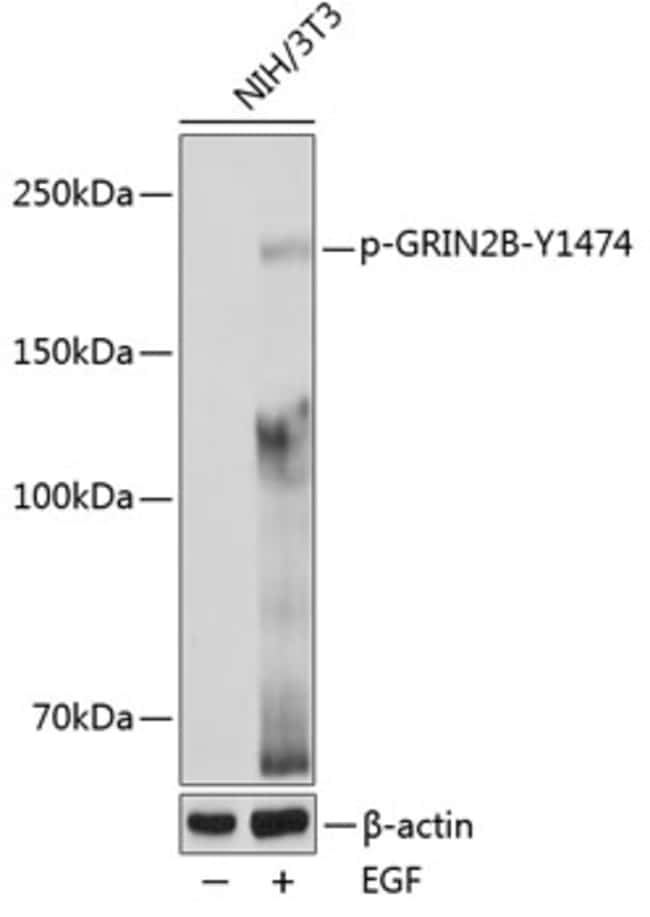
ABclonal Technology Phospho-GRIN2B-Y1474 Rabbit pAb
SDP

Catalog No. 5000110931
Encompass_Preferred

This gene encodes a member of the N-methyl-D-aspartate (NMDA) receptor family within the ionotropic glutamate receptor superfamily. The encoded protein is a subunit of the NMDA receptor ion channel which acts as an agonist binding site for glutamate. The NMDA receptors mediate a slow calcium-permeable component of excitatory synaptic transmission in the central nervous system. The NMDA receptors are heterotetramers of seven genetically encoded, differentially expressed subunits including NR1 (GRIN1), NR2 (GRIN2A, GRIN2B, GRIN2C, or GRIN2D) and NR3 (GRIN3A or GRIN3B). The early expression of this gene in development suggests a role in brain development, circuit formation, synaptic plasticity, and cellular migration and differentiation. Naturally occurring mutations within this gene are associated with neurodevelopmental disorders including autism spectrum disorder, attention deficit hyperactivity disorder, epilepsy, and schizophrenia.

Catalog No. 50-001-10931 Supplier ABclonal Technology Supplier No. AP07711000UL
May include imposed supplier surcharges.
Add to Cart
Add to Cart

missing translation for 'validMainframeMsg'

This gene encodes a member of the N-methyl-D-aspartate (NMDA) receptor family within the ionotropic glutamate receptor superfamily. The encoded protein is a subunit of the NMDA receptor ion channel which acts as an agonist binding site for glutamate. The NMDA receptors mediate a slow calcium-permeable component of excitatory synaptic transmission in the central nervous system. The NMDA receptors are heterotetramers of seven genetically encoded, differentially expressed subunits including NR1 (GRIN1), NR2 (GRIN2A, GRIN2B, GRIN2C, or GRIN2D) and NR3 (GRIN3A or GRIN3B). The early expression of this gene in development suggests a role in brain development, circuit formation, synaptic plasticity, and cellular migration and differentiation. Naturally occurring mutations within this gene are associated with neurodevelopmental disorders including autism spectrum disorder, attention deficit hyperactivity disorder, epilepsy, and schizophrenia.

Product Title
Select an issue

By clicking Submit, you acknowledge that you may be contacted by Fisher Scientific in regards to the feedback you have provided in this form. We will not share your information for any other purposes. All contact information provided shall also be maintained in accordance with our Privacy Policy.