Promotional price valid on web orders only. Your contract pricing may differ. Interested in signing up for a dedicated account number?
Learn More

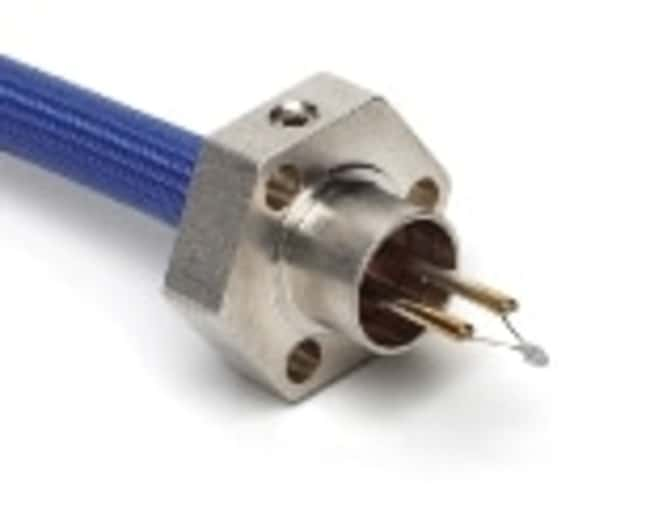
Agilent Technologies Blos Ceramic Bead Assembly, For Nitrogen Phosphorus Detector, 1 ea

Catalog No. NC3310736
Encompass

The Blos ceramic bead assembly is a replacement component designed for use with Nitrogen Phosphorous Detectors (NPD) in gas chromatography systems. It facilitates the selective ionization of organic compounds containing nitrogen and phosphorus through an alkali-coated bead surface, ensuring stable baseline and reproducible detector performance.

  • Designed for compatibility with 8890 GC systems and backwards compatible with legacy 6890/7890 NPDs.
  • Features lower required ignition voltage compared to standard ceramic beads, allowing for initial setup at lower voltages.
  • Typical ignition voltage for a new bead ranges from 0.5 V to 1.1 V.
  • Initial bead voltage recommendation is 0.0 V to 0.5 V.
  • Recommended detector gas flows include 1 to 3 mL/min for hydrogen, 120 mL/min for air, and 1 to 20 mL/min for makeup gas.

Catalog No. NC3310736 Supplier Agilent Technologies Supplier No. G343460806
May include imposed supplier surcharges.
Add to Cart
Add to Cart

missing translation for 'validMainframeMsg'

The Blos ceramic bead assembly is a replacement component designed for use with Nitrogen Phosphorous Detectors (NPD) in gas chromatography systems. It facilitates the selective ionization of organic compounds containing nitrogen and phosphorus through an alkali-coated bead surface, ensuring stable baseline and reproducible detector performance.

  • Designed for compatibility with 8890 GC systems and backwards compatible with legacy 6890/7890 NPDs.
  • Features lower required ignition voltage compared to standard ceramic beads, allowing for initial setup at lower voltages.
  • Typical ignition voltage for a new bead ranges from 0.5 V to 1.1 V.
  • Initial bead voltage recommendation is 0.0 V to 0.5 V.
  • Recommended detector gas flows include 1 to 3 mL/min for hydrogen, 120 mL/min for air, and 1 to 20 mL/min for makeup gas.

Product Title
Select an issue

By clicking Submit, you acknowledge that you may be contacted by Fisher Scientific in regards to the feedback you have provided in this form. We will not share your information for any other purposes. All contact information provided shall also be maintained in accordance with our Privacy Policy.