Promotional price valid on web orders only. Your contract pricing may differ. Interested in signing up for a dedicated account number?
Learn More

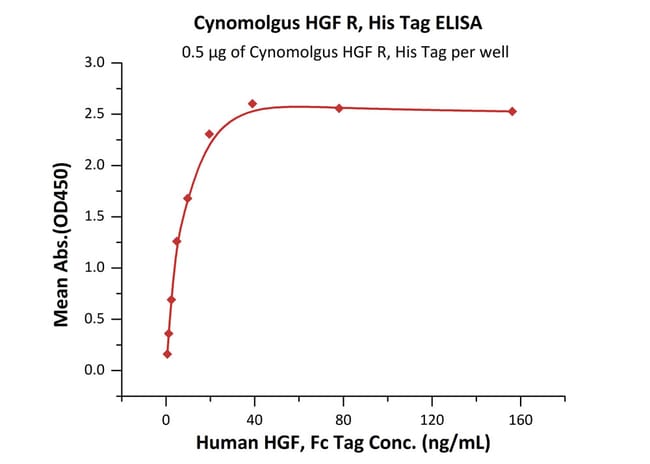
ACROBiosystems Cynomolgus HGF R, His Tag (MET-C52H9) is expressed from human 293 cells (HEK293). It contains AA Glu 25 - Asn 930 (Accession # A0A2K5UM36-1).

Catalog No. 502253386
Encompass_Preferred

Hepatocyte growth factor receptor (HGFR) is also known as mesenchymal-epithelial transition factor (MET), c-Met, and is a glycosylated receptor tyrosine kinase that plays a central role in epithelial morphogenesis and cancer development. HGFR protein possesses tyrosine-kinase activity. The primary single chain precursor protein is post-translationally cleaved to produce the alpha and beta subunits, which are disulfide linked to form the mature receptor. HGFR is normally expressed by cells of epithelial origin, while expression of HGF is restricted to cells of mesenchymal origin. Upon HGF stimulation, HGFR induces several biological responses that collectively give rise to a program known as invasive growth. Abnormal HGFR activation in cancer correlates with poor prognosis, where aberrantly active HGFR triggers tumor growth, formation of new blood vessels (angiogenesis) that supply the tumor with nutrients, and cancer spread to other organs (metastasis). HGFR is deregulated in many typ

This item is not returnable. View return policy
Catalog No. 50-225-3386 Supplier ACROBiosystems Supplier No. METC52H9100UG
May include imposed supplier surcharges.
Add to Cart
Add to Cart

missing translation for 'validMainframeMsg'

Hepatocyte growth factor receptor (HGFR) is also known as mesenchymal-epithelial transition factor (MET), c-Met, and is a glycosylated receptor tyrosine kinase that plays a central role in epithelial morphogenesis and cancer development. HGFR protein possesses tyrosine-kinase activity. The primary single chain precursor protein is post-translationally cleaved to produce the alpha and beta subunits, which are disulfide linked to form the mature receptor. HGFR is normally expressed by cells of epithelial origin, while expression of HGF is restricted to cells of mesenchymal origin. Upon HGF stimulation, HGFR induces several biological responses that collectively give rise to a program known as invasive growth. Abnormal HGFR activation in cancer correlates with poor prognosis, where aberrantly active HGFR triggers tumor growth, formation of new blood vessels (angiogenesis) that supply the tumor with nutrients, and cancer spread to other organs (metastasis). HGFR is deregulated in many typ

This item is not returnable. View return policy
Product Title
Select an issue

By clicking Submit, you acknowledge that you may be contacted by Fisher Scientific in regards to the feedback you have provided in this form. We will not share your information for any other purposes. All contact information provided shall also be maintained in accordance with our Privacy Policy.