
Cinnamaldehydes

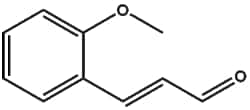
Apexbio Technology LLC 2-Methoxycinnamaldehyde 1504-74-1 100mg

2-Methoxycinnamaldehyde (CAS 1504-74-1) is a natural compound derived from cinnamon investigated for its biomedical properties Studies indicate that it disrupts mitochondrial membrane potential leading to mitochondrial dysfunction This effect is associated with the activation of caspase-3 and caspase-9 resulting in the induction of apoptosis and reduced cellular proliferation Additionally 2-Methoxycinnamaldehyde has been shown to inhibit the migration of human aortic smooth muscle cells in response to platelet-derived growth factor (PDGF) These attributes support its application in research exploring cancer cell apoptosis and vascular smooth muscle cell biology


Medchemexpress LLC 2-methoxycinnamaldehyde | 1504-74-1 | MFCD00007001 | 99.0% | 162.19 g/mol | C10H10O2 | 100 MG
2-methoxycinnamaldehyde is a naturally occurring cinnamaldehyde derivative isolated from Cinnamomum cassia and used as a research reagent. It is reported to inhibit topoisomerase I and II and NF-κB signaling, to cause mitochondrial dysfunction and lysosomal vesiculation, and to induce DNA damage and apoptosis, with reported antitumor activity in preclinical studies.
- Isolated from Cinnamomum cassia.
- Inhibits topoisomerase I and II and NF-κB signaling.
- Causes mitochondrial dysfunction and induces lysosomal vesiculation.
- Leads to DNA damage and apoptosis in cellular models.
- Reported antitumor effects in preclinical studies.
- Available as an analytical standard with high purity for research use.