
Incubator Accessories


Darwin Chambers Company STACKING RACK
Option to add rack, required for stacking two -011 model reach-in chambers.

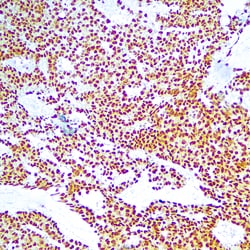
Diagnostic Biosystems OCT 3/4 OCT-3/4 (OCT4/6847R)
OCT-3/4 (also known as POU5F1) is a transcription factor that has been recognized as fundamental in the maintenance of pluripotency in embryonic stem cells and primordial germ cells. It has been proposed as a useful marker for germ cell tumors (GCT) that exhibit features of pluripotentiality (seminoma/dysgerminoma, germinoma and embryonal carcinoma. OCT-3/4 immunostaining has been shown to be sensitive and specific for GCT, whether in primary gonadal or extragonadal sites or in metastatic lesions.
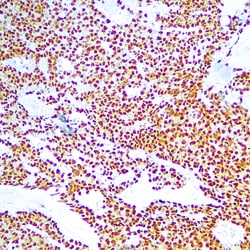
Diagnostic Biosystems OCT 3/4 OCT-3/4 (OCT4/6847R)
OCT-3/4 (also known as POU5F1) is a transcription factor that has been recognized as fundamental in the maintenance of pluripotency in embryonic stem cells and primordial germ cells. It has been proposed as a useful marker for germ cell tumors (GCT) that exhibit features of pluripotentiality (seminoma/dysgerminoma, germinoma and embryonal carcinoma. OCT-3/4 immunostaining has been shown to be sensitive and specific for GCT, whether in primary gonadal or extragonadal sites or in metastatic lesions.

Enterprise Technology Solutions Tripp Lite USB Charging Station, 5-Port, 4-9/10"Wx2-3/5"Dx6-3/5"H, BK
USB charging station features five USB-A ports, each capable of delivering up to 5V, 2.4A, to charge even battery-intensive devices. Charging station doubles as a storage unit by providing space to neatly organize cabling while your devices charge. When not in use, cables can be stored in the compartment and kept out of the way. Adjustable brackets accommodate the number and size of the devices being charged. The unit protects against overheating, overcurrent and overcharging. Plus, it stops charging as soon as your devices' batteries are at full capacity to protect your battery life. Each port complies with USB Battery Charging (BC) specification v1.2. Charging station does not require a computer to let you take it anywhere AC power is available.
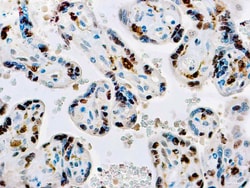
Diagnostic Biosystems FACTOR XIII A Factor XIII-A
This antibody reacts with a 160 kDa (unreacted dimer) and 80 kDa (reduced monomer) protein. Factor XIII is a β-globulin found in plasma and is composed of two subunits, Factor XIII-A and Factor XIII-B. Factor XIII-A is the catalytic subunit and is a dimer of M.W. 160 kDa. Factor XIII is a dermal dendrocyte marker and shows variable reaction with these types of tumors. Factor XIII can be used for histiocytic phenotyping and has been reported to mark capillary hemangiomas and tumors of the central nervous system.
Bellco Glass, Inc. EZBio MPC Connector, Male MPC to 3/8" HB, Non-Valved, PC, 5/PK
EZBio MPC Connector, Male MPC to 3/8" HB, Non-Valved, PC, 5/PK
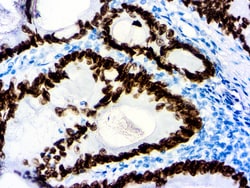
Diagnostic Biosystems SATB2 SATB2 (EP 281)
Special AT-rich sequence-binding protein 2 (SATB2) is a recently described marker that functions as a nuclear matrix-associated transcription factor. It has been reported that SATB2, in combination with CK20, could identify almost all colorectal carcinomas, including poorly differentiated colorectal carcinomas. Upper gastrointestinal (GI) carcinomas and pancreatic ductal carcinomas are usually negative for SATB2, and ovarian carcinomas, lung adenocarcinomas, and adenocarcinomas from other origin are rarely positive for SATB2. Therefore, SATB2 is a good marker for identifying a carcinoma of colorectal origin when working on a tumor of unknown primary. It can help differentiate colorectal metastasis (SATB2+) from primary pulmonary adenocarcinoma of mucinous or enteric type (SATB2- but often CDX2+)\n
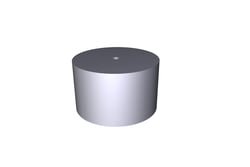
Waters Corp Waters Ion Chamber Insulator, Replacement Part
The Ion Chamber Insulator is a critical component categorized as a replacement part kit. This product is designed to ensure the proper function and maintenance of your equipment.
- Functions as a replacement part kit
- Ensures proper equipment operation
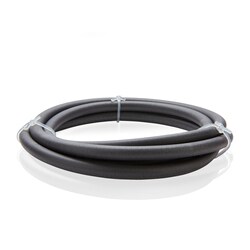
Foxx Life Sciences EZBiopure Chemically Resistant Fluoroelastomer (FKM) Supercritical Fluid Transfer Tubing 25mm (63/64") ID X 37mm (1 29/64") OD, 6FT

EZBiopure Fluoroelastomer (FKM) Tubing (popularly known as Viton tubing) is engineered for supercritical fluid transfer and the safe handling of highly corrosive chemicals and solvents in pharmaceutical applications. It is produced in a controlled cleanroom environment to meet stringent food and pharma-grade standards.
Features
Made and packaged in an ISO Class 7 certified cleanroom.
Chemical Resistance: Excellent compatibility with alcohols, acids, and halogenated solvents (e.g., IPA, MDC).
High Safety: Superior flame and fire resistance.
Wide Temperature Range: Operational from –15°C to +250°C.
Applications:
Corrosive chemical transfer
Chlorinated, fluorinated chemical transfer
Chemical and analytical analysis
Fuel and oil industries
Certifications
FDA 21 CFR 177.2600 Certificate
USP Class VI Certificate
Phthalates / Bis Phenol / Plasticizer free Certification
TSE/BSE Free Certification
5 years Shelf Life
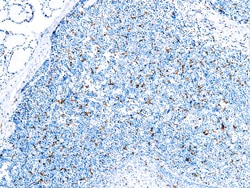
Diagnostic Biosystems CD163 CD163
The CD163 molecule is a type I membrane protein also known as M130 antigen, Ber-Mac3, Ki-M8 or SM4. CD163 protein is restricted in its expression to the monocytic/macrophage lineage. It is reported to be present on all circulating monocytes and most tissue macrophages except those found in the mantle zone and germinal centers of lymphoid follicles, interdigitating reticulum cells and Langerhans cells. In addition, multinucleated cells within inflammatory lesions are reported not to express CD163 protein. The protein is upregulated by glucocorticoids and downregulated by the immunosuppressant cyclosporin A and by phorbol esters.
Foxx Life Sciences EZBiopure Chemically Resistant Fluoroelastomer (FKM) Supercritical Fluid Transfer Tubing 8mm (5/16") ID X 14mm (35/64") OD, 25FT
EZBiopure Fluoroelastomer (FKM) Tubing (popularly known as Viton tubing) is engineered for supercritical fluid transfer and the safe handling of highly corrosive chemicals and solvents in pharmaceutical applications. It is produced in a controlled cleanroom environment to meet stringent food and pharma-grade standards.
Features
Made and packaged in an ISO Class 7 certified cleanroom.
Chemical Resistance: Excellent compatibility with alcohols, acids, and halogenated solvents (e.g., IPA, MDC).
High Safety: Superior flame and fire resistance.
Wide Temperature Range: Operational from –15°C to +250°C.
Applications:
Corrosive chemical transfer
Chlorinated, fluorinated chemical transfer
Chemical and analytical analysis
Fuel and oil industries
Certifications
FDA 21 CFR 177.2600 Certificate
USP Class VI Certificate
Phthalates / Bis Phenol / Plasticizer free Certification
TSE/BSE Free Certification
5 years Shelf Life
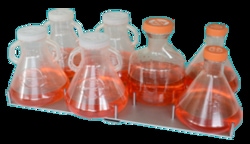
Kuhner Shaker Inc TRAY WITH PINS F-V5000/7
Tray with Pins F-V5000/7..F Tray with pins to hold seven flasks ..(3L Corning, 5L Corning, 5L Thompson)..Max speed 150RPM at 50mm 200 at 25mm


Waters Corp Waters Side Safety Shield, for 2747/2767 Sample Managers
This side safety shield provides protection for compatible laboratory instruments. It is listed as a spare part for maintaining instrument integrity.
- Designed for use with 2747 Sample Managers.
- Designed for use with 2767 Sample Managers.
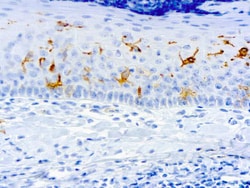
Diagnostic Biosystems CD1ACORTICALTHYMOCYTES CD1a Cortical Thymocytes
At least five CD1 genes (CD1a, b, c, d, and e) are identified. Cd1 proteins have been demonstrated to restrict T cell response to non-peptide lipid and glycolipid antigens and play a role in non-classical antigen presentation. CD1a is a non-polymorphic MHC Class I related cell surface glycoprotein, expressed in association with Beta-2 microglobulin. Anti-CD1a labels Langerhans cell histiocytosis (Histiocytosis X), extranodal histiocytic sarcoma, a subset of T-lymphoblastic lymphoma/leukemia, and interdigitating dendritic cell sarcoma of the lymph node. When combined with antibodies against TTF-1 and CD5, anti-CD1 is useful in distinguishing between pulmonary and thymic neoplasms since CD1a is consistently expressed in thymic lymphocytes in both typical and atypical thymomas, but only focally in 1/6 of thymic carcinomas and not in lymphocytes in pulmonary neoplasms. Anti-CD1a is reported to be a new marker for perivascular epithelial cell tumor (PEComa).
Caron Products And Services Additional Stainless Steel Perforated Shelf Kit, Includes 2 shelf tracks
Additional Stainless Steel Perforated Shelf Kit, Includes 2 shelf tracks. Each perforated shelf is capable of supporting a uniformly distributed load of 50 lbs. For use with 25/33 CF chambers.