
Universal Pipette Tips
Disposable pipette tips designed to fit single and multichannel pipettes from most manufacturers; offer acceptable performance compared to pipette specific tips and can be used with a variety of pipette models.
Single-use universal pipette tips are designed for compatibility with most mechanical and electronic single and multichannel pipettors.
Universal pipette tips are available in a range of types, sizes, colors, styles, and packaging configurations and may be designed for specific purposes or tasks.
- Capacity or volume based on the pipettor size
- Filters to reduce contamination and cross-contamination
- Color
- Sterility or autoclavability
- Tip style: beveled, tapered, wide bore, round, flat, or gel-loading
- Length: short or extended
- Purity: metal-free or DNase-, RNase-, ATP-, Bioburden-, PCR inhibitor-, endotoxin-, or pyrogen-free for genomic and biologic applications
- Surface treatments to reduce retention
- Packaging options to help facilitate re-stocking or eliminate waste


ABclonal Technology TRNAU1AP Rabbit pAb

Enables RNA binding activity. Predicted to be involved in selenocysteine incorporation. Predicted to be located in cytoplasm. Predicted to be active in nucleus.

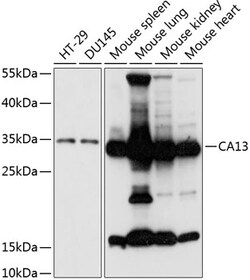
ABclonal Technology CA13 Rabbit pAb
Predicted to enable carbonate dehydratase activity. Predicted to be involved in one-carbon metabolic process. Predicted to be located in intracellular membrane-bounded organelle and myelin sheath. Predicted to be active in cytosol.

ABclonal Technology SPIRE2 Rabbit pAb
Predicted to enable actin binding activity. Involved in establishment of meiotic spindle localization, formin-nucleated actin cable assembly, and positive regulation of double-strand break repair. Predicted to be located in cytoskeleton, cytosol, and plasma membrane. Predicted to be active in cell cortex and cytoplasmic vesicle membrane. Predicted to colocalize with cleavage furrow.

ABclonal Technology DFFB Rabbit pAb
Apoptosis is a cell death process that removes toxic and/or useless cells during mammalian development. The apoptotic process is accompanied by shrinkage and fragmentation of the cells and nuclei and degradation of the chromosomal DNA into nucleosomal units. DNA fragmentation factor (DFF) is a heterodimeric protein of 40-kD (DFFB) and 45-kD (DFFA) subunits. DFFA is the substrate for caspase-3 and triggers DNA fragmentation during apoptosis. DFF becomes activated when DFFA is cleaved by caspase-3. The cleaved fragments of DFFA dissociate from DFFB, the active component of DFF. DFFB has been found to trigger both DNA fragmentation and chromatin condensation during apoptosis. Alternatively spliced transcript variants encoding distinct isoforms have been found for this gene but the biological validity of some of these variants has not been determined.
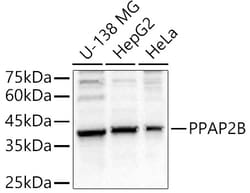
ABclonal Technology PPAP2B Rabbit pAb
The protein encoded by this gene is a member of the phosphatidic acid phosphatase (PAP) family. PAPs convert phosphatidic acid to diacylglycerol, and function in de novo synthesis of glycerolipids as well as in receptor-activated signal transduction mediated by phospholipase D. This protein is a membrane glycoprotein localized at the cell plasma membrane. It has been shown to actively hydrolyze extracellular lysophosphatidic acid and short-chain phosphatidic acid. The expression of this gene is found to be enhanced by epidermal growth factor in Hela cells.
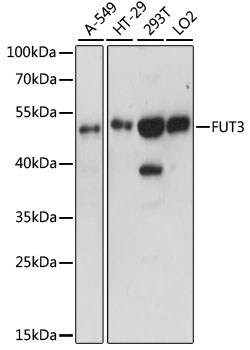
ABclonal Technology FUT3 Rabbit pAb
The Lewis histo-blood group system comprises a set of fucosylated glycosphingolipids that are synthesized by exocrine epithelial cells and circulate in body fluids. The glycosphingolipids function in embryogenesis, tissue differentiation, tumor metastasis, inflammation, and bacterial adhesion. They are secondarily absorbed to red blood cells giving rise to their Lewis phenotype. This gene is a member of the fucosyltransferase family, which catalyzes the addition of fucose to precursor polysaccharides in the last step of Lewis antigen biosynthesis. It encodes an enzyme with alpha(1,3)-fucosyltransferase and alpha(1,4)-fucosyltransferase activities. Mutations in this gene are responsible for the majority of Lewis antigen-negative phenotypes. Differences in the expression of this gene are associated with host susceptibility to viral infection.
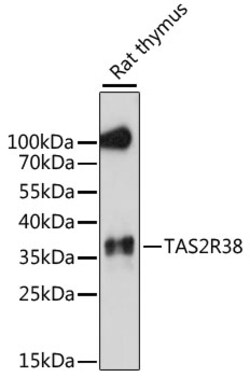
ABclonal Technology TAS2R38 Rabbit pAb
This gene encodes a seven-transmembrane G protein-coupled receptor that controls the ability to taste glucosinolates, a family of bitter-tasting compounds found in plants of the Brassica sp. Synthetic compounds phenylthiocarbamide (PTC) and 6-n-propylthiouracil (PROP) have been identified as ligands for this receptor and have been used to test the genetic diversity of this gene. Although several allelic forms of this gene have been identified worldwide, there are two predominant common forms (taster and non-taster) found outside of Africa. These alleles differ at three nucleotide positions resulting in amino acid changes in the protein (A49P, A262V, and V296I) with the amino acid combination PAV identifying the taster variant (and AVI identifying the non-taster variant).
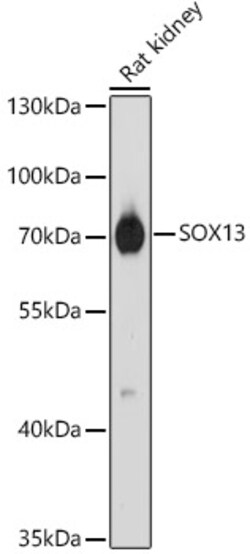
ABclonal Technology SOX13 Rabbit pAb
This gene encodes a member of the SOX (SRY-related HMG-box) family of transcription factors involved in the regulation of embryonic development and in the determination of cell fate. The encoded protein may act as a transcriptional regulator after forming a protein complex with other proteins. It has also been determined to be a type-1 diabetes autoantigen, also known as islet cell antibody 12.

ABclonal Technology FER1L5 Rabbit pAb
Predicted to enable calcium ion binding activity and calcium-dependent phospholipid binding activity. Predicted to be involved in several processes, including myeloid cell activation involved in immune response, negative regulation of phagocytosis, and plasma membrane organization. Predicted to be located in plasma membrane. Predicted to be integral component of membrane. Predicted to be active in T-tubule and cytoplasmic vesicle.


ABclonal Technology CYC1 Rabbit pAb
This gene encodes a subunit of the cytochrome bc1 complex, which plays an important role in the mitochondrial respiratory chain by transferring electrons from the Rieske iron-sulfur protein to cytochrome c. Mutations in this gene may cause mitochondrial complex III deficiency, nuclear type 6.

ABclonal Technology CENPE Rabbit pAb
Centrosome-associated protein E (CENPE) is a kinesin-like motor protein that accumulates in the G2 phase of the cell cycle. Unlike other centrosome-associated proteins, it is not present during interphase and first appears at the centromere region of chromosomes during prometaphase. This protein is required for stable spindle microtubule capture at kinetochores which is a necessary step in chromosome alignment during prometaphase. This protein also couples chromosome position to microtubule depolymerizing activity. Alternative splicing results in multiple transcript variants encoding distinct protein isoforms.

ABclonal Technology PCDH9 Rabbit pAb
This gene encodes a member of the protocadherin family, and cadherin superfamily, of transmembrane proteins containing cadherin domains. These proteins mediate cell adhesion in neural tissues in the presence of calcium. The encoded protein may be involved in signaling at neuronal synaptic junctions. Sharing a characteristic with other protocadherin genes, this gene has a notably large exon that encodes multiple cadherin domains and a transmembrane region. Alternatively spliced transcript variants encoding distinct isoforms have been found for this gene.

ABclonal Technology RANBP1 Rabbit pAb
This gene encodes a protein that forms a complex with Ras-related nuclear protein (Ran) and metabolizes guanoside triphosphate (GTP). This complex participates in the regulation of the cell cycle by controlling transport of proteins and nucleic acids into the nucleus. There are multiple pseudogenes for this gene on chromosomes 9, 12, 17, and X. Alternative splicing results in multiple transcript variants.

ABclonal Technology ITGA10 Rabbit pAb
Integrins are integral transmembrane glycoproteins composed of noncovalently linked alpha and beta chains. They participate in cell adhesion as well as cell-surface mediated signalling. This gene encodes an integrin alpha chain and is expressed at high levels in chondrocytes, where it is transcriptionally regulated by AP-2epsilon and Ets-1. The protein encoded by this gene binds to collagen. Alternative splicing results in multiple transcript variants.