
Universal Pipette Tips
Disposable pipette tips designed to fit single and multichannel pipettes from most manufacturers; offer acceptable performance compared to pipette specific tips and can be used with a variety of pipette models.
Single-use universal pipette tips are designed for compatibility with most mechanical and electronic single and multichannel pipettors.
Universal pipette tips are available in a range of types, sizes, colors, styles, and packaging configurations and may be designed for specific purposes or tasks.
- Capacity or volume based on the pipettor size
- Filters to reduce contamination and cross-contamination
- Color
- Sterility or autoclavability
- Tip style: beveled, tapered, wide bore, round, flat, or gel-loading
- Length: short or extended
- Purity: metal-free or DNase-, RNase-, ATP-, Bioburden-, PCR inhibitor-, endotoxin-, or pyrogen-free for genomic and biologic applications
- Surface treatments to reduce retention
- Packaging options to help facilitate re-stocking or eliminate waste


ABclonal Technology USP13 Rabbit pAb

Enables several functions, including BAT3 complex binding activity, chaperone binding activity, and cysteine-type peptidase activity. Involved in several processes, including maintenance of unfolded protein involved in ERAD pathway, regulation of cellular catabolic process, and regulation of transcription, DNA-templated. Acts upstream of or within protein deubiquitination and protein stabilization. Predicted to be located in nucleoplasm. Predicted to be active in cytosol and nucleus.

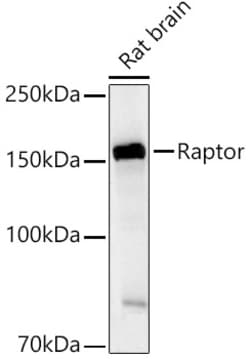
ABclonal Technology Raptor Rabbit pAb
This gene encodes a component of a signaling pathway that regulates cell growth in response to nutrient and insulin levels. The encoded protein forms a stoichiometric complex with the mTOR kinase, and also associates with eukaryotic initiation factor 4E-binding protein-1 and ribosomal protein S6 kinase. The protein positively regulates the downstream effector ribosomal protein S6 kinase, and negatively regulates the mTOR kinase. Multiple transcript variants encoding different isoforms have been found for this gene.

ABclonal Technology RNF185 Rabbit pAb
Enables ubiquitin binding activity, ubiquitin protein ligase activity, and ubiquitin-like protein conjugating enzyme binding activity. Involved in positive regulation of ERAD pathway, protein autoubiquitination, and ubiquitin-dependent ERAD pathway. Located in endoplasmic reticulum.

ABclonal Technology SULT1A1 Rabbit pAb
Sulfotransferase enzymes catalyze the sulfate conjugation of many hormones, neurotransmitters, drugs, and xenobiotic compounds. These cytosolic enzymes are different in their tissue distributions and substrate specificities. The gene structure (number and length of exons) is similar among family members. This gene encodes one of two phenol sulfotransferases with thermostable enzyme activity. Multiple alternatively spliced variants that encode two isoforms have been identified for this gene.

ABclonal Technology D2HGDH Rabbit pAb
This gene encodes D-2hydroxyglutarate dehydrogenase, a mitochondrial enzyme belonging to the FAD-binding oxidoreductase/transferase type 4 family. This enzyme, which is most active in liver and kidney but also active in heart and brain, converts D-2-hydroxyglutarate to 2-ketoglutarate. Mutations in this gene are present in D-2-hydroxyglutaric aciduria, a rare recessive neurometabolic disorder causing developmental delay, epilepsy, hypotonia, and dysmorphic features.

ABclonal Technology MRPL51 Rabbit pAb
Mammalian mitochondrial ribosomal proteins are encoded by nuclear genes and help in protein synthesis within the mitochondrion. Mitochondrial ribosomes (mitoribosomes) consist of a small 28S subunit and a large 39S subunit. They have an estimated 75% protein to rRNA composition compared to prokaryotic ribosomes, where this ratio is reversed. Another difference between mammalian mitoribosomes and prokaryotic ribosomes is that the latter contain a 5S rRNA. Among different species, the proteins comprising the mitoribosome differ greatly in sequence, and sometimes in biochemical properties, which prevents easy recognition by sequence homology. This gene encodes a 39S subunit protein. Pseudogenes corresponding to this gene are found on chromosomes 4p and 21q.

ABclonal Technology SGMS1 Rabbit pAb
The protein encoded by this gene is predicted to be a five-pass transmembrane protein. This gene may be predominately expressed in brain.

ABclonal Technology SEC23IP Rabbit pAb
This gene encodes a member of the phosphatidic acid preferring-phospholipase A1 family. The encoded protein is localized to endoplasmic reticulum exit sites and plays a critical role in ER-Golgi transport as part of the multimeric coat protein II complex. An orthologous gene in frogs is required for normal neural crest cell development, suggesting that this gene may play a role in Waardenburg syndrome neural crest defects. Alternatively spliced transcript variants have been observed for this gene.

ABclonal Technology COPG2 Rabbit pAb
Predicted to enable structural molecule activity. Involved in intra-Golgi vesicle-mediated transport. Part of COPI vesicle coat.

Thomas Scientific 100uL Clean Pack Filter tip Sterile Grad LR
100uL Clean Pack Filter tip Sterile Grad LR

ABclonal Technology Slug Rabbit pAb
This gene encodes a member of the Snail family of C2H2-type zinc finger transcription factors. The encoded protein acts as a transcriptional repressor that binds to E-box motifs and is also likely to repress E-cadherin transcription in breast carcinoma. This protein is involved in epithelial-mesenchymal transitions and has antiapoptotic activity. Mutations in this gene may be associated with sporatic cases of neural tube defects.
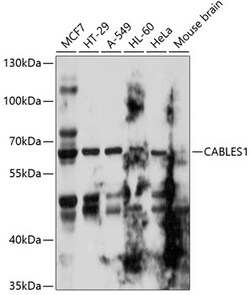
ABclonal Technology CABLES1 Rabbit pAb
This gene encodes a protein involved in regulation of the cell cycle through interactions with several cyclin-dependent kinases. One study (PMID 16177568) reported aberrant splicing of transcripts from this gene which results in removal of the cyclin binding domain only in human cancer cells, and reduction in gene expression was shown in colorectal cancers (PMID 17982127).Multiple transcript variants encoding different isoforms have been found for this gene.
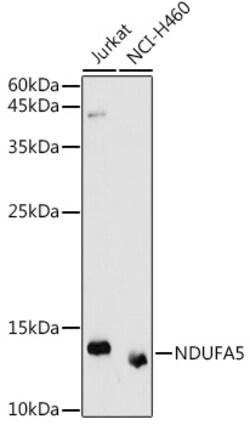
ABclonal Technology NDUFA5 Rabbit pAb
This nuclear gene encodes a conserved protein that comprises the B13 subunit of complex I of the mitochondrial respiratory chain. The encoded protein localizes to the inner mitochondrial membrane, where it is thought to aid in the transfer of electrons from NADH to ubiquinone. Alternative splicing results in multiple transcript variants. There are numerous pseudogenes of this gene on chromosomes 1, 3, 6, 8, 9, 11, 12, and 16.
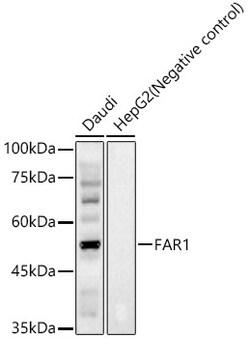
ABclonal Technology FAR1 Rabbit pAb
The protein encoded by this gene is required for the reduction of fatty acids to fatty alcohols, a process that is required for the synthesis of monoesters and ether lipids. NADPH is required as a cofactor in this reaction, and 16-18 carbon saturated and unsaturated fatty acids are the preferred substrate. This is a peroxisomal membrane protein, and studies suggest that the N-terminus contains a large catalytic domain located on the outside of the peroxisome, while the C-terminus is exposed to the matrix of the peroxisome. Studies indicate that the regulation of this protein is dependent on plasmalogen levels. Mutations in this gene have been associated with individuals affected by severe intellectual disability, early-onset epilepsy, microcephaly, congenital cataracts, growth retardation, and spasticity (PMID 25439727). A pseudogene of this gene is located on chromosome 13.

ABclonal Technology AK5 Rabbit pAb
This gene encodes a member of the adenylate kinase family, which is involved in regulating the adenine nucleotide composition within a cell by catalyzing the reversible transfer of phosphate groups among adenine nucleotides. This member is related to the UMP/CMP kinase of several species. It is located in the cytosol and expressed exclusively in brain. Alternatively spliced transcript variants encoding distinct isoforms have been identified for this gene.