
Universal Pipette Tips
Disposable pipette tips designed to fit single and multichannel pipettes from most manufacturers; offer acceptable performance compared to pipette specific tips and can be used with a variety of pipette models.
Single-use universal pipette tips are designed for compatibility with most mechanical and electronic single and multichannel pipettors.
Universal pipette tips are available in a range of types, sizes, colors, styles, and packaging configurations and may be designed for specific purposes or tasks.
- Capacity or volume based on the pipettor size
- Filters to reduce contamination and cross-contamination
- Color
- Sterility or autoclavability
- Tip style: beveled, tapered, wide bore, round, flat, or gel-loading
- Length: short or extended
- Purity: metal-free or DNase-, RNase-, ATP-, Bioburden-, PCR inhibitor-, endotoxin-, or pyrogen-free for genomic and biologic applications
- Surface treatments to reduce retention
- Packaging options to help facilitate re-stocking or eliminate waste


ABclonal Technology HMGB3 Rabbit pAb

This gene encodes a member of a family of proteins containing one or more high mobility group DNA-binding motifs. The encoded protein plays an important role in maintaining stem cell populations, and may be aberrantly expressed in tumor cells. A mutation in this gene was associated with microphthalmia, syndromic 13. There are numerous pseudogenes of this gene on multiple chromosomes. Alternative splicing results in multiple transcript variants.


ABclonal Technology FOXS1 Rabbit pAb
The forkhead family of transcription factors belongs to the winged helix class of DNA-binding proteins. The protein encoded by this intronless gene contains a forkhead domain and is found predominantly in aorta and kidney. The function of the encoded protein is unknown.
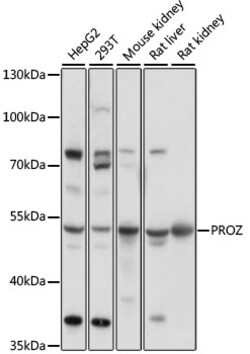
ABclonal Technology PROZ Rabbit pAb
This gene encodes a liver vitamin K-dependent glycoprotein that is synthesized in the liver and secreted into the plasma. The encoded protein plays a role in regulating blood coagulation by complexing with protein Z-dependent protease inhibitor to directly inhibit activated factor X at the phospholipid surface. Deficiencies in this protein are associated with an increased risk of ischemic arterial diseases and fetal loss. Mutations in this gene are the cause of protein Z deficiency. Alternate splicing results in multiple transcript variants.

ABclonal Technology SRSF7 Rabbit pAb
The protein encoded by this gene is a member of the serine/arginine (SR)-rich family of pre-mRNA splicing factors, which constitute part of the spliceosome. Each of these factors contains an N-terminal RNA recognition motif (RRM) for binding RNA and a C-terminal RS domain for binding other proteins. The RS domain is rich in serine and arginine residues and facilitates interaction between different SR splicing factors. In addition to being critical for mRNA splicing, the SR proteins have also been shown to be involved in mRNA export from the nucleus and in translation. Multiple transcript variants encoding different isoforms have been found for this gene.

ABclonal Technology Pan-Succinyl-K Rabbit pAb
Succinylation of protein is a kind of post-translational modification of protein mainly occurring on lysine residues. Compared with methylation and acetylation, succinylation of lysine has a greater effect on protein structure and function. Sirt5 is an important de-succinylation modifying enzyme involved in the regulation of a variety of biological processes, such as reactive oxygen species defense, fatty acid metabolism and cell apoptosis

ABclonal Technology UBE2G2 Rabbit pAb
The modification of proteins with ubiquitin is an important cellular mechanism for targeting abnormal or short-lived proteins for degradation. Ubiquitination involves at least three classes of enzymes ubiquitin-activating enzymes, or E1s, ubiquitin-conjugating enzymes, or E2s, and ubiquitin-protein ligases, or E3s. This gene encodes a member of the E2 ubiquitin-conjugating enzyme family. The encoded protein shares 100% sequence identity with the mouse counterpart. This gene is ubiquitously expressed, with high expression seen in adult muscle. Three alternatively spliced transcript variants encoding distinct isoforms have been found for this gene.

ABclonal Technology METTL21C Rabbit pAb
Enables heat shock protein binding activity and protein-lysine N-methyltransferase activity. Involved in protein methylation. Located in nucleus. Part of protein-containing complex.

ABclonal Technology FZD6 Rabbit pAb
This gene represents a member of the frizzled gene family, which encode 7-transmembrane domain proteins that are receptors for Wnt signaling proteins. The protein encoded by this family member contains a signal peptide, a cysteine-rich domain in the N-terminal extracellular region, and seven transmembrane domains, but unlike other family members, this protein does not contain a C-terminal PDZ domain-binding motif. This protein functions as a negative regulator of the canonical Wnt/beta-catenin signaling cascade, thereby inhibiting the processes that trigger oncogenic transformation, cell proliferation, and inhibition of apoptosis. Alternative splicing results in multiple transcript variants, some of which do not encode a protein with a predicted signal peptide.

ABclonal Technology DIAPH2 Rabbit pAb
The product of this gene belongs to the diaphanous subfamily of the formin homology family of proteins. This gene may play a role in the development and normal function of the ovaries. Defects in this gene have been linked to premature ovarian failure 2. Alternatively spliced transcript variants encoding different isoforms have been identified.

ABclonal Technology GPER1 Rabbit pAb
This gene encodes a multi-pass membrane protein that localizes to the endoplasmic reticulum and a member of the G-protein coupled receptor 1 family. This receptor binds estrogen and activates multiple downstream signaling pathways, leading to stimulation of adenylate cyclase and an increase in cyclic AMP levels, while also promoting intracellular calcium mobilization and synthesis of phosphatidylinositol 3,4,5-trisphosphate in the nucleus. This protein therefore plays a role in the rapid nongenomic signaling events widely observed following stimulation of cells and tissues with estrogen. This receptor has been shown to play a role in diverse biological processes, including bone and nervous system development, metabolism, cognition, male fertility and uterine function.

ABclonal Technology IPO4 Rabbit pAb
Predicted to enable nuclear import signal receptor activity and nuclear localization sequence binding activity. Involved in DNA replication-dependent chromatin assembly, DNA replication-independent chromatin assembly, and protein import into nucleus. Located in chromatin. Part of protein-containing complex.

ABclonal Technology Pan Phospho-Serine/Threonine Rabbit pAb
Phosphorylation, a key post-translational modification, regulates protein function by adding a phosphoryl group from ATP to serine (~86%), threonine (~12%), or tyrosine (~2%), with removal by phosphatases. It can occur at other amino acids as well and affects protein structure, function, and interactions. Phosphorylation is essential for numerous cellular processes such as signal transduction, cell cycle regulation, differentiation, metabolism, motility, and apoptosis. Different phosphorylation sites can lead to distinct outcomes. For example, phosphorylation of RAF1 at specific serine or threonine residues activates it in the MAPK pathway, while phosphorylation at other sites inhibits its activity.
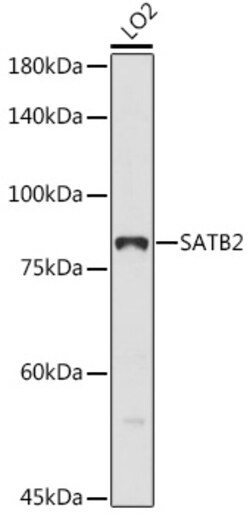
ABclonal Technology SATB2 Rabbit pAb
This gene encodes a DNA binding protein that specifically binds nuclear matrix attachment regions. The encoded protein is involved in transcription regulation and chromatin remodeling. Defects in this gene are associated with isolated cleft palate and cognitive disability. Alternate splicing results in multiple transcript variants that encode the same protein.

Labcon North America ZAP™ 100uL Aerosol Filter Pipet Tips, in Racks, Sterile
Tip, Pipet; Labcon; ZAP™ Aerosol Filter; Fits most popular 100uL Pipettors; Sterile; Patented robotically inserted endotoxin free filter; Protease, Human DNA, ATP, RNase/DNase and Endotoxin Free (non-pyrogenic); Polypropylene USP Class VI resin; Validated Sterilization (ISO 11137) for use in Research and Medical labs; Refillable autoclavable racks; 96 tips/rack; 10 racks/pack; 10 packs/case; 49.7mm H.; Made in USA

ABclonal Technology EPN2 Rabbit pAb
This gene encodes a protein which interacts with clathrin and adaptor-related protein complex 2, alpha 1 subunit. The protein is found in a brain-derived clathrin-coated vesicle fraction and localizes to the peri-Golgi region and the cell periphery. The protein is thought to be involved in clathrin-mediated endocytosis. Alternate splicing of this gene results in multiple transcript variants encoding different isoforms.