
Protein Molecular Weight Markers

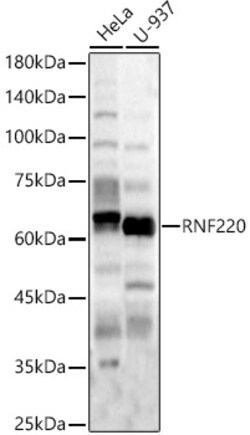
ABclonal Technology RNF220 Rabbit pAb

Predicted to enable ubiquitin protein ligase activity. Involved in positive regulation of canonical Wnt signaling pathway. Part of protein-containing complex.

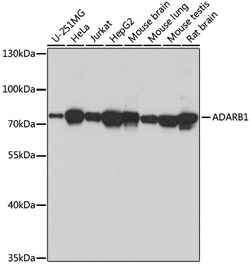
ABclonal Technology ADARB1 Rabbit pAb
This gene encodes the enzyme responsible for pre-mRNA editing of the glutamate receptor subunit B by site-specific deamination of adenosines. Studies in rat found that this enzyme acted on its own pre-mRNA molecules to convert an AA dinucleotide to an AI dinucleotide which resulted in a new splice site. Alternative splicing of this gene results in several transcript variants, some of which have been characterized by the presence or absence of an ALU cassette insert and a short or long C-terminal region.

S2 Media 15x100mm Chameleon™ COLOREX™ STEC, 10/pack
Chameleon™ COLOREX™ STEC is a selective and differential, chromogenic culture medium used for the qualitative direct detection and presumptive identification of Shiga-Toxin Producing Escherichia coli (STEC). Test specimens include rectal swab and stools. It can also be used in the detection of STEC in the analyses of food products for human consumption, animal feed and in environmental samples. Further identification, susceptibility testing, and epidemiological typing should be performed on suspect colonies. Media can also be used in the detection of STEC in the analyses of food products for human consumption, animal feed and in environmental samples. • Product meets CLSI performance criteria.• Chameleon™ COLOREX™ STEC should be used by trained professionals within a laboratory setting. • For in vitro diagnostic (IVD) use.• Product is not intended for use in the diagnosis or treatment of disease or other human conditions.

S2 Media 15x100mm Chameleon™ COLOREX™ Orientation, 10/pack
Chameleon™ COLOREX™ Orientation is a non-selective, differential, chromogenic culture medium used for the qualitative direct detection and presumptive identification of uropathogens associated with urinary tract infections (UTI). Test specimens include urine. Concomitant cultures should be performed to recover organisms for further microbiological testing or epidemiological typing. Further identification, susceptibility testing, and epidemiological typing should be performed on suspect colonies.• Product meets CLSI performance criteria.• Chameleon™ COLOREX™ Orientation should be used by trained professionals within a laboratory setting. • For in vitro diagnostic (IVD) use.• Product is not intended for use in the diagnosis or treatment of disease or other human conditions.
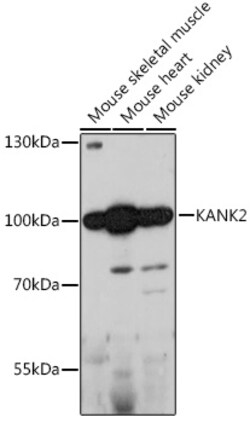
ABclonal Technology KANK2 Rabbit pAb
This gene encodes a member of the KN motif and ankyrin repeat domains (KANK) family of proteins, which play a role in cytoskeletal formation by regulating actin polymerization. The encoded protein functions in the sequestration of steroid receptor coactivators and possibly other proteins. Mutations in this gene are associated with impaired kidney podocyte function and nephrotic syndrome, and keratoderma and woolly hair.
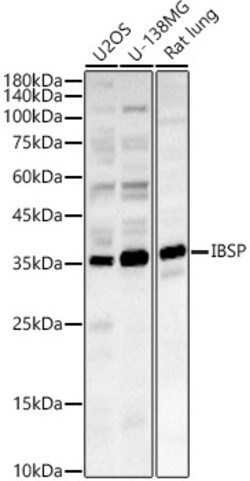
ABclonal Technology IBSP Rabbit pAb
The protein encoded by this gene is a major structural protein of the bone matrix. It constitutes approximately 12% of the noncollagenous proteins in human bone and is synthesized by skeletal-associated cell types, including hypertrophic chondrocytes, osteoblasts, osteocytes, and osteoclasts. The only extraskeletal site of its synthesis is the trophoblast. This protein binds to calcium and hydroxyapatite via its acidic amino acid clusters, and mediates cell attachment through an RGD sequence that recognizes the vitronectin receptor.
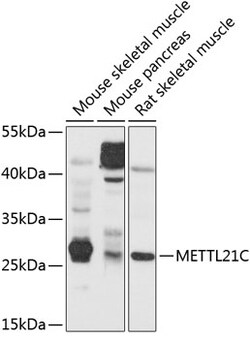
ABclonal Technology METTL21C Rabbit pAb
Enables heat shock protein binding activity and protein-lysine N-methyltransferase activity. Involved in protein methylation. Located in nucleus. Part of protein-containing complex.
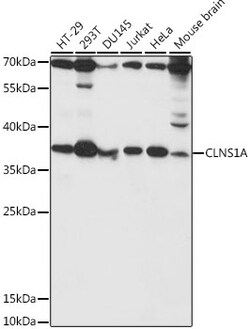
ABclonal Technology CLNS1A Rabbit pAb
This gene encodes a protein that functions in multiple regulatory pathways. The encoded protein complexes with numerous cytosolic proteins and performs diverse functions including regulation of small nuclear ribonucleoprotein biosynthesis, platelet activation and cytoskeletal organization. The protein is also found associated with the plasma membrane where it functions as a chloride current regulator. Pseudogenes of this gene are found on chromosomes 1, 4 and 6. Several transcript variants encoding different isoforms have been found for this gene.
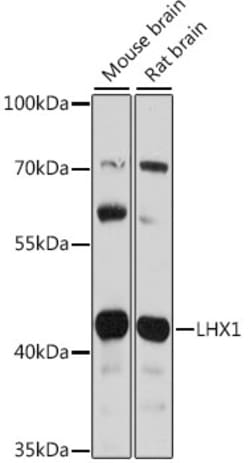
ABclonal Technology LHX1 Rabbit pAb
This gene encodes a member of a large protein family which contains the LIM domain, a unique cysteine-rich zinc-binding domain. The encoded protein is a transcription factor important for the development of the renal and urogenital systems. This gene is a candidate for Mayer-Rokitansky-Kuster-Hauser syndrome, a disorder characterized by anomalies in the female genital tract.


S2 Media 15x100mm Chameleon™ COLOREX™ B. cereus, 10/pack
Chameleon™ COLOREX™ B. cereus s a selective and differential, chromogenic culture medium used for the qualitative direct detection and enumeration of Bacillus cereus in environmental and food samples. Bacillus cereus is a spore-forming bacterium, which produces toxins, that is frequently isolated from soil and foods. These toxins result in two types of illness: one is characterized by diarrhea (long incubation of 8-16 hours) and the other by nausea and vomiting (short incubation of 1-6 hours). Further identification testing should be performed on suspect colonies.• Product meets CLSI performance criteria.• Chameleon™ COLOREX™ B. cereus should be used by trained professionals within a laboratory setting. • Product is not intended for use in the diagnosis or treatment of disease or other human conditions.
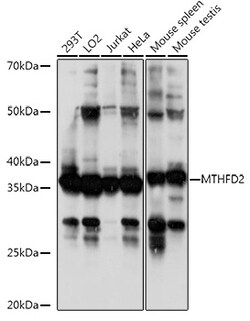
ABclonal Technology MTHFD2 Rabbit pAb
This gene encodes a nuclear-encoded mitochondrial bifunctional enzyme with methylenetetrahydrofolate dehydrogenase and methenyltetrahydrofolate cyclohydrolase activities. The enzyme functions as a homodimer and is unique in its absolute requirement for magnesium and inorganic phosphate. Formation of the enzyme-magnesium complex allows binding of NAD. Alternative splicing results in two different transcripts, one protein-coding and the other not protein-coding. This gene has a pseudogene on chromosome 7.
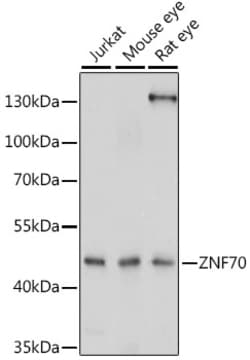
ABclonal Technology ZNF70 Rabbit pAb
Predicted to enable DNA-binding transcription factor activity, RNA polymerase II-specific and RNA polymerase II transcription regulatory region sequence-specific DNA binding activity. Predicted to be involved in regulation of transcription by RNA polymerase II. Predicted to be located in nucleus.
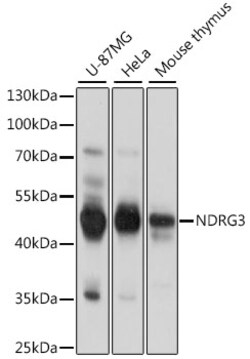
ABclonal Technology NDRG3 Rabbit pAb
Predicted to be involved in signal transduction. Located in cytoplasm.
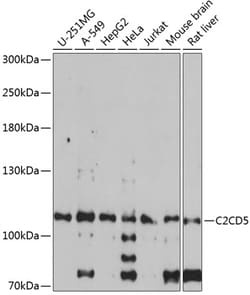
ABclonal Technology C2CD5 Rabbit pAb
Enables calcium ion binding activity and calcium-dependent phospholipid binding activity. Involved in cellular response to insulin stimulus, intracellular protein transmembrane transport, and positive regulation of transport. Located in several cellular components, including centriolar satellite, cytoplasmic vesicle membrane, and ruffle membrane.