
Protein Molecular Weight Markers

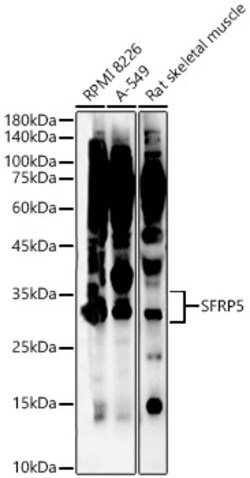
ABclonal Technology SFRP5 Rabbit pAb

Secreted frizzled-related protein 5 (SFRP5) is a member of the SFRP family that contains a cysteine-rich domain homologous to the putative Wnt-binding site of Frizzled proteins. SFRPs act as soluble modulators of Wnt signaling. SFRP5 and SFRP1 may be involved in determining the polarity of photoreceptor cells in the retina. SFRP5 is highly expressed in the retinal pigment epithelium, and moderately expressed in the pancreas.

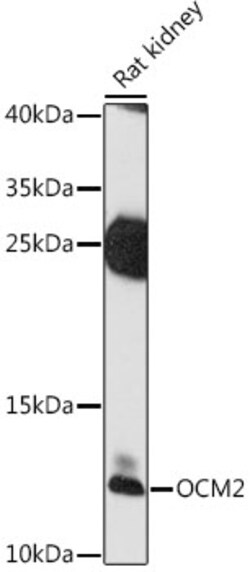
ABclonal Technology OCM2 Rabbit pAb
This gene is similar to the oncomodulin gene, a high-affinity calcium ion-binding protein that belongs to the superfamily of calmodulin proteins, also known as the EF-hand proteins.

Biotium CD44v9 (Marker of Tumor Metastasis) (rCD44v9/1459), CF594 conjugate, 0.1mg/mL
This antibody recognizes an epitope encoded by exon v4 on the variant portion of human CD44. The CD44 molecule belongs to a family of cellular adhesion molecules found on a wide range of normal and malignant cells in epithelial, mesothelial and hemopoiesis tissues. CD44 is a single gene with 20 exons, of which 10 are normally expressed to encode the basic CD44 (H-CAM) molecule. The additional 10 exons (v1 to v10) are only expressed by alternative splicing of the nuclear RNA. The expression of specific cell adhesion molecule CD44 splice variants has been reported to be associated with metastasis in certain human malignancies.Primary antibodies are available purified, or with a selection of fluorescent CF Dyes and other labels. CF Dyes offer exceptional brightness and photostability. Note: Conjugates of blue fluorescent dyes like CF405S and CF405M are not recommended for detecting low abundance targets, because blue dyes have lower fluorescence and can give higher non-specific
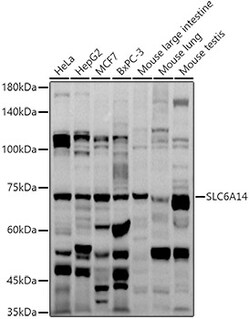
ABclonal Technology SLC6A14 Rabbit pAb
This gene encodes a member of the solute carrier family 6. Members of this family are sodium and chloride dependent neurotransmitter transporters. The encoded protein transports both neutral and cationic amino acids. This protein may also function as a beta-alanine carrier. Mutations in this gene may be associated with X-linked obesity. A pseudogene of this gene is found on chromosome X.
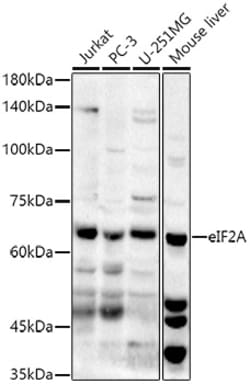
ABclonal Technology eIF2A Rabbit pAb
This gene encodes a eukaryotic translation initiation factor that catalyzes the formation of puromycin-sensitive 80 S preinitiation complexes and the poly(U)-directed synthesis of polyphenylalanine at low concentrations of Mg2+. This gene should not be confused with eIF2-alpha (EIF2S1, Gene ID 1965), the alpha subunit of the eIF2 translation initiation complex. Although both of these proteins function in binding initiator tRNA to the 40 S ribosomal subunit, the encoded protein does so in a codon-dependent manner, whereas eIF2 complex requires GTP. Alternative splicing of this gene results in multiple transcript variants encoding different isoforms.
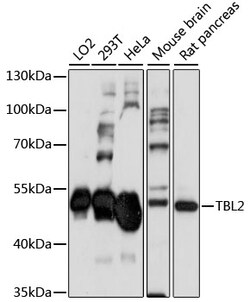
ABclonal Technology TBL2 Rabbit pAb
This gene encodes a member of the beta-transducin protein family. Most proteins of the beta-transducin family are involved in regulatory functions. This protein is possibly involved in some intracellular signaling pathway. This gene is deleted in Williams-Beuren syndrome, a developmental disorder caused by deletion of multiple genes at 7q11.23.
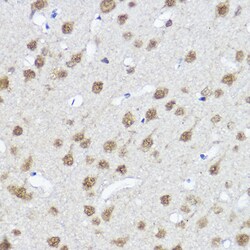
ABclonal Technology MYOCD Rabbit pAb
This gene encodes a nuclear protein, which is expressed in heart, aorta, and in smooth muscle cell-containing tissues. It functions as a transcriptional co-activator of serum response factor (SRF) and modulates expression of cardiac and smooth muscle-specific SRF-target genes, and thus may play a crucial role in cardiogenesis and differentiation of the smooth muscle cell lineage. Alternatively spliced transcript variants encoding different isoforms have been found for this gene.
STEMCELL Technologies EasySepTM Human CD4 Positive
Large-scale immunomagnetic positive selection of human CD4plus cells (e.g. CD4plus T cells) - 1 x 10.10 cells

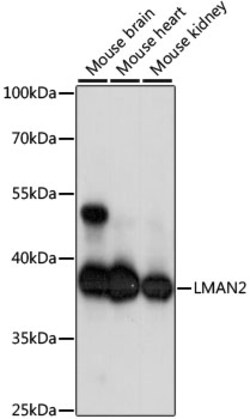
ABclonal Technology LMAN2 Rabbit pAb
This gene encodes a type I transmembrane lectin that shuttles between the endoplasmic reticulum, the Golgi apparatus and the plasma membrane. The encoded protein binds high mannose type glycoproteins and may facilitate their sorting, trafficking and quality control.
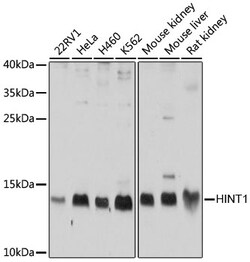
ABclonal Technology HINT1 Rabbit pAb
This gene encodes a protein that hydrolyzes purine nucleotide phosphoramidates substrates, including AMP-morpholidate, AMP-N-alanine methyl ester, AMP-alpha-acetyl lysine methyl ester, and AMP-NH2. The encoded protein interacts with these substrates via a histidine triad motif. This gene is considered a tumor suppressor gene. In addition, mutations in this gene can cause autosomal recessive neuromyotonia and axonal neuropathy. There are several related pseudogenes on chromosome 7. Several transcript variants have been observed.
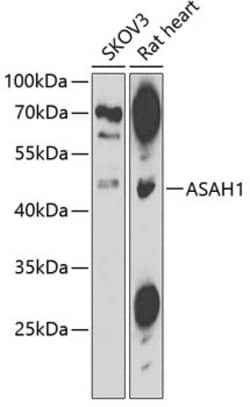
ABclonal Technology ASAH1 Rabbit pAb
This gene encodes a member of the acid ceramidase family of proteins. Alternative splicing results in multiple transcript variants, at least one of which encodes a preproprotein that is proteolytically processed. Processing of this preproprotein generates alpha and beta subunits that heterodimerize to form the mature lysosomal enzyme, which catalyzes the degradation of ceramide into sphingosine and free fatty acid. This enzyme is overexpressed in multiple human cancers and may play a role in cancer progression. Mutations in this gene are associated with the lysosomal storage disorder, Farber lipogranulomatosis, and a neuromuscular disorder, spinal muscular atrophy with progressive myoclonic epilepsy.
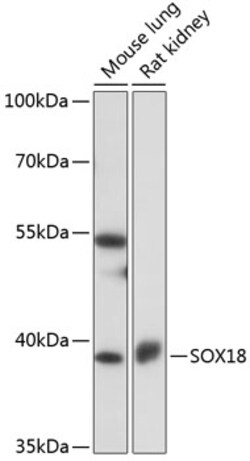
ABclonal Technology SOX18 Rabbit pAb
This gene encodes a member of the SOX (SRY-related HMG-box) family of transcription factors involved in the regulation of embryonic development and in the determination of the cell fate. The encoded protein may act as a transcriptional regulator after forming a protein complex with other proteins. This protein plays a role in hair, blood vessel, and lymphatic vessel development. Mutations in this gene have been associated with recessive and dominant forms of hypotrichosis-lymphedema-telangiectasia.
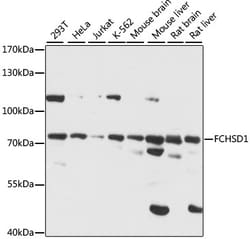
ABclonal Technology FCHSD1 Rabbit pAb
Predicted to enable lipid binding activity. Predicted to be involved in neuromuscular synaptic transmission and positive regulation of actin filament polymerization. Predicted to be located in cell projection and perikaryon. Predicted to be active in neuromuscular junction and recycling endosome. Predicted to colocalize with cuticular plate.
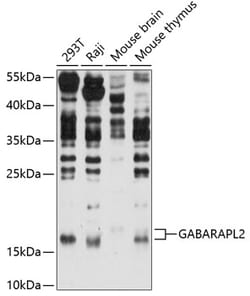
ABclonal Technology GABARAPL2 Rabbit pAb
Enables ubiquitin protein ligase binding activity. Involved in negative regulation of proteasomal protein catabolic process and protein localization to endoplasmic reticulum. Located in Golgi membrane and autophagosome membrane.
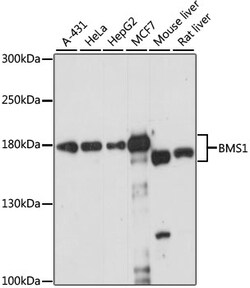
ABclonal Technology BMS1 Rabbit pAb
This gene likely encodes a ribosome assembly protein. A similar protein in yeast functions in 35S-rRNA processing, which includes a series of cleavage steps critical for formation of 40S ribosomes. Related pseudogenes exist on chromosomes 2, 9, 10, 15, 16, and 22.