
Protein Molecular Weight Markers

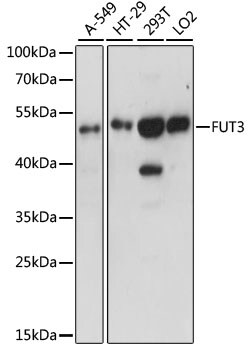
ABclonal Technology FUT3 Rabbit pAb

The Lewis histo-blood group system comprises a set of fucosylated glycosphingolipids that are synthesized by exocrine epithelial cells and circulate in body fluids. The glycosphingolipids function in embryogenesis, tissue differentiation, tumor metastasis, inflammation, and bacterial adhesion. They are secondarily absorbed to red blood cells giving rise to their Lewis phenotype. This gene is a member of the fucosyltransferase family, which catalyzes the addition of fucose to precursor polysaccharides in the last step of Lewis antigen biosynthesis. It encodes an enzyme with alpha(1,3)-fucosyltransferase and alpha(1,4)-fucosyltransferase activities. Mutations in this gene are responsible for the majority of Lewis antigen-negative phenotypes. Differences in the expression of this gene are associated with host susceptibility to viral infection.

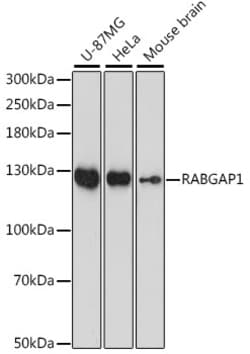
ABclonal Technology RABGAP1 Rabbit pAb
Enables GTPase activator activity and small GTPase binding activity. Involved in regulation of GTPase activity. Located in cytosol.
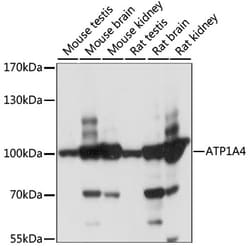
ABclonal Technology ATP1A4 Rabbit pAb
The protein encoded by this gene belongs to the family of P-type cation transport ATPases, and to the subfamily of Na+/K+ -ATPases. Na+/K+ -ATPase is an integral membrane protein responsible for establishing and maintaining the electrochemical gradients of Na and K ions across the plasma membrane. These gradients are essential for osmoregulation, for sodium-coupled transport of a variety of organic and inorganic molecules, and for electrical excitability of nerve and muscle. This enzyme is composed of two subunits, a large catalytic subunit (alpha) and a smaller glycoprotein subunit (beta). The catalytic subunit of Na+/K+ -ATPase is encoded by multiple genes. This gene encodes an alpha 4 subunit. Alternatively spliced transcript variants encoding different isoforms have been identified.
![ABclonal Technology [KO Validated] LRRC59 Rabbit pAb](https://assets.fishersci.com/TFS-Assets/CCG/product-images/5000134622.jpg-250.jpg)
ABclonal Technology [KO Validated] LRRC59 Rabbit pAb
Enables RNA binding activity and cadherin binding activity. Predicted to be involved in positive regulation of Ras protein signal transduction and signal transduction. Located in endoplasmic reticulum and mitochondrial nucleoid.
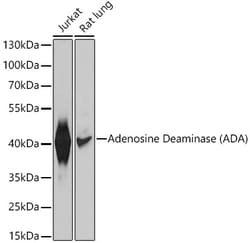
ABclonal Technology Adenosine Deaminase (ADA) Rabbit pAb
This gene encodes an enzyme that catalyzes the hydrolysis of adenosine to inosine in the purine catabolic pathway. Various mutations have been described for this gene and have been linked to human diseases related to impaired immune function such as severe combined immunodeficiency disease (SCID) which is the result of a deficiency in the ADA enzyme. In ADA-deficient individuals there is a marked depletion of T, B, and NK lymphocytes, and consequently, a lack of both humoral and cellular immunity. Conversely, elevated levels of this enzyme are associated with congenital hemolytic anemia.
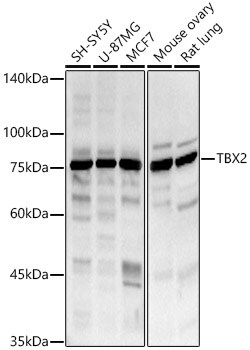
ABclonal Technology TBX2 Rabbit pAb
This gene is a member of a phylogenetically conserved family of genes that share a common DNA-binding domain, the T-box. T-box genes encode transcription factors involved in the regulation of developmental processes. This gene product is the human homolog of mouse Tbx2, and shares strong sequence similarity with Drosophila omb protein. Expression studies indicate that this gene may have a potential role in tumorigenesis as an immortalizing agent. Transcript heterogeneity due to alternative polyadenylation has been noted for this gene.
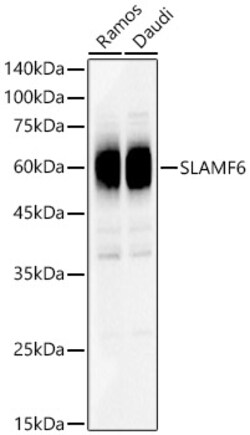
ABclonal Technology SLAMF6 Rabbit pAb
The protein encoded by this gene is a type I transmembrane protein, belonging to the CD2 subfamily of the immunoglobulin superfamily. This encoded protein is expressed on Natural killer (NK), T, and B lymphocytes. It undergoes tyrosine phosphorylation and associates with the Src homology 2 domain-containing protein (SH2D1A) as well as with SH2 domain-containing phosphatases (SHPs). It functions as a coreceptor in the process of NK cell activation. It can also mediate inhibitory signals in NK cells from X-linked lymphoproliferative patients. Alternative splicing results in multiple transcript variants encoding distinct isoforms.
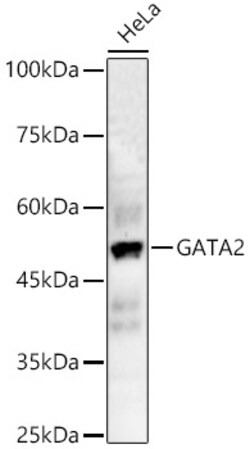
ABclonal Technology GATA2 Rabbit pAb
This gene encodes a member of the GATA family of zinc-finger transcription factors that are named for the consensus nucleotide sequence they bind in the promoter regions of target genes. The encoded protein plays an essential role in regulating transcription of genes involved in the development and proliferation of hematopoietic and endocrine cell lineages. Alternative splicing results in multiple transcript variants.
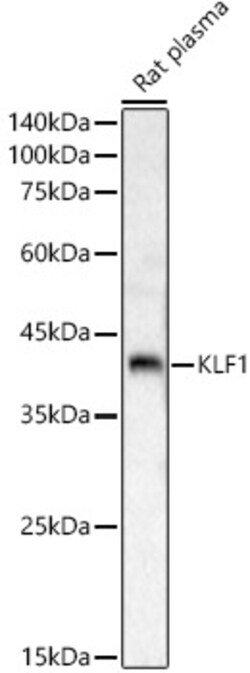
ABclonal Technology KLF1 Rabbit pAb
This gene encodes a hematopoietic-specific transcription factor that induces high-level expression of adult beta-globin and other erythroid genes. The zinc-finger protein binds to the DNA sequence CCACACCCT found in the beta hemoglobin promoter. Heterozygous loss-of-function mutations in this gene result in the dominant In(Lu) blood phenotype.
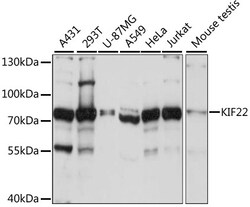
ABclonal Technology KIF22 Rabbit pAb
The protein encoded by this gene is a member of the kinesin-like protein family. The family members are microtubule-dependent molecular motors that transport organelles within cells and move chromosomes during cell division. The C-terminal half of this protein has been shown to bind DNA. Studies with the Xenopus homolog suggests its essential role in metaphase chromosome alignment and maintenance. Alternatively spliced transcript variants encoding different isoforms have been found for this gene.
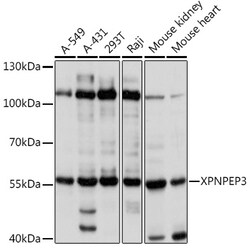
ABclonal Technology XPNPEP3 Rabbit pAb
The protein encoded by this gene belongs to the family of X-pro-aminopeptidases that utilize a metal cofactor, and remove the N-terminal amino acid from peptides with a proline residue in the penultimate position. This protein has been shown to localize to the mitochondria of renal cells, and have a role in ciliary function. Mutations in this gene are associated with nephronophthisis-like nephropathy-1. Alternatively spliced transcript variants encoding different isoforms have been noted for this gene, however, expression of some of these isoforms in vivo is not known.
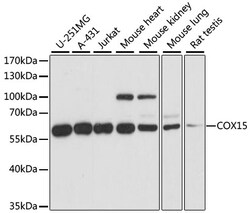
ABclonal Technology COX15 Rabbit pAb
Cytochrome c oxidase (COX), the terminal component of the mitochondrial respiratory chain, catalyzes the electron transfer from reduced cytochrome c to oxygen. This component is a heteromeric complex consisting of 3 catalytic subunits encoded by mitochondrial genes and multiple structural subunits encoded by nuclear genes. The mitochondrially-encoded subunits function in electron transfer, and the nuclear-encoded subunits may function in the regulation and assembly of the complex. This nuclear gene encodes a protein which is not a structural subunit, but may be essential for the biogenesis of COX formation and may function in the hydroxylation of heme O, according to the yeast mutant studies. This protein is predicted to contain 5 transmembrane domains localized in the mitochondrial inner membrane. Alternative splicing of this gene generates two transcript variants diverging in the 3 region.
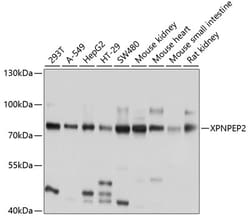
ABclonal Technology XPNPEP2 Rabbit pAb
Aminopeptidase P is a hydrolase specific for N-terminal imido bonds, which are common to several collagen degradation products, neuropeptides, vasoactive peptides, and cytokines. Structurally, the enzyme is a member of the pita bread fold family and occurs in mammalian tissues in both soluble and GPI-anchored membrane-bound forms. A membrane-bound and soluble form of this enzyme have been identified as products of two separate genes.
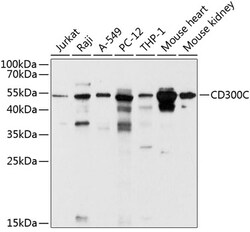
ABclonal Technology CD300C Rabbit pAb
The CMRF35 antigen, which was identified by reactivity with a monoclonal antibody, is present on monocytes, neutrophils, and some T and B lymphocytes (Jackson et al., 1992 [PubMed 1349532]).
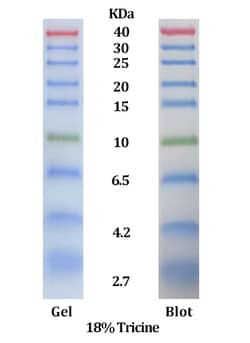
ACROBiosystems Star Ribbon Pre-stained Protein Marker (2.7-40 kDa)
This product is a mixture of nine highly purified pre-stained proteins ranging from 2.7 kDa to 40 kDa. The 40 kDa band is orange, 10 kDa band is green, and other bands are blue. It is designed for observing protein separation during SDS-PAGE, verifying western transfer efficiency on membranes, and approximating the size of proteins.