
Protein Molecular Weight Markers


Advanced Instruments Inc BROAD SPECTRUM MICROTABS-II
Broad Spectrum Microtabs-II, 800 tablets/dispenser

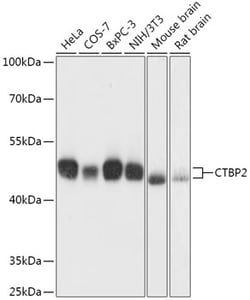
ABclonal Technology CTBP2 Rabbit pAb

This gene produces alternative transcripts encoding two distinct proteins. One protein is a transcriptional repressor, while the other isoform is a major component of specialized synapses known as synaptic ribbons. Both proteins contain a NAD+ binding domain similar to NAD+-dependent 2-hydroxyacid dehydrogenases. A portion of the 3 untranslated region was used to map this gene to chromosome 21q21.3, however, it was noted that similar loci elsewhere in the genome are likely. Blast analysis shows that this gene is present on chromosome 10. Several transcript variants encoding two different isoforms have been found for this gene.

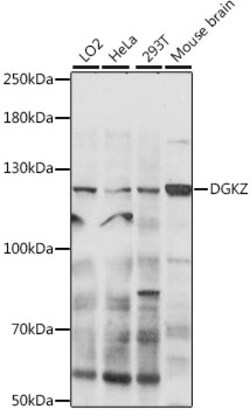
ABclonal Technology DGKZ Rabbit pAb
The protein encoded by this gene belongs to the eukaryotic diacylglycerol kinase family. It may attenuate protein kinase C activity by regulating diacylglycerol levels in intracellular signaling cascade and signal transduction. Alternative splicing occurs at this locus and multiple transcript variants encoding distinct isoforms have been identified.

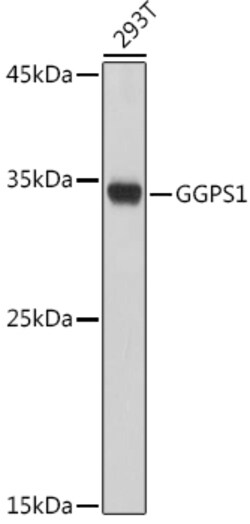
ABclonal Technology GGPS1 Rabbit pAb
This gene is a member of the prenyltransferase family and encodes a protein with geranylgeranyl diphosphate (GGPP) synthase activity. The enzyme catalyzes the synthesis of GGPP from farnesyl diphosphate and isopentenyl diphosphate. GGPP is an important molecule responsible for the C20-prenylation of proteins and for the regulation of a nuclear hormone receptor. Alternate transcriptional splice variants, both protein-coding and non-protein-coding, have been found for this gene.
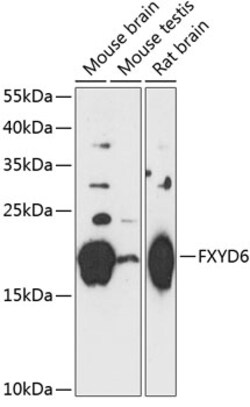
ABclonal Technology FXYD6 Rabbit pAb
This gene encodes a member of the FXYD family of transmembrane proteins. This particular protein encodes phosphohippolin, which likely affects the activity of Na,K-ATPase. Multiple alternatively spliced transcript variants encoding the same protein have been described. Related pseudogenes have been identified on chromosomes 10 and X. Read-through transcripts have been observed between this locus and the downstream sodium/potassium-transporting ATPase subunit gamma (FXYD2, GeneID 486) locus.
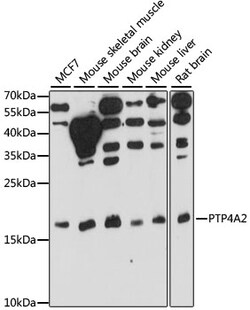
ABclonal Technology PTP4A2 Rabbit pAb
The protein encoded by this gene belongs to a small class of the protein tyrosine phosphatase (PTP) family. PTPs are cell signaling molecules that play regulatory roles in a variety of cellular processes. PTPs in this class contain a protein tyrosine phosphatase catalytic domain and a characteristic C-terminal prenylation motif. This PTP has been shown to primarily associate with plasmic and endosomal membrane through its C-terminal prenylation. This PTP was found to interact with the beta-subunit of Rab geranylgeranyltransferase II (beta GGT II), and thus may function as a regulator of GGT II activity. Overexpression of this gene in mammalian cells conferred a transformed phenotype, which suggested its role in tumorigenesis. Alternatively spliced transcript variants have been described. Related pseudogenes exist on chromosomes 11, 12 and 17.
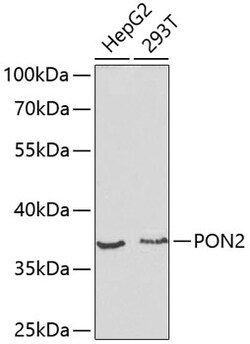
ABclonal Technology PON2 Rabbit pAb
This gene encodes a member of the paraoxonase gene family, which includes three known members located adjacent to each other on the long arm of chromosome 7. The encoded protein is ubiquitously expressed in human tissues, membrane-bound, and may act as a cellular antioxidant, protecting cells from oxidative stress. Hydrolytic activity against acylhomoserine lactones, important bacterial quorum-sensing mediators, suggests the encoded protein may also play a role in defense responses to pathogenic bacteria. Mutations in this gene may be associated with vascular disease and a number of quantitative phenotypes related to diabetes. Alternatively spliced transcript variants encoding different isoforms have been described.
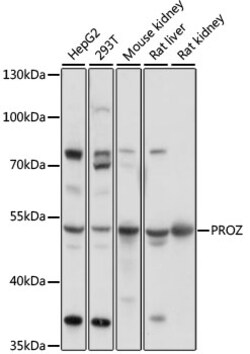
ABclonal Technology PROZ Rabbit pAb
This gene encodes a liver vitamin K-dependent glycoprotein that is synthesized in the liver and secreted into the plasma. The encoded protein plays a role in regulating blood coagulation by complexing with protein Z-dependent protease inhibitor to directly inhibit activated factor X at the phospholipid surface. Deficiencies in this protein are associated with an increased risk of ischemic arterial diseases and fetal loss. Mutations in this gene are the cause of protein Z deficiency. Alternate splicing results in multiple transcript variants.
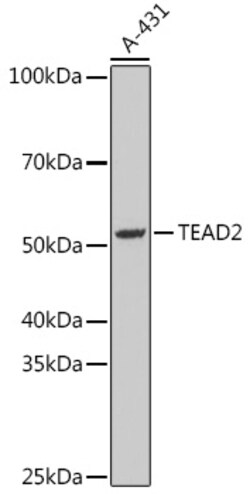
ABclonal Technology TEAD2 Rabbit pAb
Enables several functions, including DNA-binding transcription factor activity, disordered domain specific binding activity, and transcription coactivator binding activity. Involved in hippo signaling, positive regulation of transcription, DNA-templated, and protein-containing complex assembly. Located in cytosol and nucleoplasm. Part of TEAD-YAP complex.
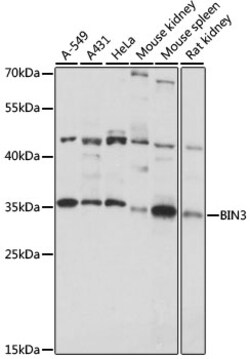
ABclonal Technology BIN3 Rabbit pAb
The product of this gene is a member of the BAR domain protein family. The encoded protein is comprised solely of a BAR domain which is predicted to form coiled-coil structures and proposed to mediate dimerization, sense and induce membrane curvature, and bind small GTPases. BAR domain proteins have been implicated in endocytosis, intracellular transport, and a diverse set of other processes.
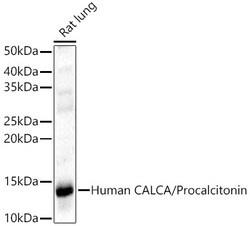
ABclonal Technology CALCA Rabbit pAb
This gene encodes the peptide hormones calcitonin, calcitonin gene-related peptide and katacalcin by tissue-specific alternative RNA splicing of the gene transcripts and cleavage of inactive precursor proteins. Calcitonin is involved in calcium regulation and acts to regulate phosphorus metabolism. Calcitonin gene-related peptide functions as a vasodilator and as an antimicrobial peptide while katacalcin is a calcium-lowering peptide. Multiple transcript variants encoding different isoforms have been found for this gene.
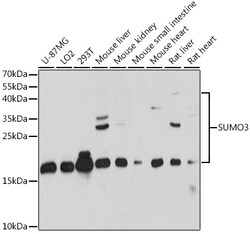
ABclonal Technology SUMO3 Rabbit pAb
This gene encodes a member of the small ubiquitin-related modifier (SUMO) family of eukaryotic proteins. The encoded protein is covalently conjugated to other proteins via a post-translation modification known as sumoylation. Sumoylation may play a role in a wide variety of cellular processes, including nuclear transport, DNA replication and repair, mitosis, transcriptional regulation, and signal transduction. Alternatively spliced transcript variants encoding distinct proteins have been described.
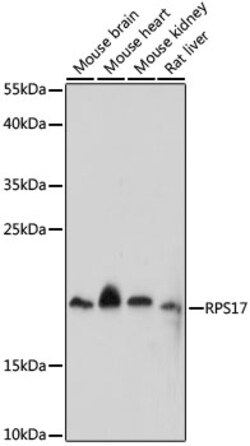
ABclonal Technology RPS17 Rabbit pAb
Ribosomes, the organelles that catalyze protein synthesis, consist of a small 40S subunit and a large 60S subunit. Together these subunits are composed of four RNA species and approximately 80 structurally distinct proteins. This gene encodes a ribosomal protein that is a component of the 40S subunit. The protein belongs to the S17E family of ribosomal proteins and is located in the cytoplasm. Mutations in this gene cause Diamond-Blackfan anemia 4. Alternative splicing of this gene results in multiple transcript variants. As is typical for genes encoding ribosomal proteins, there are multiple processed pseudogenes of this gene dispersed through the genome.
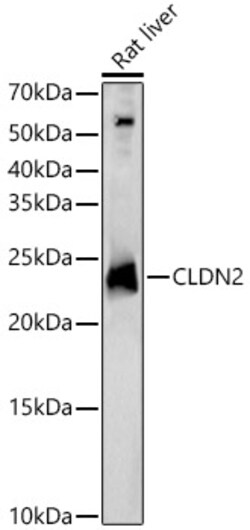
ABclonal Technology CLDN2 Rabbit pAb
This gene product belongs to the claudin protein family whose members have been identified as major integral membrane proteins localized exclusively at tight junctions. Claudins are expressed in an organ-specific manner and regulate tissue-specific physiologic properties of tight junctions. This protein is expressed in the intestine. Alternatively spliced transcript variants with different 5 untranslated region have been found for this gene.