
Oligonucleotides

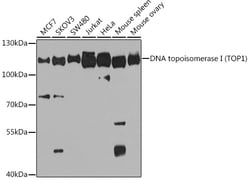
ABclonal Technology DNA topoisomerase I (TOP1) Rabbit pAb

This gene encodes a DNA topoisomerase, an enzyme that controls and alters the topologic states of DNA during transcription. This enzyme catalyzes the transient breaking and rejoining of a single strand of DNA which allows the strands to pass through one another, thus altering the topology of DNA. This gene is localized to chromosome 20 and has pseudogenes which reside on chromosomes 1 and 22.

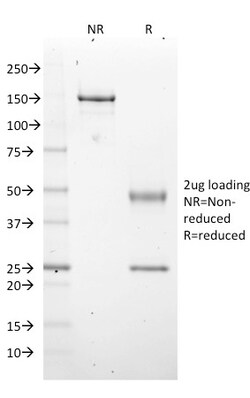
Biotium EZH2 / KMT6(EZH2/2536), Biotin conjugate, 0.1mg/mL
This gene encodes a member of the Polycomb-group (PcG) family. PcG family members form multimeric protein complexes, which are involved in maintaining the transcriptional repressive state of genes over successive cell generations. This protein associates with the embryonic ectoderm development protein, the VAV1 oncoprotein, and the X-linked nuclear protein. This protein may play a role in the hematopoietic and central nervous systems. Multiple alternatively spliced transcript variants encoding distinct isoforms have been identified for this gene. Primary antibodies are available purified, or with a selection of fluorescent CF Dyes and other labels. CF Dyes offer exceptional brightness and photostability. Note: Conjugates of blue fluorescent dyes like CF405S and CF405M are not recommended for detecting low abundance targets, because blue dyes have lower fluorescence and can give higher non-specific background than other dye colors.
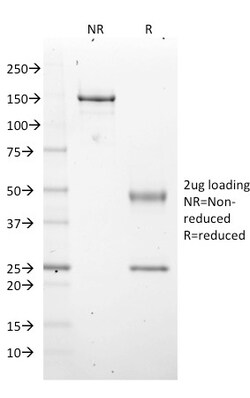
Biotium EZH2 / KMT6(EZH2/2536), CF647 conjugate, 0.1mg/mL
This gene encodes a member of the Polycomb-group (PcG) family. PcG family members form multimeric protein complexes, which are involved in maintaining the transcriptional repressive state of genes over successive cell generations. This protein associates with the embryonic ectoderm development protein, the VAV1 oncoprotein, and the X-linked nuclear protein. This protein may play a role in the hematopoietic and central nervous systems. Multiple alternatively spliced transcript variants encoding distinct isoforms have been identified for this gene. Primary antibodies are available purified, or with a selection of fluorescent CF Dyes and other labels. CF Dyes offer exceptional brightness and photostability. Note: Conjugates of blue fluorescent dyes like CF405S and CF405M are not recommended for detecting low abundance targets, because blue dyes have lower fluorescence and can give higher non-specific background than other dye colors.
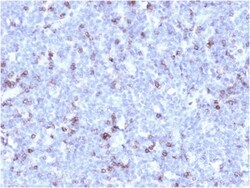
Biotium CD43 (T-Cell Marker) (rSPN/1094), CF405S conjugate, 0.1mg/mL
This antibody recognizes a cell surface glycoprotein of 95/115/135 kDa (depending upon the extent of glycosylation), identified as CD43. 70-90% of T-cell lymphomas and from 22-37% of B-cell lymphomas express CD43. No reactivity has been observed with reactive B-cells. So a B-lineage population that co-expresses CD43 is highly likely to be a malignant lymphoma, especially a low-grade lymphoma, rather than a reactive B-cell population. When CD43 antibody is used in combination with anti-CD20, effective immunophenotyping of lymphomas in formalin-fixed tissues can be obtained. Co-staining of a lymphoid infiltrate with anti-CD20 and anti-CD43 argues against a reactive process and favors a diagnosis of lymphoma.Primary antibodies are available purified, or with a selection of fluorescent CF Dyes and other labels. CF Dyes offer exceptional brightness and photostability. Note: Conjugates of blue fluorescent dyes like CF405S and CF405M are not recommended for detecting low ab
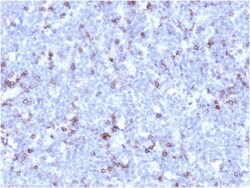
Biotium CD43 (T-Cell Marker) (rSPN/1094), Biotin conjugate, 0.1mg/mL
This antibody recognizes a cell surface glycoprotein of 95/115/135 kDa (depending upon the extent of glycosylation), identified as CD43. 70-90% of T-cell lymphomas and from 22-37% of B-cell lymphomas express CD43. No reactivity has been observed with reactive B-cells. So a B-lineage population that co-expresses CD43 is highly likely to be a malignant lymphoma, especially a low-grade lymphoma, rather than a reactive B-cell population. When CD43 antibody is used in combination with anti-CD20, effective immunophenotyping of lymphomas in formalin-fixed tissues can be obtained. Co-staining of a lymphoid infiltrate with anti-CD20 and anti-CD43 argues against a reactive process and favors a diagnosis of lymphoma.Primary antibodies are available purified, or with a selection of fluorescent CF Dyes and other labels. CF Dyes offer exceptional brightness and photostability. Note: Conjugates of blue fluorescent dyes like CF405S and CF405M are not recommended for detecting low ab
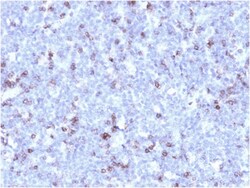
Biotium CD43 (T-Cell Marker)(rSPN/1094), 1mg/mL
This antibody recognizes a cell surface glycoprotein of 95/115/135 kDa (depending upon the extent of glycosylation), identified as CD43. 70-90% of T-cell lymphomas and from 22-37% of B-cell lymphomas express CD43. No reactivity has been observed with reactive B-cells. So a B-lineage population that co-expresses CD43 is highly likely to be a malignant lymphoma, especially a low-grade lymphoma, rather than a reactive B-cell population. When CD43 antibody is used in combination with anti-CD20, effective immunophenotyping of lymphomas in formalin-fixed tissues can be obtained. Co-staining of a lymphoid infiltrate with anti-CD20 and anti-CD43 argues against a reactive process and favors a diagnosis of lymphoma.Primary antibodies are available purified, or with a selection of fluorescent CF Dyes and other labels. CF Dyes offer exceptional brightness and photostability. Note: Conjugates of blue fluorescent dyes like CF405S and CF405M are not recommended for detecting low ab
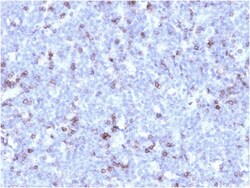
Biotium CD43 (T-Cell Marker) (rSPN/1094), CF594 conjugate, 0.1mg/mL
This antibody recognizes a cell surface glycoprotein of 95/115/135 kDa (depending upon the extent of glycosylation), identified as CD43. 70-90% of T-cell lymphomas and from 22-37% of B-cell lymphomas express CD43. No reactivity has been observed with reactive B-cells. So a B-lineage population that co-expresses CD43 is highly likely to be a malignant lymphoma, especially a low-grade lymphoma, rather than a reactive B-cell population. When CD43 antibody is used in combination with anti-CD20, effective immunophenotyping of lymphomas in formalin-fixed tissues can be obtained. Co-staining of a lymphoid infiltrate with anti-CD20 and anti-CD43 argues against a reactive process and favors a diagnosis of lymphoma.Primary antibodies are available purified, or with a selection of fluorescent CF Dyes and other labels. CF Dyes offer exceptional brightness and photostability. Note: Conjugates of blue fluorescent dyes like CF405S and CF405M are not recommended for detecting low ab
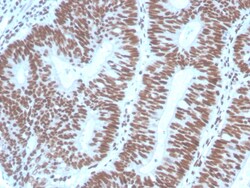
Biotium PAX2 (Renal Cell & Ovarian Carcinoma Marker) (PAX2/1104), Biotin conjugate, 0.1mg/mL
This antibody recognizes a protein of 42 kDa, which is identified as PAX2. It is a member of the paired box family of transcription factors, which is required for development and proliferation of the kidney, brain, and Müllerian organs. PAX2 genes contain a highly conserved DNA sequence within the paired box region, which encodes a DNA-binding domain, enabling PAX proteins to bind the promoters of specific genes to transcriptionally regulate their expression. PAX2 is specifically expressed in the developing central nervous system, eye, ear, and urogenital tract, and is essential for the development of these organs. In normal adult tissues PAX2 was mainly detected in the urogenital system, including kidney, ureteric epithelium, fallopian tube epithelium, ovary and uterus. In tumors, PAX2 has been detected in renal cell carcinomas, Wilms' tumors, nephrogenic adenomas and papillary serous carcinoma of the ovary. PAX2 has been used as a marker for the identification of renal cel

Biotium PAX2 (Renal Cell & Ovarian Carcinoma Marker) (PAX2/1104), Biotin conjugate, 0.1mg/mL
This antibody recognizes a protein of 42 kDa, which is identified as PAX2. It is a member of the paired box family of transcription factors, which is required for development and proliferation of the kidney, brain, and Müllerian organs. PAX2 genes contain a highly conserved DNA sequence within the paired box region, which encodes a DNA-binding domain, enabling PAX proteins to bind the promoters of specific genes to transcriptionally regulate their expression. PAX2 is specifically expressed in the developing central nervous system, eye, ear, and urogenital tract, and is essential for the development of these organs. In normal adult tissues PAX2 was mainly detected in the urogenital system, including kidney, ureteric epithelium, fallopian tube epithelium, ovary and uterus. In tumors, PAX2 has been detected in renal cell carcinomas, Wilms' tumors, nephrogenic adenomas and papillary serous carcinoma of the ovary. PAX2 has been used as a marker for the identification of renal cel

Medchemexpress LLC sEH inhibitor-7 | 340221-20-7 | 99.5% | 247.33 | 25 MG
sEH inhibitor-7 (compound c-2) is an inhibitor of soluble epoxide hydrolase (sEH) with IC50s of 0.15 μM (mouse sEH) and 6.2 μM (human sEH). Soluble epoxide hydrolase (sEH) plays an important role in the metabolism of endogenous chemical mediators involved in the regulation of blood pressure and inflammation.
- Inhibitor of soluble epoxide hydrolase (sEH)
- IC50s of 0.15 μM (mouse sEH) and 6.2 μM (human sEH)
- Plays an important role in the metabolism of endogenous chemical mediators
- Involved in the regulation of blood pressure and inflammation
- Purity: 99.5%
- Appearance: solid
- Color: off-white to light yellow
- Molecular weight: 247.33
- CAS No.: 340221-20-7
- Solubility: 100 mg/mL in DMSO

Medchemexpress LLC Gapdh, rabbit muscle | 9001-50-7 | 73,600 | 500 U
Glyceraldehyde phosphate dehydrogenase (EC 1.2.1.12) is an enzyme that targets anti-thymocyte and anti-apoptotic agents. It catalyzes the chain oxidation of reduced nicotinamide adenine dinucleotide by perhydroxyl radicals. This recombinant product is suitable for enzymatic determination of glycerol and triglycerides when combined with glycerol kinase.
- Solid appearance, white to light yellow
- pH stable between 6.5 and 10.0, with an optimum pH of 9.0
- Soluble in H₂O at concentrations ≥ 25 mg/mL
- For research use only
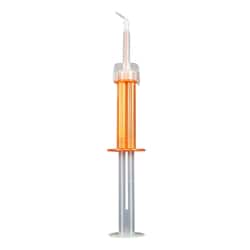
Med Vet International Gen II Anal Sac Excision Kit, 5/Pack, J1490
The surgical excision of both anal sacs can be elected as a permanent solution to these reoccurring issues. Overview of Product The Gen II product uses a safe and nontoxic polymer gel that is infused as soft gel into the empty anal sac. The gel solidifies after 2-4 minutes in the anal sac. This provides an easily discernible mass that can be dissected out fairly readily. This reduces surgery time and the risk of leaving anal sac remnants. Kit is a single complete unit • 18g plastic blunt angled needle for easy insertion in to anal sac opening /duct • Dual chambered cartridge of polymer with mixing tip. -Gel solidifies 2-4 minutes upon application • Capacity of 2.4cc is sufficient for larger patients • Superb ergonomic design for small hands • Simple turn and click of syringe hub opens gel pathway • Includes directions for use Gen II Anal Sac Excision Kit 5/pk
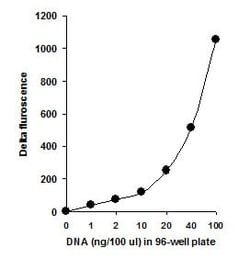
Abcam General DNA Quantification Kit.
General DNA Quantification Kit.
The product is subject to the following: Abcam Restricted Use Statement
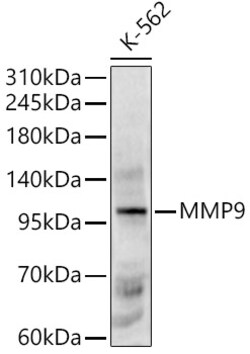
ABclonal Technology MMP9 Rabbit pAb
Proteins of the matrix metalloproteinase (MMP) family are involved in the breakdown of extracellular matrix in normal physiological processes, such as embryonic development, reproduction, and tissue remodeling, as well as in disease processes, such as arthritis and metastasis. Most MMPs are secreted as inactive proproteins which are activated when cleaved by extracellular proteinases. The enzyme encoded by this gene degrades type IV and V collagens. Studies in rhesus monkeys suggest that the enzyme is involved in IL-8-induced mobilization of hematopoietic progenitor cells from bone marrow, and murine studies suggest a role in tumor-associated tissue remodeling.
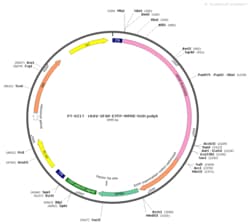
BIOHIPPO AAV-GFAP-EYFP-WPRE-hGH-polyA
Recombinant adeno associated virus expressing EYFP under the GFAP promoter with WPRE and hGH polyA elements. Offered under the Biohippo AAVX Series with multiple serotypes available including AAV2/1, AAV2/2, AAV2/5, AAV2/6, AAV2/6m, AAV2/6.2FF, AAV2/7m8, AAV2/8, AAV2/9, AAV2/DJ, AAV2/DJ8, AAV2/Retro, AAV2/PHP.eB, AAV2/PHP.B, AAV2/rh10, AAV2/PHP.S, AAV2/anc80, AAV2/B10, AAV2/olig001, AAV2/BI30, AAV2/BR1, AAV2/MG1.2, AAV1/2, AAV2/MaCPNS1, and AAV2/MaCPNS2. Regular titer is greater than or equal to 2.00E+12 vg per mL, with high titer greater than or equal to 1.00E+13 vg per mL available upon request at no additional cost. Customers may specify preferred serotype and titer when placing orders.
