
Primary Antibody Matched Pairs

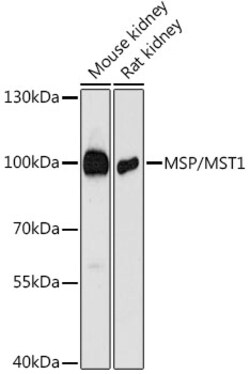
ABclonal Technology MSP/MST1 Rabbit pAb

The protein encoded by this gene contains four kringle domains and a serine protease domain, similar to that found in hepatic growth factor. Despite the presence of the serine protease domain, the encoded protein may not have any proteolytic activity. The receptor for this protein is RON tyrosine kinase, which upon activation stimulates ciliary motility of ciliated epithelial lung cells. This protein is secreted and cleaved to form an alpha chain and a beta chain bridged by disulfide bonds.


Medchemexpress LLC Recombinant human cellular retinoic acid-binding protein 2 (CRABP2), His-tagged | >95.0% | 5 UG
Recombinant human cellular retinoic acid-binding protein 2 (CRABP2), His-tagged, supplied lyophilized for research applications involving retinoic acid binding and signaling. Expressed in E. coli, the protein has an approximate molecular weight of 16 kDa and is provided as a 5 μg vial in a Tris-NaCl formulation with low endotoxin.
- High purity greater than 95% as determined by reducing SDS-PAGE.
- Low endotoxin level (<1 EU/μg) suitable for sensitive assays.
- Lyophilized format for long-term storage and convenient shipping.
- Recommended storage at -20°C; reconstituted stability at 4°C for 1 week.
- His tag facilitates affinity purification and detection.
- Formulated in 50 mM Tris-HCl, 300 mM NaCl, pH 8.0.
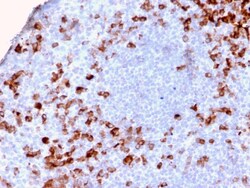
Biotium Human Kappa Light Chain / IGKC (B-Cell Marker)(KLC2886R), 0.2mg/mL
This MAb is specific to kappa light chain of immunoglobulin and shows no cross-reaction with lambda light chain or any of the five heavy chains. It recognizes human Ig kappa light chains of both secreted and cell surface immunoglobulin. It detects also free kappa light chains. In mammals, the two light chains in an antibody are always identical, with only one type of light chain, kappa or lambda. The ratio of Kappa to Lambda is 70:30. However, with the occurrence of multiple myeloma or other B-cell malignancies this ratio is disturbed. Antibody to the kappa light chain is reportedly useful in the identification of leukemias, plasmacytomas, and certain non-Hodgkin's lymphomas. Demonstration of clonality in lymphoid infiltrates indicates that the infiltrate is malignant. Primary antibodies are available purified, or with a selection of fluorescent CF Dyes and other labels. CF Dyes offer exceptional brightness and photostability. Note: Conjugates of blue fluorescent dyes like
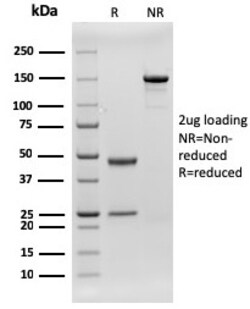
Biotium CD79b (B-Cell Marker)(rIGB/1842), CF594 conjugate, 0.1mg/mL
CD79 (also designated Ig chains, designated CD79B or B29. The B cell antigen receptor complex (BCR) is formed by the association of CD79 with a membrane immunoglobulin, such as IgM or IgD. The membrane immunoglobulins IgM and IgD achieve surface expression and antigen presentation function in response to CD79 association. The cytoplasmic tails of both CD79A and CD79B contain an ITAM (immuno-receptor tyrosine-based activation) motif, which acts to initiate the BCR signaling reactions by binding to and activating tyrosine kinases. Primary antibodies are available purified, or with a selection of fluorescent CF Dyes and other labels. CF Dyes offer exceptional brightness and photostability. Note: Conjugates of blue fluorescent dyes like CF405S and CF405M are not recommended for detecting low abundance targets, because blue dyes have lower fluorescence and can give higher non-specific background than other dye colors.

Sino Biological Human MMP-8 Matched ELISA Antibody Pair Set 5 Plates
The Human MMP-8 ELISA Pair Set is for the quantitative determination of Human MMP-8.This ELISA Pair Set contains the basic components required for the development of sandwich ELISAs.The Sino Biological ELISA Pair Set is a solid phase sandwich ELISA (Enzyme-Linked Immunosorbent Assay). It utilizes a monoclonal antibody specific for MMP-8 coated on a 96-well plate. Standards and samples are added to the wells, and any MMP-8 present binds to the immobilized antibody. The wells are washed and a horseradish peroxidase conjugated rabbit anti-MMP-8 monoclonal antibody is then added, producing an antibody-antigen-antibody "sandwich". The wells are again washed and TMB substrate solution is loaded, which produces color in proportion to the amount of MMP-8 present in the sample. To end the enzyme reaction, the stop solution is added and absorbances of the microwell are read at 450 nm.
Sino Biological Mouse IL-1 alpha/IL1A Matched ELISA Antibody Pair Set 5 Plates
The Mouse IL-1 alpha / IL-1F1 / IL1A ELISA Pair Set is for the quantitative determination of Mouse IL-1 alpha / IL-1F1 / IL1A.The Sino Biological ELISA Pair Set is a solid phase sandwich ELISA (Enzyme-Linked Immunosorbent Assay). It utilizes a monoclonal antibody specific for Mouse IL-1 alpha / IL-1F1 / IL1A coated on a 96-well plate. Standards and samples are added to the wells, and any Mouse IL-1 alpha / IL-1F1 / IL1A present binds to the immobilized antibody. The wells are washed and a horseradish peroxidase conjugated rabbit anti-Mouse IL-1 alpha / IL-1F1 / IL1A polyclonal antibody is then added, producing an antibody-antigen-antibody "sandwich". The wells are again washed and TMB substrate solution is loaded, which produces color in proportion to the amount of Mouse IL-1 alpha / IL-1F1 / IL1A present in the sample. To end the enzyme reaction, the stop solution is added and absorbances of the microwell are read at 450 nm.
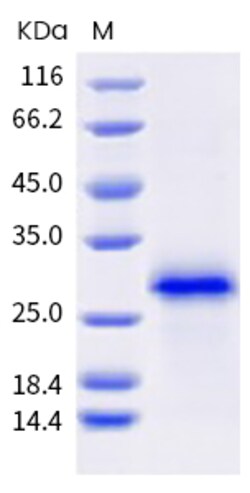
Human TNFRSF18 Protein 100ug (Sino Biological)
A DNA sequence encoding the Human TNFRSF18 (NP_683700.1) (Met1-Glu161) was expressed with a C-terminal polyhistidine tag followed by an AVI tag. The expressed protein was biotinylated in vivo by the Biotin-Protein ligase (BirA enzyme) which is co-expressed.
Sino Biological Mouse SIGNR1/CD209B Matched ELISA Antibody Pair Set 15 Plates
The Mouse SIGNR1 / CD209b ELISA Pair Set is for the quantitative determination of Mouse SIGNR1 / CD209b.This ELISA Pair Set contains the basic components required for the development of sandwich ELISAs.The Sino Biological ELISA Pair Set is a solid phase sandwich ELISA (Enzyme-Linked Immunosorbent Assay). It utilizes a monoclonal antibody specific for SIGNR1 / CD209b coated on a 96-well plate. Standards and samples are added to the wells, and any SIGNR1 / CD209b present binds to the immobilized antibody. The wells are washed and a horseradish peroxidase conjugated rabbit anti-SIGNR1 / CD209b monoclonal antibody is then added, producing an antibody-antigen-antibody “sandwich”. The wells are again washed and TMB substrate solution is loaded, which produces color in proportion to the amount of SIGNR1 / CD209b present in the sample. To end the enzyme reaction, the stop solution is added and absorbances of the microwell are read at 450 nm.
Sino Biological Human ENPP-5 Matched ELISA Antibody Pair Set 5 Plates
The Human ENPP5 ELISA Pair Set is for the quantitative determination of Human ENPP5.The Sino Biological ELISA Pair Set is a solid phase sandwich ELISA (Enzyme-Linked Immunosorbent Assay). It utilizes a monoclonal antibody specific for Human ENPP5 coated on a 96-well plate. Standards and samples are added to the wells, and any Human ENPP5 present binds to the immobilized antibody. The wells are washed and a horseradish peroxidase conjugated rabbit anti-Human ENPP5 polyclonal antibody is then added, producing an antibody-antigen-antibody "sandwich". The wells are again washed and TMB substrate solution is loaded, which produces color in proportion to the amount of Human ENPP5 present in the sample. To end the enzyme reaction, the stop solution is added and absorbances of the microwell are read at 450 nm.

Sino Biological Human Prostasin / Prss8 Protein (His Tag), Endotoxin-Free 1mg
A DNA sequence encoding the mature form of human Prss8 (NP_002764.1) (Ala 30-Arg 322) was fused with a signal peptide at the N-terminus and a polyhistidine-tag at the C-terminus.
Sino Biological Human SPINK4 Matched ELISA Antibody Pair Set 5 Plates
The Human SPINK4 ELISA Pair Set is for the quantitative determination of Human SPINK4.The Sino Biological ELISA Pair Set is a solid phase sandwich ELISA (Enzyme-Linked Immunosorbent Assay). It utilizes a monoclonal antibody specific for Human SPINK4 coated on a 96-well plate. Standards and samples are added to the wells, and any Human SPINK4 present binds to the immobilized antibody. The wells are washed and a horseradish peroxidase conjugated rabbit anti-Human SPINK4 monoclonal antibody is then added, producing an antibody-antigen-antibody "sandwich". The wells are again washed and TMB substrate solution is loaded, which produces color in proportion to the amount of Human SPINK4 present in the sample. To end the enzyme reaction, the stop solution is added and absorbances of the microwell are read at 450 nm.
Sino Biological Human Factor X Matched ELISA Antibody Pair Set 15 Plates
The Human Coagulation Factor X/F10 ELISA Pair Set is for the quantitative determination of Human Coagulation Factor X/F10.The Sino Biological ELISA Pair Set is a solid phase sandwich ELISA (Enzyme-Linked Immunosorbent Assay). It utilizes a monoclonal antibody specific for Human Coagulation Factor X/F10 coated on a 96-well plate. Standards and samples are added to the wells, and any Human Coagulation Factor X/F10 present binds to the immobilized antibody. The wells are washed and a horseradish peroxidase conjugated rabbit anti-Human Coagulation Factor X/F10 monoclonal antibody is then added, producing an antibody-antigen-antibody "sandwich". The wells are again washed and TMB substrate solution is loaded, which produces color in proportion to the amount of Human Coagulation Factor X/F10 present in the sample. To end the enzyme reaction, the stop solution is added and absorbances of the microwell are read at 450 nm.
Sino Biological Human MIP-5/CCL15 Matched ELISA Antibody Pair Set 5 Plates
The Human CCL15/MIP-5/MIP-1 delta ELISA Pair Set is for the quantitative determination of Human CCL15/MIP-5/MIP-1 delta.The Sino Biological ELISA Pair Set is a solid phase sandwich ELISA (Enzyme-Linked Immunosorbent Assay). It utilizes a monoclonal antibody specific for Human CCL15/MIP-5/MIP-1 delta coated on a 96-well plate. Standards and samples are added to the wells, and any Human CCL15/MIP-5/MIP-1 delta present binds to the immobilized antibody. The wells are washed and a horseradish peroxidase conjugated rabbit anti-Human CCL15/MIP-5/MIP-1 delta polyclonal antibody is then added, producing an antibody-antigen-antibody "sandwich". The wells are again washed and TMB substrate solution is loaded, which produces color in proportion to the amount of Human CCL15/MIP-5/MIP-1 delta present in the sample. To end the enzyme reaction, the stop solution is added and absorbances of the microwell are read at 450 nm.

Sino Biological Recombinant Human Integrin alpha V beta 3 Protein (His Tag)
A DNA sequence encoding the extracellular domain (Met1-Val992) of human ITGAV (P06756) was fused with a his tag at the C-terminus, constructed the plasmid 1; A DNA sequence encoding the extracellular domain (Met1-Asp718) of human ITGB3 (P05106) constructed the plasmid 2. The two plasmids were co-expressed and the human ITGAV&ITGB3 heterodimer was purified.