
Primary Antibody Matched Pairs


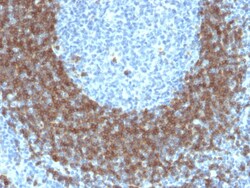
Biotium CD79b (B-Cell Marker)(IGB/1842), CF488A conjugate, 0.1mg/mL
CD79 (also designated Ig chains, designated CD79B or B29. The B cell antigen receptor complex (BCR) is formed by the association of CD79 with a membrane immunoglobulin, such as IgM or IgD. The membrane immunoglobulins IgM and IgD achieve surface expression and antigen presentation function in response to CD79 association. The cytoplasmic tails of both CD79A and CD79B contain an ITAM (immuno-receptor tyrosine-based activation) motif, which acts to initiate the BCR signaling reactions by binding to and activating tyrosine kinases. Primary antibodies are available purified, or with a selection of fluorescent CF Dyes and other labels. CF Dyes offer exceptional brightness and photostability. Note: Conjugates of blue fluorescent dyes like CF405S and CF405M are not recommended for detecting low abundance targets, because blue dyes have lower fluorescence and can give higher non-specific background than other dye colors.

ABclonal Technology IL1B Rabbit mAb

This gene encodes a protein in the interleukin 1 cytokine family produced by activated macrophages as a proprotein and activated by caspase 1 (CASP1 ICE) This cytokine mediates the inflammatory response and is involved in cell proliferation differentiation and apoptosis It induces cyclooxygenase-2 (COX2) in the CNS contributing to inflammatory pain hypersensitivity and is implicated in osteoarthritis Elevated IL-1B levels are found in patients with severe COVID-19 where it plays a role in lung damage due to the inflammatory response triggered by SARS-CoV-2 This gene is part of a cytokine gene cluster on chromosome 2 which includes eight other interleukin 1 family genes
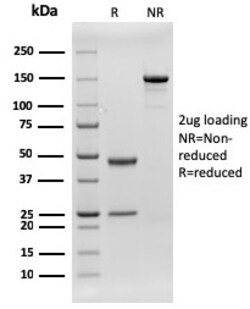
Biotium CD79b (B-Cell Marker)(rIGB/1842), 1mg/mL
CD79 (also designated Ig chains, designated CD79B or B29. The B cell antigen receptor complex (BCR) is formed by the association of CD79 with a membrane immunoglobulin, such as IgM or IgD. The membrane immunoglobulins IgM and IgD achieve surface expression and antigen presentation function in response to CD79 association. The cytoplasmic tails of both CD79A and CD79B contain an ITAM (immuno-receptor tyrosine-based activation) motif, which acts to initiate the BCR signaling reactions by binding to and activating tyrosine kinases. Primary antibodies are available purified, or with a selection of fluorescent CF Dyes and other labels. CF Dyes offer exceptional brightness and photostability. Note: Conjugates of blue fluorescent dyes like CF405S and CF405M are not recommended for detecting low abundance targets, because blue dyes have lower fluorescence and can give higher non-specific background than other dye colors.
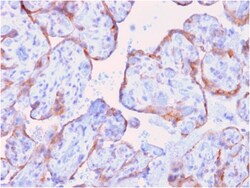
Biotium MMP3 (Marker of Metastasis and Rheumatoid Arthritis)(rMMP3/1730), CF740 conjugate, 0.1mg/mL
The matrix metalloproteinases (MMP) are a family of peptidase enzymes responsible for the degradation of extracellular matrix components, including collagen, gelatin, fibronectin, laminin and proteoglycan. Transcription of MMP genes is differentially activated by phorbol ester, lipopolysaccharide (LPS) or staphylococcal enterotoxin B (SEB). MMP catalysis requires both calcium and zinc. MMP-3, MMP-10 and MMP-11 (also designated stromelysin-1, 2 and 3, respectively) activate procollagenase. MMP-3 activation of procollagenase can occur via two pathways. Direct activation by MMP-3 is slow and activation by MMP-3 in conjunction with tissue or plasma proteinases is rapid. MMP-10 is expressed in small intestine, and at lower levels in lung and heart. MMP-11 is specifically expressed in stromal cells of breast carcinomas and contributes to epithelial cell malignancies. Primary antibodies are available purified, or with a selection of fluorescent CF Dyes and other labels. CF Dyes offer e
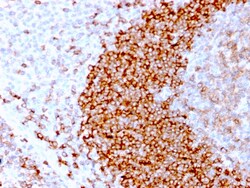
Biotium CD79b (B-Cell Marker)(IGB/3170R), CF488A conjugate, 0.1mg/mL
CD79 (also designated Ig chains, designated CD79B or B29. The B cell antigen receptor complex (BCR) is formed by the association of CD79 with a membrane immunoglobulin, such as IgM or IgD. The membrane immunoglobulins IgM and IgD achieve surface expression and antigen presentation function in response to CD79 association. The cytoplasmic tails of both CD79A and CD79B contain an ITAM (immuno-receptor tyrosine-based activation) motif, which acts to initiate the BCR signaling reactions by binding to and activating tyrosine kinases. Primary antibodies are available purified, or with a selection of fluorescent CF Dyes and other labels. CF Dyes offer exceptional brightness and photostability. Note: Conjugates of blue fluorescent dyes like CF405S and CF405M are not recommended for detecting low abundance targets, because blue dyes have lower fluorescence and can give higher non-specific background than other dye colors.
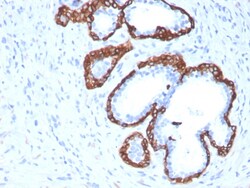
Biotium Cytokeratin 5 (KRT5) (Basal, Myoepithelial & Mesothelial Cell Marker)(KRT5/3594), CF594 conjugate, 0.1mg/mL
This MAb recognizes a protein of 58 kDa, which is identified as Cytokeratin 5 (KRT5). This type II cytokeratin is specifically expressed in the basal layer of the epidermis with family member KRT14. Antibodies to KRT5 identify basal cells of squamous and glandular epithelia, myoepithelia, and mesothelium. Anti-cytokeratin 5 has been reported useful in the differential diagnosis of metastatic carcinoma in the pleura versus epithelioid mesothelioma. Almost all squamous cell carcinomas, half of transitional carcinomas, and many undifferentiated large cell carcinomas express. Anti-KRT5, along with anti-p63, affords a high sensitivity and specificity for squamous differentiation. Myoepithelial cells of the breast, glandular epithelia, and basal cells of the prostate are labeled with anti-KRT5. Primary antibodies are available purified, or with a selection of fluorescent CF Dyes and other labels. CF Dyes offer exceptional brightness and photostability. Note: Conjugates of blue f
American Research Products Inc PrEST Antigen PEX19
PrEST Antigen PEX19 antigen APrEST84395 for peroxisomal biogenesis factor 19 Recombinant protein fragment of Human PEX19

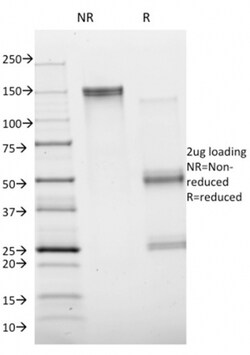
Biotium Annexin A1 / (Hairy Cell Leukemia Marker)(ANXA1/1672), CF568 conjugate, 0.1mg/mL
Annexin A1 belongs to the annexin family. It plays a role in glucocorticoid-mediated down-regulation of the early phase of the inflammatory response. In resting conditions Annexin A1 is localized to the cytoplasm. Upon activation it is mobilized to the membrane and secreted. Annexin A1 and contains 4 annexin repeats. A pair of annexin repeats may form one binding site for calcium and a phospholipid. Expression of the ANXA1 gene is upregulated in hairy cell leukemia (HCL). Detection of ANXA1 provides a simple, highly sensitive and specific assay for diagnosing HCL. Annexin A1 has also been found to be protective against DNA damage induced by heat in breast cancer cells, suggesting it is involved in tumor suppressive and protective activities, and also is associated with treatment resistance. Primary antibodies are available purified, or with a selection of fluorescent CF Dyes and other labels. CF Dyes offer exceptional brightness and photostability. Note: Conjugates of blue
Sino Biological Anti-RCVRN Antibody, Rabbit Polyclonal 100 µL
Produced in rabbits immunized with E. coli-derived Human RCVRN fragment, and purified by antigen affinity chromatography.
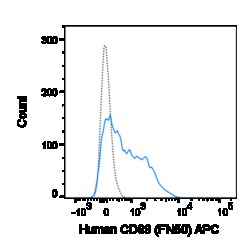
Cytek Biosciences Inc APC aHu CD69 Anti Primary
Product Name: APC Anti-Human CD69 (FN50)
Product Class: Antibody
Type: Primary
Product Name: APC Anti-Human CD69 (FN50)
Cytek Catalog Number: 20-0699-T100
Marker: CD69
Target Species: Human
Clonality: Monoclonal
Clone: FN50
Host Species: Mouse
Isotype: IgG1, k
Conjugation: APC
Size: 100 Tests