
Donkey Secondary Antibodies

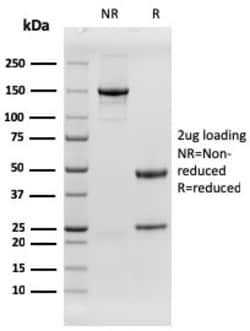
Biotium EGFR (Epidermal Growth Factor Receptor)(rGFR/1667), CF647 conjugate, 0.1mg/mL
This MAb recognizes a protein of 170 kDa, identified as EGFR. EGFR is type I receptor tyrosine kinase with sequence homology to erbB-1, -2, -3 -4 or HER-1, -2, -3 -4. It binds to Epidermal Growth Factor (EGF), Transforming Growth Factor-a (TGF-a), Heparin-binding EGF (HB-EGF), amphiregulin, betacellulin and epiregulin. EGFR is overexpressed in tumors of breast, brain, bladder, lung, gastric, head neck, esophagus, cervix, vulva, ovary, and endometrium. It is predominantly present in squamous cell carcinomas. Primary antibodies are available purified, or with a selection of fluorescent CF Dyes and other labels. CF Dyes offer exceptional brightness and photostability. Note: Conjugates of blue fluorescent dyes like CF405S and CF405M are not recommended for detecting low abundance targets, because blue dyes have lower fluorescence and can give higher non-specific background than other dye colors.


Biotium ATRX / RAD54 (Alpha Thalassemia Mental Retardation) (ATRX/2900R), CF647 conjugate, 0.1mg/mL
ATRX is a member of the Snf2 family of helicase/ATPases, which contribute to the remodeling of the nucelosome structure in an ATP-dependent manner, and facilitate the initiation of transcription and replication. Structurally, ATRX contains a PHD zinc finger motif. ATRX is regulated throughout the cell cycle where it is differentially distributed within the nucleus. During interphase, ATRX predominately associates with the nuclear matrix, while during mitosis, ATRX localizes with condensed chromatin. At the onset of M phase, phosphorylation rapidly induces this redistribution of ATRX to the short arms of human acrocentric chromosomes, where it then specifically complexes with heterochromatin protein 1 alpha to mediate chromosomal segregation. Mutations in the ATRX gene correlate with a high incidence of severe X-linked form of syndromal mental retardation associated with alpha-thalassemia or ATRX syndrome. Primary antibodies are available purified, or with a selection of fluorescen
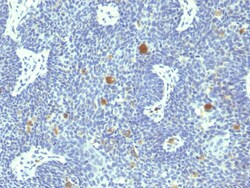
Biotium HPV-18 (Human Papilloma Virus 18)(HPV18/1297), CF647 conjugate, 0.1mg/mL
Human papilloma viruses (HPVs) can be classified as either high risk or low risk according to their association with cancer. HPV16 and HPV18 are the most common of the high risk group while HPV6 and HPV11 are among the low risk types. Approximately 90% of cervical cancers contain HPV DNA of the high risk types. Mutational analysis has shown that the E6 and E7 genes of the high risk HPVs are necessary and sufficient for HPV transforming function. The specific interactions of the E6 and E7 proteins with p53 and pRB, respectively, correlate with HPV high and low risk classifications. The high risk HPV E7 proteins bind to pRB with a higher affinity than do the low risk HPV proteins, and only the high risk HPV E6 proteins form detectable complexes with p53 in vitro. Primary antibodies are available purified, or with a selection of fluorescent CF Dyes and other labels. CF Dyes offer exceptional brightness and photostability. Note: Conjugates of blue fluorescent dyes like CF405S
Biotium Desmoglein-2 (DSG2) (6D8), CF647 conjugate, 0.1mg/mL
This antibody recognizes a protein of 165 kDa, identified as Desmoglein-2 (DSG2). This monoclonal antibody This antibody recognizes the extracellular domain of human desmoglein-2. Desmoglein-2 is a member of the desmosomal cadherin family. Desmosomes are intercellular adhering junctions that represent cell surface attachment sites for intermediate filament. Desmocollins and desmogleins are the main desmosomal transmembrane proteins. Desmogleins consist of Dsg1, Dsg2, Dsg3, and Dsg4 isoforms. Within the desmosome, the extracellular domain of desmoglein is essential for calcium dependent heterophilic binding to the desmocollins, whereas the intracellular domain is essential for binding to the desmosomal plaque protein, plakoglobin. Human Desmoglein-2 is a type I transmembrane glycoprotein of 1117 amino acid (aa) residues with a 23 aa signal peptide and a 25 aa propeptide. It differs from other classic cadherins by having four instead of five cadherin repeat domains in its extra
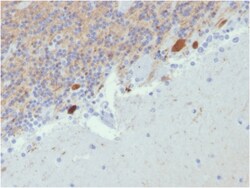
Biotium Calretinin / Calbindin 2 (Mesothelioma Marker)(CALB2/2807), CF647 conjugate, 0.1mg/mL
Calretinin (also known as Calbindin 2) is a member of the troponin C superfamily. Proteins in this family have 6 EF-hand domains which bind to calcium. Calretinin is a vitamin D-dependent calcium-binding protein involved in calcium signaling. It is present in subsets of neurons throughout the brain and spinal chord, including sensory ganglia. Antibodies to calretinin are useful in differentiating mesothelioma from adenocarcinomas of the lung. They can also aid in differentiating adrenal cortical neoplasms from pheochromocytomas. Primary antibodies are available purified, or with a selection of fluorescent CF Dyes and other labels. CF Dyes offer exceptional brightness and photostability. Note: Conjugates of blue fluorescent dyes like CF405S and CF405M are not recommended for detecting low abundance targets, because blue dyes have lower fluorescence and can give higher non-specific background than other dye colors.

Jackson Immuno Research Labs Alexa Fluor 594-AffiniPure Fab Fragment Donkey Anti-Mouse IgG (H+L)
Alexa Fluor 594-AffiniPure Fab Fragment Donkey Anti-Mouse IgG (H+L)
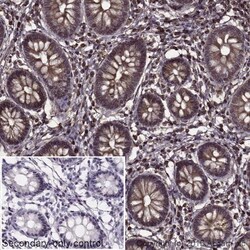
Abcam Donkey Anti-Goat IgG H&L (HRP)
Donkey Anti-Goat IgG H&L (HRP)
The product is subject to the following: Abcam Restricted Use Statement
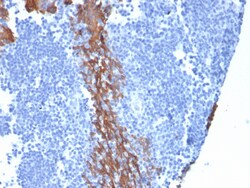
Biotium Cytokeratin 13 (Non-Keratinized Squamous Epithelial Marker)(KRT13/2213), CF568 conjugate, 0.1mg/mL
Cytokeratin 13 (KRT13) is the major acidic keratin, which together with KRT4, its basic partner, is expressed in the suprabasal layers of non-cornified stratified epithelia including tongue mucosa, esophagus, anal canal epithelium, tracheal epithelium, uterine cervix, and urothelium. Defects in the KRT13 gene are a cause of white sponge nevus of cannon (WSN), a rare autosomal dominant disorder, which predominantly affects non-cornified stratified squamous epithelia and is characterized by the presence of soft, white and spongy plaques in the oral mucosa. KRT13 has been used as a marker for non-keratinized squamous epithelium. It is also expressed in various squamous metaplasia, but it is down regulated in squamous dysplasia and squamous carcinoma. Primary antibodies are available purified, or with a selection of fluorescent CF Dyes and other labels. CF Dyes offer exceptional brightness and photostability. Note: Conjugates of blue fluorescent dyes like CF405S and CF405M a

Biotium Secondary Antibody Rabbit IgG Donkey CF740 1/EA
This product is prepared by labeling highly cross-adsorbed donkey anti-rabbit IgG (H plus L) with CF and reg 740 dye To minimize cross-reactivity the antibody has been adsorbed against bovine chicken goat guinea pig Syrian hamster horse human mouse rat and sheep serum

Biotium pgp9.5 (UCHL-1)(13C4), CF568 conjugate, 0.1mg/mL
This MAb reacts with a protein of 20-30 kDa, identified as PGP9.5, also known as ubiquitin carboxyl-terminal hydrolase-1 (UchL1). Initially, PGP9.5 expression in normal tissues was reported in neurons and neuroendocrine cells but later it was found in distal renal tubular epithelium, spermatogonia, Leydig cells, oocytes, melanocytes, prostatic secretory epithelium, ejaculatory duct cells, epididymis, mammary epithelial cells, Merkel cells, and dermal fibroblasts. Furthermore, immunostaining for PGP9.5 has been shown in a wide variety of mesenchymal neoplasms as well. A mutation in PGP9.5 gene is believed to cause a form of Parkinson's disease.Primary antibodies are available purified, or with a selection of fluorescent CF Dyes and other labels. CF Dyes offer exceptional brightness and photostability. Note: Conjugates of blue fluorescent dyes like CF405S and CF405M are not recommended for detecting low abundance targets, because blue dyes have lower fluorescence and c
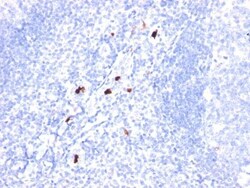
Biotium Granulocyte Marker(BM-1), CF568 conjugate, 0.1mg/mL
Recognizes 183 kDa protein with DNA-binding characteristics, which is identified as a myeloid specific antigen. It reacts with myeloid precursor cells and granulocytes in bone marrow. Its antigen appears to be restricted to M2 and M3 acute myelogenous leukemia (AML) subtypes. Markers of myeloid cells are useful in the identification of different levels of cellular differentiation. This MAb reacts with early precursor and mature forms of human myeloid cells. It is useful in the identification of myelogenous leukemias, distinguishing granulocytic sarcomas from lymphoid malignancies and also in the study of differentiation and transformation of human myeloid cells. The biological function of this antigen is not clear, although it has been proposed that it may play a role in the differentiation of myeloid cells.Primary antibodies are available purified, or with a selection of fluorescent CF Dyes and other labels. CF Dyes offer exceptional brightness and photostability. Note: C

Abcam Donkey Anti-Goat IgG H&L (Cy3 ) preadsorbed.
Donkey Anti-Goat IgG H&L (Cy3 ) preadsorbed.
The product is subject to the following: Abcam Restricted Use Statement
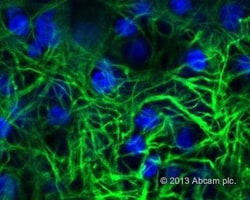
Abcam Donkey Anti-Goat IgG H&L (Alexa Fluor 555)
Donkey Anti-Goat IgG H&L (Alexa Fluor 555)
The product is subject to the following: Abcam Restricted Use Statement

Arbor Assays Donkey Anti-Sheep IgG (H&L), 10MG
An affinity purified Donkey Antibody to Sheep IgG,(H&L). Supplied in PBS with azide as preservative. Affinity purified on a column with covalently coupled Sheep IgG attached.

Arbor Assays Donkey Anti-Sheep IgG (H&L), 25MG
An affinity purified Donkey Antibody to Sheep IgG,(H&L). Supplied in PBS with azide as preservative. Affinity purified on a column with covalently coupled Sheep IgG attached.