Donkey Secondary Antibodies
- (26)
- (4)
- (15)
- (4)
- (12)
- (6)
- (8)
- (2)
- (15)
- (4)
- (2)
- (4)
- (8)
- (4)
- (4)
- (8)
- (3)
- (3)
- (44)
- (61)
- (8)
- (1)
- (1)
- (21)
- (11)
- (18)
- (20)
- (20)
- (6)
- (18)
- (15)
- (11)
- (9)
- (52)
- (9)
- (78)
- (4)
- (24)
- (2)
- (2)
- (23)
- (4)
- (4)
- (4)
- (31)
- (26)
- (1)
- (1)
- (1)
- (1)
- (1)
- (6)
- (16)
- (16)
- (16)
- (66)
- (1)
- (781)
- (2)
- (1)
- (21)
- (9)
- (3)
- (142)
- (31)
- (2)
- (77)
- (218)
- (20)
- (38)
- (6)
- (10)
- (8)
- (2)
- (1)
- (1)
- (69)
- (4)
- (1)
- (1)
- (3)
- (3)
- (1)
- (1)
- (1)
- (22)
- (86)
- (2)
- (4)
- (778)
- (15)
- (14)
- (37)
- (451)
- (250)
- (87)
- (37)
- (212)
- (223)
- (20)
- (31)
- (416)
- (62)
- (161)
- (62)
- (46)
- (2)
- (3)
- (5)
- (4)
- (520)
Filtered Search Results
Biotium CD262 / DR5(DR5/3381), CF647 conjugate, 0.1mg/mL
Tumor necrosis factor (TNF) is a pleiotropic cytokine whose function is mediated by two distinct cell surface receptors, designated TNF-R1 and TNF-R2, which are expressed on most cell types. TNF function is primarily mediated through TNF-R1 signaling. Both receptors belong to the growing TNF receptor superfamily which includes Fas antigen and CD40. TNF-R1 contains a cytoplasmic motif, termed the death domain , that has been found to be necessary for the transduction of the apoptotic signal. The death domain is also found in several other receptors, including Fas, DR2 (or TRUNDD), DR3 (death receptor 3), DR4 and DR5. TRUNDD, DR4 and DR5 are receptors for the apoptosis-inducing cytokine TRAIL. A non-death domain-containing receptor, designated decoy receptor (DcR1 or TRID), also specifically associates with TRAIL and may play a role in cellular resistance to apoptotic stimuli. Primary antibodies are available purified, or with a selection of fluorescent CF Dyes and other label
Non-distribution item offered as a customer accommodation; additional freight charges may apply.
Learn More
Biotium Calcineurin A / PPP3CA(BF1.1), CF647 conjugate, 0.1mg/mL
This antibody recognizes the Calcineurin A alpha protein, encoded by the PPP3CA (Protein Phosphatase 3 Catalytic Subunit Alpha) gene. Calcineurin is an enzyme that dephosphorylates serine and threonine residues in proteins. It is a heterodimer of a 59 kDa catalytic A subunit and a 19 kDa regulatory B subunit that is activated by the binding of calcium ions and calmodulin. Calcineurin is expressed in many tissues, but its levels are highest in the brain, where it may play a role in learning and memory. It has many substrates, including NFAT, a transcription factor that is activated by dephosphorylation. Complexes of the immuno-suppressants cyclosporine and FK506 with immunophilin proteins such as cyclophilin and FKBP12 are potent and specific inhibitors of Calcineurin activity. Alterations in Calcineurin activity are suspected to play a role in cardiac hypertrophy and graft versus host disease in organ transplantation. Primary antibodies are available purified, or with a selection
Non-distribution item offered as a customer accommodation; additional freight charges may apply.
Learn More
Biotium StAR (Steroidogenic Acute Regulator) (Leydig Cell Marker)(STAR/2077), CF647 conjugate, 0.1mg/mL
Steroidogenic Acute Regulatory Protein (STAR) controls the rate-limiting step of steroidegenesis by translocating cholesterol from the outer mitochondrial membrane to the inner membrane where it is later cleaved to pregnenolone. It is primarily present in steroid-producing cells, including Leydig cells in the testis, theca cells and luteal cells in the ovary and adrenal cells in the adrenal cortex. Due to low levels of pregnenolone, seminomas and Leydig cell tumors display no specific STAR staining. Therefore, STAR antibody may assist in differentiating sex cord stromal tumors (SCST), seminomas and embryonal carcinomas. Primary antibodies are available purified, or with a selection of fluorescent CF Dyes and other labels. CF Dyes offer exceptional brightness and photostability. Note: Conjugates of blue fluorescent dyes like CF405S and CF405M are not recommended for detecting low abundance targets, because blue dyes have lower fluorescence and can give higher non-specific back
Non-distribution item offered as a customer accommodation; additional freight charges may apply.
Learn More
Biotium CD7(124.1D1), CF647 conjugate, 0.1mg/mL
Recognizes a protein of 40 kDa, identified as CD7 (Workshop IV; Code T155). CD7 is a member of the immunoglobulin gene superfamily. Its N-terminal amino acids 1-107 are highly homologous to Ig kappa-L chains whereas the carboxyl-terminal region of the extracellular domain is proline-rich and has been postulated to form a stalk from which the Ig domain projects. CD7 is expressed on the majority of immature and mature T-lymphocytes, and T cell leukemia. It is also found on natural killer cells, a small subpopulation of normal B cells and on malignant B cells. Cross-linking surface CD7 positively modulates T cell and NK cell activity as measured by calcium fluxes, expression of adhesion molecules, cytokine secretion and proliferation. CD7 associates directly with phosphoinositol 3'-kinase. CD7 ligation induces production of D-3 phosphoinositides and tyrosine phosphorylation.Primary antibodies are available purified, or with a selection of fluorescent CF Dyes and other labels. C
Non-distribution item offered as a customer accommodation; additional freight charges may apply.
Learn More
Biotium BIOTIUM INC
5000672879 MAB MS NPM1 NA24 CF647 100
Non-distribution item offered as a customer accommodation; additional freight charges may apply.
Learn More
Biotium BIOTIUM INC
5000672885 MAB MS CD269 BCMA/2 CF647 100
Non-distribution item offered as a customer accommodation; additional freight charges may apply.
Learn More
Biotium BIOTIUM INC
5000672552 MAB MS EMERIN EMD/2 CF647 100
Non-distribution item offered as a customer accommodation; additional freight charges may apply.
Learn More
Biotium BIOTIUM INC
5000672969 MAB MS ALLOGRA RAIF CF647 100
Non-distribution item offered as a customer accommodation; additional freight charges may apply.
Learn More
Biotium BIOTIUM INC
5000672616 MAB MS CD227 MUC1/2 CF647 500
Non-distribution item offered as a customer accommodation; additional freight charges may apply.
Learn More
Biotium BIOTIUM INC
5000807636 MAB MS FTL FTL/1389 CF647 100
Non-distribution item offered as a customer accommodation; additional freight charges may apply.
Learn More
Biotium Malate dehydrogenase 1 NAD (soluble)(CPTC-MDH1-1), CF647 conjugate, 0.1mg/mL
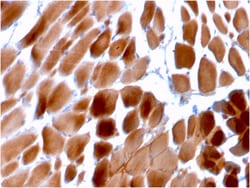
Malate dehydrogenase catalyzes the reversible oxidation of malate to oxaloacetate, utilizing the NAD/NADH cofactor system in the citric acid cycle. The protein encoded by this gene is localized to the cytoplasm and may play pivotal roles in the malate-aspartate shuttle that operates in the metabolic coordination between cytosol and mitochondria. Alternatively spliced transcript variants encoding distinct isoforms have been found for this gene. Primary antibodies are available purified, or with a selection of fluorescent CF Dyes and other labels. CF Dyes offer exceptional brightness and photostability. Note: Conjugates of blue fluorescent dyes like CF405S and CF405M are not recommended for detecting low abundance targets, because blue dyes have lower fluorescence and can give higher non-specific background than other dye colors.
Non-distribution item offered as a customer accommodation; additional freight charges may apply.
Learn More
Biotium MMP3 (Marker of Metastasis and Rheumatoid Arthritis)(rMMP3/1730), CF647 conjugate, 0.1mg/mL
The matrix metalloproteinases (MMP) are a family of peptidase enzymes responsible for the degradation of extracellular matrix components, including collagen, gelatin, fibronectin, laminin and proteoglycan. Transcription of MMP genes is differentially activated by phorbol ester, lipopolysaccharide (LPS) or staphylococcal enterotoxin B (SEB). MMP catalysis requires both calcium and zinc. MMP-3, MMP-10 and MMP-11 (also designated stromelysin-1, 2 and 3, respectively) activate procollagenase. MMP-3 activation of procollagenase can occur via two pathways. Direct activation by MMP-3 is slow and activation by MMP-3 in conjunction with tissue or plasma proteinases is rapid. MMP-10 is expressed in small intestine, and at lower levels in lung and heart. MMP-11 is specifically expressed in stromal cells of breast carcinomas and contributes to epithelial cell malignancies. Primary antibodies are available purified, or with a selection of fluorescent CF Dyes and other labels. CF Dyes offer e
Non-distribution item offered as a customer accommodation; additional freight charges may apply.
Learn More
Biotium Tyrosinase (Melanoma Marker)(rOCA1/812), CF647 conjugate, 0.1mg/mL
Recognizes a cluster of proteins between 70-80 kDa, identified as tyrosinase. Occasionally a minor band at 55 kDa is also detected. This MAb shows no cross-reaction with MAGE-1 and tyrosinase-related protein 1, TRP-1/gp75. Tyrosinase is a copper-containing metalloglycoprotein that catalyzes several steps in the melanin pigment biosynthetic pathway; the hydroxylation of tyrosine to L-3, 4-dihydroxy-phenylalanine (dopa), and the subsequent oxidation of dopa to dopaquinone. Mutations of the tyrosinase gene occur in various forms of albinism. Tyrosinase is one of the targets for cytotoxic T-cell recognition in melanoma patients. Staining of melanomas with this MAb shows tyrosinase in melanotic as well as amelanotic variants. This MAb is a useful marker for melanocytes and melanomas. Primary antibodies are available purified, or with a selection of fluorescent CF Dyes and other labels. CF Dyes offer exceptional brightness and photostability. Note: Conjugates of blue fluorescent dyes
Non-distribution item offered as a customer accommodation; additional freight charges may apply.
Learn More
Biotium N-Cadherin / Cadherin-2 / CD325 (NCAD) (13A9), CF647 conjugate, 0.1mg/mL
This antibody recognizes a protein of ~140 kDa, identified as N-Cadherin (NCAD), also known as CD325. NCAD is a member of the Cadherin superfamily, and consists of five extracellular repeats, a transmembrane domain and a cytoplasmic domain. CD325 deficient mice die at day 10 of gestation and embryos display major heart defects and malformed neural tubes and somites. Consistent with this, CD325 has been implicated in several aspects of cardiac development including the precardiac mesoderm, establishment of left-right symmetry and cardiac looping morphogenesis. Furthermore, CD325 is normally involved in inducing cell cycle arrest and its expression is frequently deregulated in cancer cells. Studies have linked N-cadherin to cancer metastasis by showing the aggressive tumor cells had preferentially turned on N-cadherin as opposed to E- or P-cadherin.Primary antibodies are available purified, or with a selection of fluorescent CF Dyes and other labels. CF Dyes offer exceptional
Non-distribution item offered as a customer accommodation; additional freight charges may apply.
Learn More
Biotium Ksp-Cadherin (Kidney-Specific Cadherin) / CDH16, CF647 conjugate, 0.1mg/mL
This antibody recognizes a protein of 130 kDa, identified as Ksp-cadherin. Cadherins form a superfamily of related glycoproteins that mediate calcium-dependent cell adhesion and transmit signals from the extracellular matrix to the cytoplasm. Cadherins have been implicated in embryogenesis, tissue morphogenesis, tissue structure maintenance, cell polarization, neoplastic invasiveness and metastasis, and membrane transport. It is suggested that Ksp-cadherin is a marker for terminal differentiation of the basolateral membranes of renal tubular epithelial cells. Within the kidney, Ksp-Cadherin is found exclusively in the basolateral membrane of renal tubular epithelial cells and collecting duct cells, and not in glomeruli, renal interstitial cells, or blood vessels. Ksp-Cadherin has been suggested to distinguish Chromophobe Renal-Cell Carcinoma from Oncocytoma.Primary antibodies are available purified, or with a selection of fluorescent CF Dyes and other labels. CF Dyes of
Non-distribution item offered as a customer accommodation; additional freight charges may apply.
Learn More