
Protein Labeling Reagents

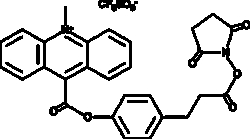
Cayman Chemical AcrIdInIum NHS ester 1mg
The acridinium NHS ester can be used to label proteins and nucleic acids. The covalently bound acridinium NHS ester will produce chemiluminescence in the presence of hydrogen peroxide. Acridinium-labeled proteins can be used as a detection method in immunoassays.{2437,2438}

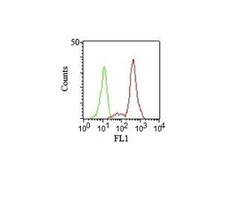
Biotium CD11c(HC1/1), CF568 conjugate, 0.1mg/mL
CD11c, also known as Integrin, alpha X (complement component 3 receptor 4 subunit) (ITGAX), is a type I transmembrane protein found at high levels on most human dendritic cells, but also on monocytes, macrophages, neutrophils, and some B cells. It induces cellular activation and helps trigger neutrophil respiratory burst. It is expressed in hairy cell leukemias, acute non-lymphocytic leukemias, and some B-cell chronic lymphocytic leukemias.Primary antibodies are available purified, or with a selection of fluorescent CF Dyes and other labels. CF Dyes offer exceptional brightness and photostability. Note: Conjugates of blue fluorescent dyes like CF405S and CF405M are not recommended for detecting low abundance targets, because blue dyes have lower fluorescence and can give higher non-specific background than other dye colors.
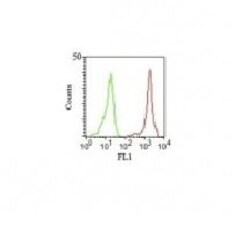
Biotium CD11a(Cris-3), CF568 conjugate, 0.1mg/mL
Recognizes a protein of 180 kDa, identified as CD11a (Leucocyte Workshop II; Code N202). CD11a complex with the 2 subunit of the integrin family, CD18, to form the cell surface heterodimer, LFA-1 or CD11a /C18 (aLbL). LFA-1 is expressed on all leukocytes including lymphocytes, monocytes, and granulocytes. It is involved in leukocyte adhesion to its ligands including intercellular adhesion molecule-1 (ICAM-1 or CD54), ICAM-2 (CD102), ICAM-3 (CD50) and Telencephalin (TLN) and play a role in most immune/inflammatory responses.Primary antibodies are available purified, or with a selection of fluorescent CF Dyes and other labels. CF Dyes offer exceptional brightness and photostability. Note: Conjugates of blue fluorescent dyes like CF405S and CF405M are not recommended for detecting low abundance targets, because blue dyes have lower fluorescence and can give higher non-specific background than other dye colors.

Biotium p53(BP53-12), CF488A conjugate, 0.1mg/mL
This MAb reacts with an N-terminal epitope (aa 16-25) of both wild type and mutated p53. Mutation and/or allelic loss of p53 is one of the causes of a variety of mesenchymal and epithelial tumors. If it occurs in the germ line, such tumors run in families. In most transformed and tumor cells the concentration of p53 is increased 51000 fold over the minute concentrations (1000 molecules cell) in normal cells, principally due to the increased half-life (4 h) compared to that of the wild-type (20 min). p53 Localizes in the nucleus, but is detectable at the plasma membrane during mitosis and when certain mutations modulate cytoplasmic/nuclear distribution. Mutations arise with an average frequency of 70% but incidence varies from zero in carcinoid lung tumors to 97% in primary melanomas. High concentrations of p53 protein are transiently expressed in human epidermis and superficial dermal fibroblasts following mild ultraviolet irradiation. Positive nuclear staining with p53 antib
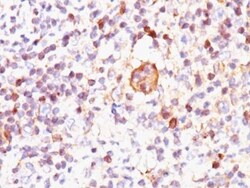
Biotium Bax(2D2), CF568 conjugate, 0.1mg/mL
This antibody recognizes a protein of 21 kDa, identified as the Bax protein. This MAb is highly specific to Bax and shows no cross-reaction with Bcl-2 or Bcl-X protein. Bcl-2 blocks cell death following a variety of stimuli. Bax has extensive amino acid homology with Bcl-2 and it homodimerizes and forms heterodimers with Bcl-2. Overexpression of Bax accelerates apoptotic death induced by cytokine deprivation in an IL-3 dependent cell line, and Bax also counters the death repressor activity of Bcl-2.Primary antibodies are available purified, or with a selection of fluorescent CF Dyes and other labels. CF Dyes offer exceptional brightness and photostability. Note: Conjugates of blue fluorescent dyes like CF405S and CF405M are not recommended for detecting low abundance targets, because blue dyes have lower fluorescence and can give higher non-specific background than other dye colors.

Enzo Life Sciences BIO-PROBE 3'-Oligonucleotide labeling kit with bio-16-ddUTP (25Reactions)
Terminal labeling is an ideal procedure for the labeling of oligonucleotides with haptens such as biotin or fluorescein. An oligonucleotide can be synthesized using standard, commercially available reagents and labeled after synthesis in a simple and reproducible enzyme reaction.The BIO-PROBE 3'-Oligonucleotide Labeling Kit with Bio-16-ddUTP contains all reagents required for terminal labeling of oligonucleotides with biotin except the oligonucleotides to be labeled. The BIO-PROBE 3'-Oligonucleotide Labeling Kit provides maximum flexibility for labeling oligonucleotides approximately 15 to 100 nucleotides in length. A standard reaction will label up to 100 picomoles (1 µg of a 30-mer oligonucleotide sequence). A complete kit contains two component packs that are available separately: a Reagent Pack and a Bio-16-ddUTP Dideoxynucleotide Pack. Both packs contain sufficient reagents for 25 labeling reactions. Applications: Southern Blot, Northern Blot, ISH , Dot Blot.
Biotium CD36(1E8), CF568 conjugate, 0.1mg/mL
Recognizes a protein of 80 kDa-90 kDa, identified as CD36. It is expressed on platelets, monocytes and macrophages, microvascular endothelial cells, erythrocyte precursors, mammary epithelial cells, and some macrophage derived dendritic cells. CD36 acts as a receptor for thrombospondin (TSP), collagen types I, IV and V, P. falciparum malaria-infected erythrocytes, and sickle erythrocytes. It also functions as a scavenger receptor, mediating macrophage uptake of oxidized low-density lipoprotein (LDL) and recognition of apoptotic polymorphonuclear leukocytes (PMN). CD36 plays a role in platelet aggregation, macrophage foam cell development, inflammation, and the tissue ischemia observed in sickle cell disease and cerebral malaria. Note that 1-4% of Japanese and East Asia population lack CD36.Primary antibodies are available purified, or with a selection of fluorescent CF Dyes and other labels. CF Dyes offer exceptional brightness and photostability. Note: Conjugates of blue
Biotium Human IgM Immunoglobulin(IM373), CF488A conjugate, 0.1mg/mL
Recognizes a protein of 75 kDa, identified as mu heavy chain of human immunoglobulins. It does not cross-react with alpha (IgA), gamma (IgG), epsilon (IgE), or delta (IgD), heavy chains, T-cells, monocytes, granulocytes, or erythrocytes. This MAb is useful in the identification of leukemias, plasmacytomas, and certain non-Hodgkin's lymphomas. The most common feature of these malignancies is the restricted expression of a single heavy chain class. Demonstration of clonality in lymphoid infiltrates indicates that the infiltrate is clonal and therefore malignant.Primary antibodies are available purified, or with a selection of fluorescent CF Dyes and other labels. CF Dyes offer exceptional brightness and photostability. Note: Conjugates of blue fluorescent dyes like CF405S and CF405M are not recommended for detecting low abundance targets, because blue dyes have lower fluorescence and can give higher non-specific background than other dye colors.
Biotium CD38(AT1), CF568 conjugate, 0.1mg/mL
CD38 is a type II transmembrane glycoprotein that is present on early B- and T-cell lineages and activated B- and T-cells but is absent from most mature resting peripheral lymphocytes. CD38 is also found on thymocytes, pre-B cells, germinal center B-cells, mitogen-activated T-cells, monocytes and Ig-secreting plasma cells. CD38 is expressed on CD34 cells. The CD34 CD38- population of hematopoietic stems cells defines the most pluripotent cells (e.g. blast colony forming cells).Primary antibodies are available purified, or with a selection of fluorescent CF Dyes and other labels. CF Dyes offer exceptional brightness and photostability. Note: Conjugates of blue fluorescent dyes like CF405S and CF405M are not recommended for detecting low abundance targets, because blue dyes have lower fluorescence and can give higher non-specific background than other dye colors.