
Immunohistochemistry Kits and Reagents


Proteintech Group Inc GFP-Booster ATTO488
anti-GFP VHH/ Nanobody conjugated to a fluorescent dye for IF/ microscopy.

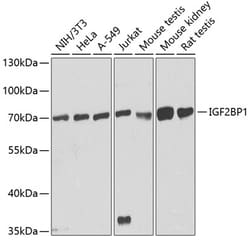
ABclonal Technology IGF2BP1/IMP1 Rabbit pAb

This gene encodes a member of the insulin-like growth factor 2 mRNA-binding protein family. The protein encoded by this gene contains four K homology domains and two RNA recognition motifs. It functions by binding to the mRNAs of certain genes, including insulin-like growth factor 2, beta-actin and beta-transducin repeat-containing protein, and regulating their translation. Two transcript variants encoding different isoforms have been found for this gene.

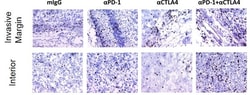
Abcam Hydrogen Pero x ide Blocking Reagent, 60ML
Hydrogen peroxide blocking reagent is used to block endogenous peroxidase activity in IHC applications, enhancing signal detection in HRP / peroxidase-based systems. - Cited in over 30 publications - Endogenous peroxidase block – prevents non-specific background staining in IHC - HRP-based detection – ideal for use with HRP/peroxidase detection systems - Concentration – contains 0.3% hydrogen peroxide
The product is subject to the following: Abcam Restricted Use Statement

Medchemexpress LLC Recombinant rat discoidin domain receptor 1 (DDR1) protein, His-tag | >95.0% | 50 UG
Recombinant rat discoidin domain receptor 1 (DDR1) is supplied as a His-tagged protein produced in HEK293 cells, covering residues M1-T413 (accession Q6MG19). It is intended for research use in biochemical and cell-based studies involving DDR1 signaling and binding.
- Recombinant protein expressed in HEK293 for native-like mammalian post-translational modifications.
- His-tagged for facile purification and detection.
- Includes residues M1-T413 to represent the functional receptor region.
- Purity greater than 95% as determined by reducing SDS-PAGE.
- Available in small research quantities suitable for assay development.
Biotium Cytokeratin 8/18(KRT8/803 + KRT18/835), CF740 conjugate, 0.1mg/mL
Cytokeratin 8 (CK8) belongs to the type II (or B or basic) subfamily of high molecular weight cytokeratins and exists in combination with cytokeratin 18 (CK18). This MAb cocktail recognizes all simple epithelia including glandular epithelium, for example thyroid, female breast, gastrointestinal tract, respiratory tract, and urogenital tract including transitional epithelium. All adenocarcinomas and most squamous carcinomas are positive but keratinizing squamous carcinomas are usually negative. This antibody is useful in demonstrating the presence of Paget cells; there is very little keratin 18 in the normal epidermis so only Paget cells are stained.Immuno-histochemical staining with this MAb is indistinguishable from that obtained with monoclonal antibody 5D3.Primary antibodies are available purified, or with a selection of fluorescent CF Dyes and other labels. CF Dyes offer exceptional brightness and photostability. Note: Conjugates of blue fluorescent dyes like CF405S and CF
Cell Signaling Technology FoxP3/Transcription Factor Fixation/Permeabilization Concentrate (4X) 50 ml
FoxP3/Transcription Factor Fixation/Permeabilization Concentrate (4X) 50 ml

Meso Scale Discovery V-PLEX Plus Human ICAM-1 Kit
The Meso Scale Discovery K151SUG-4 is a 4-plate assay kit for measuring glucose in biological samples It uses electrochemiluminescent detection technology for high sensitivity and wide dynamic range The assay takes 2 5 hours and requires 25 L of sample per well It can detect glucose in the range of 0 03-1000 g/mL The kit includes plates coated with glucose oxidase calibrators controls detection antibody read buffer wash buffer and plate seals It is designed for research use only
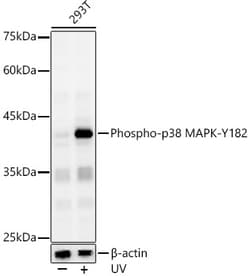
ABclonal Technology Phospho-p38 MAPK-Y182 Rabbit pAb
The protein encoded by this gene is a member of the MAP kinase family. MAP kinases act as an integration point for multiple biochemical signals, and are involved in a wide variety of cellular processes such as proliferation, differentiation, transcription regulation and development. This kinase is activated by various environmental stresses and proinflammatory cytokines. The activation requires its phosphorylation by MAP kinase kinases (MKKs), or its autophosphorylation triggered by the interaction of MAP3K7IP1/TAB1 protein with this kinase. The substrates of this kinase include transcription regulator ATF2, MEF2C, and MAX, cell cycle regulator CDC25B, and tumor suppressor p53, which suggest the roles of this kinase in stress related transcription and cell cycle regulation, as well as in genotoxic stress response. Four alternatively spliced transcript variants of this gene encoding distinct isoforms have been reported.
Biotium S100B(S100B/1012), CF594 conjugate, 0.1mg/mL
S100 belongs to the family of calcium binding proteins. S100A and S100B proteins are two members of the S100 family. S100A is composed of an alpha and a beta chain whereas S100B is composed of two beta chains. This antibody is specific against an epitope located on the beta-chain (i.e. in S-100A and S-100B) but not on the alpha-chain of S-100 (i.e. in S-100A and S100A0). This antibody can be used to localize S-100A and S-100B in various tissue sections. S-100 protein has been found in normal melanocytes, Langerhans cells, histiocytes, chondrocytes, lipocytes, skeletal and cardiac muscle, Schwann cells, epithelial and myoepithelial cells of the breast, salivary and sweat glands, as well as in glial cells. Neoplasms derived from these cells also express S-100 protein, albeit non-uniformly. A large number of well-differentiated tumors of the salivary gland, adipose and cartilaginous tissue, and Schwann cell-derived tumors express S-100 protein. Almost all malignant melanomas and case

Abcam DAB Substrate Kit
DAB Substrate Kit
The product is subject to the following: Abcam Restricted Use Statement
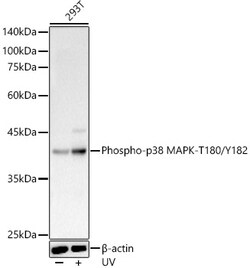
ABclonal Technology Phospho-p38 MAPK-T180/Y182 Rabbit pAb
The protein encoded by this gene is a member of the MAP kinase family. MAP kinases act as an integration point for multiple biochemical signals, and are involved in a wide variety of cellular processes such as proliferation, differentiation, transcription regulation and development. This kinase is activated by various environmental stresses and proinflammatory cytokines. The activation requires its phosphorylation by MAP kinase kinases (MKKs), or its autophosphorylation triggered by the interaction of MAP3K7IP1/TAB1 protein with this kinase. The substrates of this kinase include transcription regulator ATF2, MEF2C, and MAX, cell cycle regulator CDC25B, and tumor suppressor p53, which suggest the roles of this kinase in stress related transcription and cell cycle regulation, as well as in genotoxic stress response. Four alternatively spliced transcript variants of this gene encoding distinct isoforms have been reported.
ABclonal Technology TFF1/pS2 Rabbit mAb
Members of the trefoil family are characterized by having at least one copy of the trefoil motif a 40-amino acid domain that contains three conserved disulfides They are stable secretory proteins expressed in gastrointestinal mucosa Their functions are not defined but they may protect the mucosa from insults stabilize the mucus layer and affect healing of the epithelium This gene which is expressed in the gastric mucosa has also been studied because of its expression in human tumors This gene and two other related trefoil family member genes are found in a cluster on chromosome 21
ABclonal Technology 488 Conjugated AIF1/IBA1
Enables actin filament binding activity and calcium ion binding activity Involved in several processes including Rac protein signal transduction actin filament organization and ruffle assembly Acts upstream of or within actin filament bundle assembly Located in several cellular components including actin filament phagocytic cup and ruffle membrane Is expressed in adrenal cortex central nervous system embryo mesenchyme and retina Human ortholog(s) of this gene implicated in type 1 diabetes mellitus Orthologous to human AIF1 (allograft inflammatory factor 1)
Biotium Napsin-A(NAPSA/1238), Biotin conjugate, 0.1mg/mL
Napsin is a pepsin-like aspartic proteinase connected with maturation of surfactant protein B. There are two closely related napsins, napsin A and napsin B. Napsin A is expressed as a single chain protein. Immunohistochemical studies revealed high expression levels of napsin A in human lung and kidney but low expression in spleen. Napsin A is expressed in type II pneumocytes and in adenocarcinomas of lung. The high specificity expression of napsin A in adenocarcinomas of lung is useful to distinguish primary lung adenocarcinomas from adenocarcinomas of other organs.Primary antibodies are available purified, or with a selection of fluorescent CF Dyes and other labels. CF Dyes offer exceptional brightness and photostability. Note: Conjugates of blue fluorescent dyes like CF405S and CF405M are not recommended for detecting low abundance targets, because blue dyes have lower fluorescence and can give higher non-specific background than other dye colors.
Biotium pS2 / pNR-2 / TFF1 (Estrogen-Regulated Protein) (TFF1/2969R), Biotin conjugate, 0.1mg/mL
This antibody recognizes a polypeptide of 6.5 kDa, identified as pS2 estrogen-regulated protein. Its epitope is localized between aa57-84 of human pS2 protein. pS2 is a trefoil peptide. Trefoil peptides are protease resistant molecules secreted throughout the gut that play a role in mucosal healing. These peptides contain three intra-chain disulfide bonds, forming the trefoil motif, or P-domain. pS2 is known to form dimers and this dimerization is thought to play a role in its protective and healing properties. About 60% of breast carcinomas are positive for pS2. Staining is cytoplasmic, often with localization to the Golgi apparatus. pS2 is shown to be localized in normal stomach mucosa, gastric fluid, goblet cells in the colon and small intestine, and in ulcerations of the gastrointestinal tract. Several studies have shown that pS2 is primarily expressed in estrogen receptor-positive breast tumors and it may define a subset of estrogen-dependent tumors that displays an increased