Learn More
Description
ATM is the gene that is mutated in ataxia telangiectasia, an autosomal recessive hereditary disease that is characterized by delayed motor and sexual development, weakened immunity, multiple skin changes, increased sensitivity to ionizing radiation, and increased risk of developing certain cancers. The protein encoded by ATM is a phophoinositide-3-kinase-related protein kinase that is found in the nucleus and is responsible for early responses to the changes in chromatin structure caused by DNA double-strand breaks. Inactive wild type ATM protein forms homodimers or higher order multimers in which the C-terminal kinase domains are inhibited. It has been proposed that multimeric ATM is recruited to DNA double-strand breaks through interactions between its N-terminal HEAT domains and specific chromatin protein complexes. The inhibition of the kinase domains is lifted, resulting in auto-phosphorylation of the ATM at a single serine site and disruption of the multimers. The phosphorylated state of ATM is a rapid and highly sensitive indicator that cells have been exposed to agents that cause DNA double-strand breaks. The kinase domains of the resulting ATM monomers are accessible to a wide variety of substrates that are involved in DNA repair, cell-cycle regulation, and apoptosis. Thus ATM is a central regulator of cellular responses to ionizing radiation, and cells that lack ATM undergo radioresistant DNA synthesis and are resistant to γradiation-induced apoptosis .
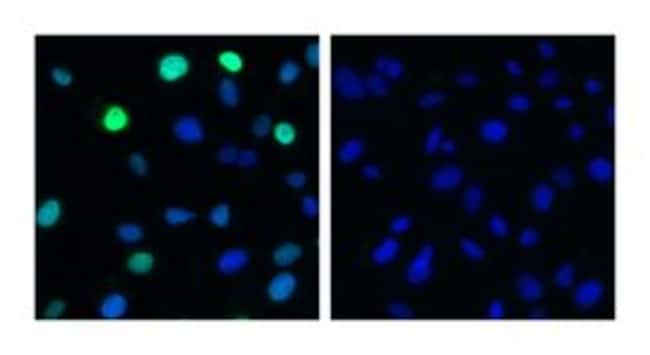
The K88-534 monoclonal antibody recognizes human ATM phosphorylated at serine 1981 (S1981) and mouse ATM phosphorylated at its orthologous site, S1987.

Specifications
Specifications
| Antigen | ATM (pS1981) |
| Applications | In vitro Assay |
| Classification | Monoclonal |
| Clone | K88-534 |
| Concentration | 0.5mg/mL |
| Conjugate | Unconjugated |
| Formulation | Aqueous buffered solution containing ≤0.09% sodium azide. |
| Host Species | Mouse |
| Immunogen | Phosphorylated Mouse ATM Peptide |
| Purification Method | Affinity Purified |
| Show More |
Safety and Handling
By clicking Submit, you acknowledge that you may be contacted by Fisher Scientific in regards to the feedback you have provided in this form. We will not share your information for any other purposes. All contact information provided shall also be maintained in accordance with our Privacy Policy.