Learn More
Description
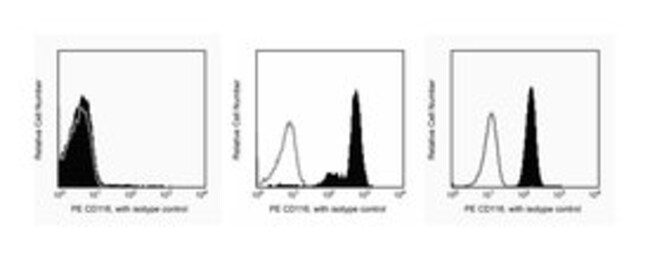
The hGMCSFR-M1 antibody reacts with the subunit (GM-CSFR) of the human Granulocyte-Macrophage Colony-Stimulating Factor Receptor complex. This 75-85 kD subunit is also known as CD116. The hGMCSFR-M1 antibody was first clustered at the Fifth International Workshop on Human Leucocyte Differentiation Antigens. The GM-CSFR subunit associates with the 120-140 kD βc subunit (common subunit, CD131), that is shared with the receptors for interleukins IL-3 and IL-5. Both of the chains of the GM-CSFR complex are involved in ligand binding and intracellular signaling. The α chain appears to transmit most of the biological signals. CD116 is expressed by a variety of myeloid cell lines, hematopoietic and non-hematopoetic tumor cells, and normal cell types including monocytes, macrophages, neutrophils, eosinophils, myeloid dendritic cells, endothelial cells, fibroblasts, and placental trophoblasts. Lymphocytes are negative for GM-CSFR expression. Reports suggest that GM-CSFR plays a role in myeloid lineage growth and differentiation. The immunogen used to generate the hGMCSFR-M1 hybridoma was recombinant human GM-CSFR.

Specifications
Specifications
| Antigen | CD116 |
| Applications | Flow Cytometry |
| Classification | Monoclonal |
| Clone | HGMCSFR-M1 |
| Concentration | 0.2mg/mL |
| Conjugate | PE |
| Description | CSF2RA; GM-CSF Receptor alpha; GM-CSFRα; GMCSFRA; GMR, SMDP4 |
| Formulation | Aqueous buffered solution containing ≤0.09% sodium azide. |
| Host Species | Mouse |
| Immunogen | Recombinant human GM-CSFR |
| Show More |
Safety and Handling
For Research Use Only.
By clicking Submit, you acknowledge that you may be contacted by Fisher Scientific in regards to the feedback you have provided in this form. We will not share your information for any other purposes. All contact information provided shall also be maintained in accordance with our Privacy Policy.