Learn More

Description
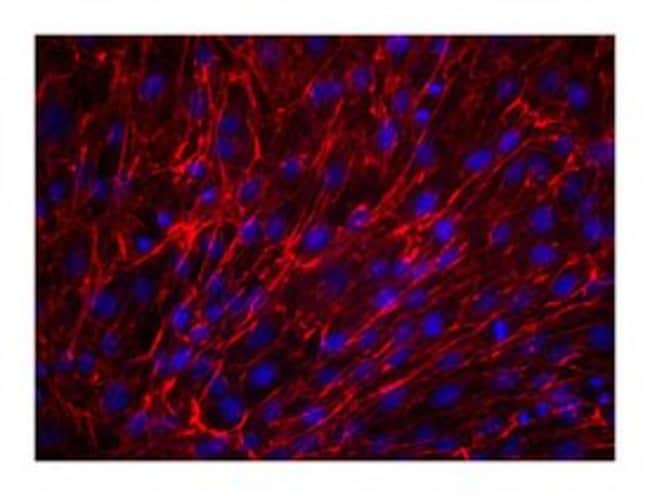
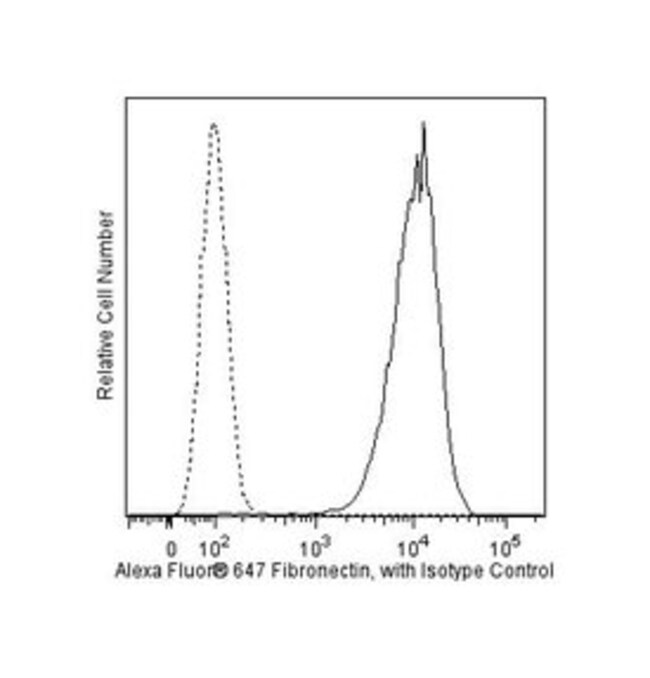
The 240-kDa dimeric fibronectin protein exists in two forms: a soluble protomer in body fluids and an insoluble multimer in the extracellular matrix. The latter is the primary functional form and creates a substrate for cell migration, a role which makes fibronectin vital to embryogenesis and wound response. Fibronectin mediates cytoskeletal organization, cell attachment, and cellular signaling through interactions with cellular receptors. Although various isoforms of fibronectin are derived by alternative splicing, they share a common N-terminus which is a critical region for cell surface binding in an initial step of multimer assembly. Further polymerization steps are regulated by fibronectin/integrin interactions and result in generation of the complex fibrils that constitute the fibronectin matrix.

Specifications
Specifications
| Antigen | Fibronectin |
| Applications | Flow Cytometry |
| Classification | Monoclonal |
| Clone | 10/Fibronectin |
| Conjugate | Alexa Fluor 647 |
| Description | FN; LETS |
| Formulation | Aqueous buffered solution containing BSA, protein stabilizer, and ≤0.09% sodium azide. |
| Host Species | Mouse |
| Immunogen | Human Fibronectin |
| Purification Method | Affinity Purified |
| Show More |
By clicking Submit, you acknowledge that you may be contacted by Fisher Scientific in regards to the feedback you have provided in this form. We will not share your information for any other purposes. All contact information provided shall also be maintained in accordance with our Privacy Policy.