Learn More
Description
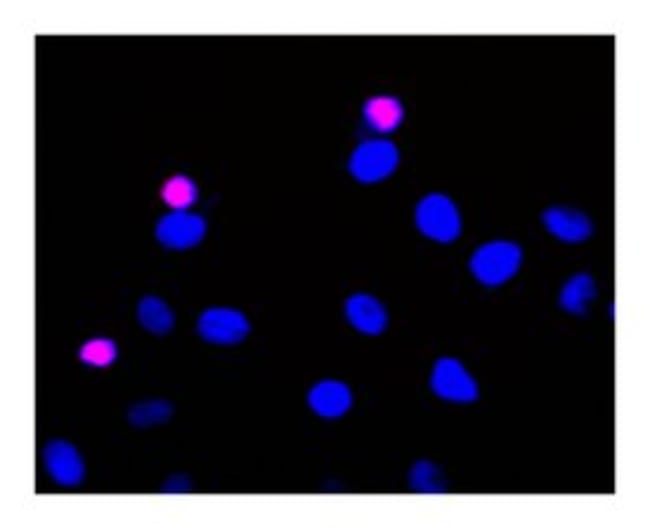
Histones are highly basic proteins that complex with DNA to form chromatin. Histone H3 is a ∽15kDa protein that is phosphorylated at serine 28 (S28), S10, and/or threonine 11 during mammalian cell mitosis and meiosis. The phosphorylation sites are located in the N-terminal tail, a region that is outside of the chromatin fiber and is thus accessible for interactions with agents that may regulate chromatin or specific gene activities. The phosphorylation states of the two serine sites during the cell cycle are highly regulated by Aurora B kinase and a PP1 phosphatase: S10 is in the phosphorylated state from late G2 phase to anaphase, while S28 is phosphorylated from prophase to anaphase. Furthermore, phosphorylation of histone H3 S28 may be mediated by other kinases in response to external stimuli. Evidence suggests that histone phosphorylation is involved in the regulation of chromosome condensation, cell division, and gene transcription. The HTA28 monoclonal antibody reacts with histone H3 phosphorylated at S28 in its N-terminal tail. It does not recognize the unphosphorylated protein.
Bioimaging

Specifications
Specifications
| Antigen | Histone H3 (pS28) |
| Applications | In vitro Assay |
| Classification | Monoclonal |
| Clone | HTA28 |
| Conjugate | Alexa Fluor 488 |
| Formulation | Aqueous buffered solution containing BSA and ≤0.09% sodium azide. |
| Host Species | Rat |
| Immunogen | Phosphorylated Human Histone H3 Peptide |
| Purification Method | Affinity Purified |
| Quantity | 100 Tests |
| Show More |
By clicking Submit, you acknowledge that you may be contacted by Fisher Scientific in regards to the feedback you have provided in this form. We will not share your information for any other purposes. All contact information provided shall also be maintained in accordance with our Privacy Policy.