Learn More
Description
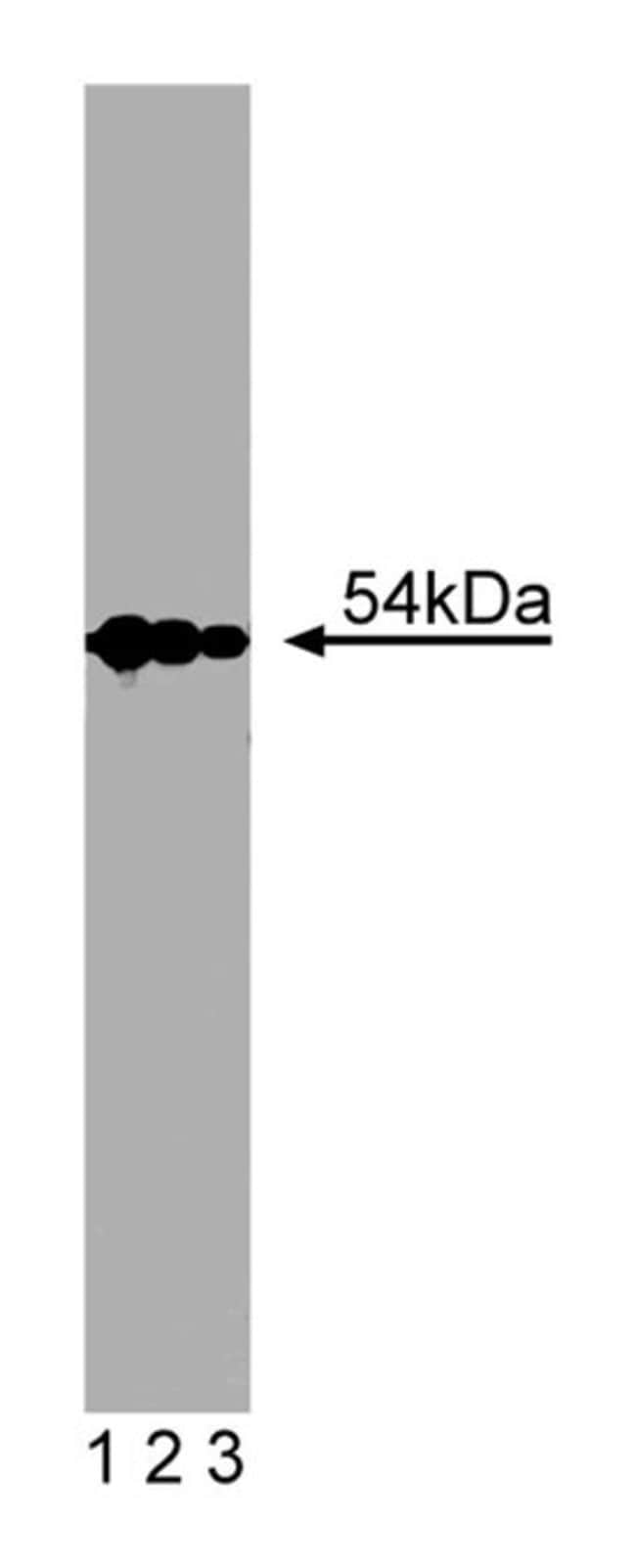
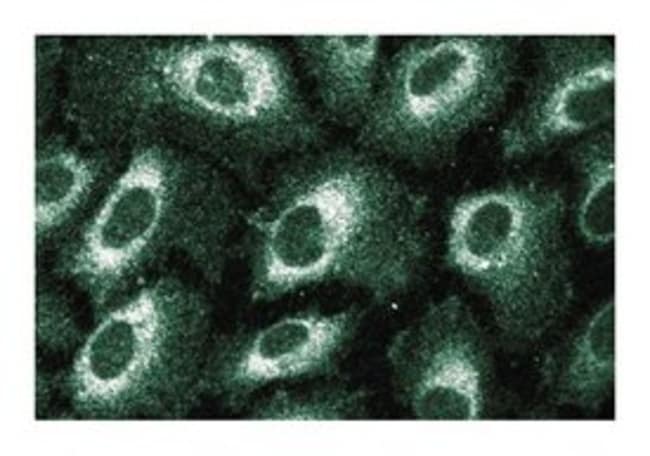
Ribosomes that exist freely in the cytosol or those attached to the ER are intrinsically the same in their translational properties. ER-bound ribosomes are responsible for the production of secretory proteins and integral ER, Golgi, lysosomal, and plasma membrane spanning proteins. Such proteins contain signal sequences that direct their synthesis to the ER membrane. As the nascent polypeptide emerges from the ribosome, a signal recognition particle (SRP) binds to the signal sequence and serves to couple the ribosome to the protein-translocating machinery in the ER membrane. Although the SRP is a 325kDa ribonucleoprotein, its 54kDa subunit (SRP54) mediates interaction with, and targeting of, the nascent protein to the ER. Via its C-terminal M-domain, SRP54 associates with the nascent protein and inhibits its elongation. This complex binds to the SRP receptor on the ER, the ribosome is delivered to the translocation machinery, SRP is released, and elongation resumes. Targeting and insertion are tightly coupled to a GTPase cycle that involves SRP54 and SRP receptor. Although the mechanisms are unclear, release of SRP from the ER-bound complex requires GTP hydrolysis.
Immunofluorescence, Western Blotting

Specifications
Specifications
| Antigen | SRP54 |
| Applications | Western Blot |
| Classification | Monoclonal |
| Clone | 30 |
| Concentration | 250μg/mL |
| Conjugate | Unconjugated |
| Formulation | Aqueous buffered solution containing BSA, glycerol, and ≤0.09% sodium azide. |
| Host Species | Mouse |
| Immunogen | Human SRP54 aa. 262-476 |
| Purification Method | Affinity Purified |
| Show More |
For Research Use Only.
By clicking Submit, you acknowledge that you may be contacted by Fisher Scientific in regards to the feedback you have provided in this form. We will not share your information for any other purposes. All contact information provided shall also be maintained in accordance with our Privacy Policy.