Learn More

Description
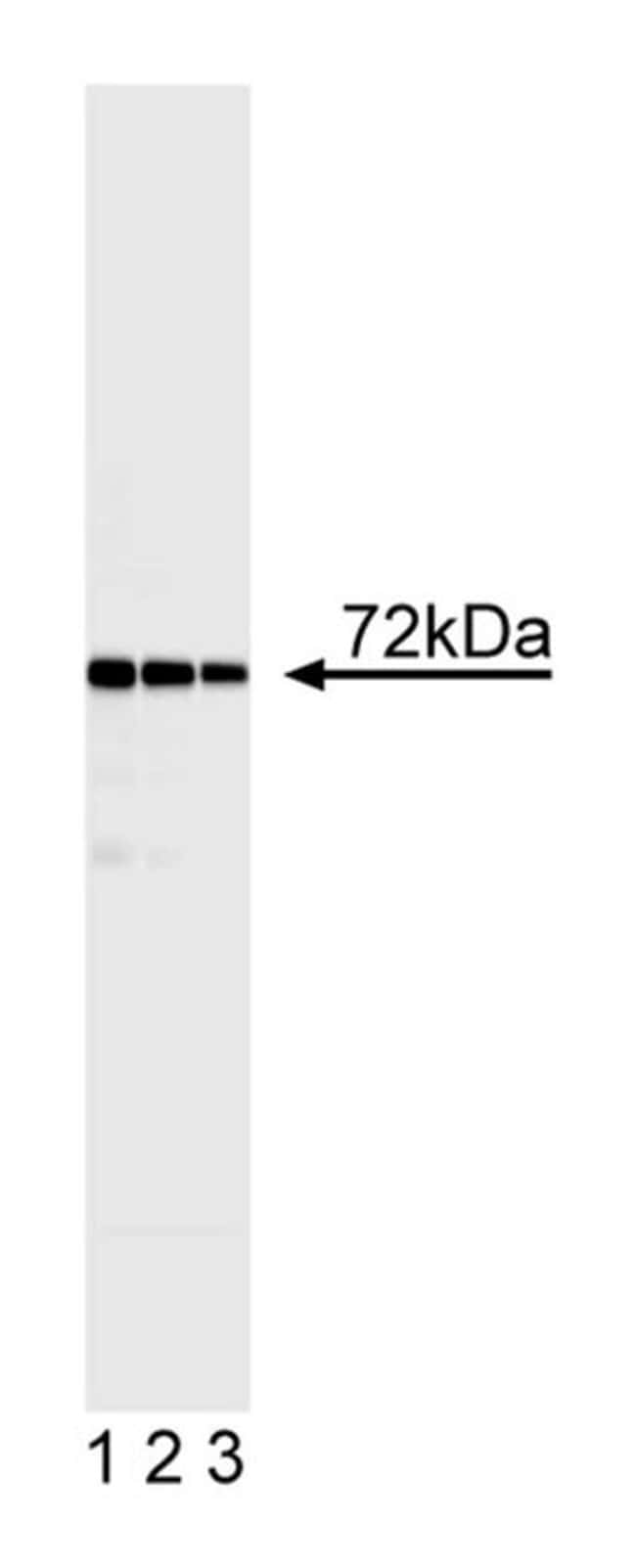
Syk is a member of the family of non-receptor type protein-tyrosine kinases and plays a crucial role in lymphocyte signaling and development. Syk is expressed in all haematopoietic cells and contributes to the signal transduction process by binding to a tyrosine-based activation motif (ITAM) of immune receptors, including Igα, TCRζ, CD3ε, FcεRIβ, and FceRIγ. Upon receptor activation, Syk binds to phosphorylated ITAMs via its two N-terminal SH2 domains thereby activating Syk and causing tyrosines in Syk to undergo auto-phosphorylation or phosphorylation. These phosphorylated sites can act as binding sites for other signaling molecules or help to regulate enzymatic activity. For example, in mast cells, Syk can activate downstream targets such as phospholipase Cγ1 and VAV. Studies in Syk-/- mast cells identified defects in both the ERK-MAP and JNK-MAP kinase pathways. Syk migrates as 72kDa in SDS/PAGE. (Predicted MW from SWISS-PROT is 72kDa; Accession number P43405).
Host Species: Mouse
Clone: 4D10
Isotype: IgG2a κ
Species Reactivity: Human
Immunogen: Human Syk peptide aa. 314-339
Western Blotting

Specifications
Specifications
| Antigen | Syk w/control |
| Applications | Western Blot |
| Classification | Monoclonal |
| Clone | 4D10 |
| Conjugate | Unconjugated |
| Formulation | Aqueous buffered solution containing BSA, glycerol, and ≤0.09% sodium azide. |
| Host Species | Mouse |
| Immunogen | Human Syk peptide aa. 314-339 |
| Purification Method | Affinity Purified |
| Quantity | 150 μg |
| Show More |
For Research Use Only.
By clicking Submit, you acknowledge that you may be contacted by Fisher Scientific in regards to the feedback you have provided in this form. We will not share your information for any other purposes. All contact information provided shall also be maintained in accordance with our Privacy Policy.